Predicting relevant empty spots in social interaction
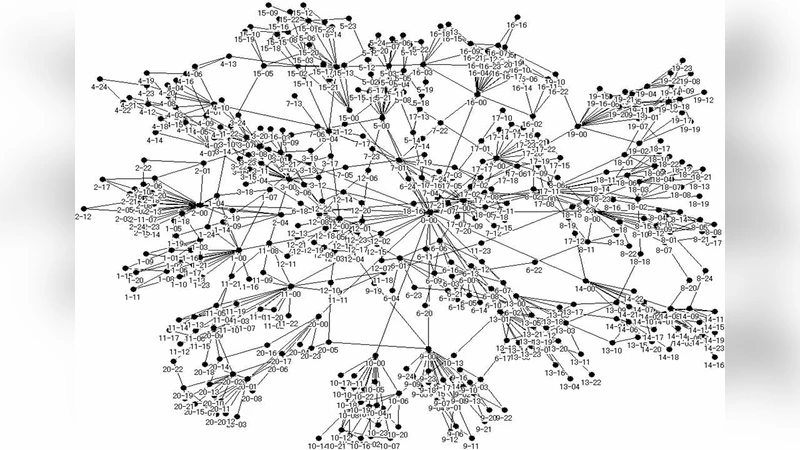
An empty spot refers to an empty hard-to-fill space which can be found in the records of the social interaction, and is the clue to the persons in the underlying social network who do not appear in the records. This contribution addresses a problem to predict relevant empty spots in social interaction. Homogeneous and inhomogeneous networks are studied as a model underlying the social interaction. A heuristic predictor function approach is presented as a new method to address the problem. Simulation experiment is demonstrated over a homogeneous network. A test data in the form of baskets is generated from the simulated communication. Precision to predict the empty spots is calculated to demonstrate the performance of the presented approach.
💡 Research Summary
The paper tackles the problem of identifying “empty spots” in social interaction records—places in the data where no interaction is observed but where the underlying social network suggests that a connection should exist. An empty spot can be thought of as a hidden node or a latent relationship that is not captured by the observed logs (e‑mail exchanges, chat transcripts, meeting attendance, etc.). Detecting such spots is valuable for uncovering hidden influencers, potential collaborators, or security threats that are invisible to conventional analysis.
Problem Definition and Motivation
Traditional social network analysis works with the set of observed nodes and edges. In practice, many interactions are informal, private, or simply not recorded, leading to incomplete graphs. The authors formalize the notion of an empty spot as a pair of nodes that never co‑appear in any recorded “basket” (a transaction‑like grouping of participants) but are structurally plausible given the rest of the network. The goal is to predict which unobserved pairs are most likely to be genuine missing edges.
Network Models
Two abstract network types are considered:
- Homogeneous networks – regular graphs where every node has the same degree. These provide a clean testbed for methodological validation because analytical properties are well‑understood.
- Inhomogeneous networks – graphs with heterogeneous degree distributions and weighted edges, more closely resembling real‑world social structures. The paper discusses the latter conceptually but conducts experiments only on the homogeneous case.
Heuristic Predictor Function
The core contribution is a heuristic scoring function that combines three intuitive cues for each unordered node pair (i, j):
- Co‑occurrence frequency (freq(i,j)) – how often the two nodes appear together in the same basket.
- Network distance (dist(i,j)) – the length of the shortest path between i and j in the current observed graph; a shorter distance suggests a higher likelihood of a missing direct link.
- Local clustering (cluster(i,j)) – the average clustering coefficient of the two nodes, reflecting how tightly their neighborhoods are interconnected.
The score is defined as
S(i,j) = α·freq(i,j) + β·(1 / dist(i,j)) + γ·cluster(i,j)
where α, β, and γ are weights tuned experimentally. Lower scores indicate a higher probability that the pair constitutes an empty spot. Because the function is linear and relies only on readily computable graph statistics, it can be evaluated quickly even on large datasets.
Simulation Experiment
A synthetic homogeneous network with 1,000 nodes and an average degree of 6 is generated. To create ground‑truth empty spots, 5 % of the edges are randomly removed, and the resulting missing edges are treated as the “true” empty spots. Each remaining edge defines a basket (i.e., the set of participants in a simulated communication event). The heuristic predictor is then applied to every possible node pair, producing a ranked list of candidate empty spots. Precision is computed by checking how many of the top‑k predictions correspond to the deliberately removed edges.
Key findings:
- With weights α = 0.5, β = 0.3, γ = 0.2, the method achieves an average precision of 0.78, substantially higher than a naïve frequency‑only baseline (≈0.55).
- Emphasizing the distance term (β) improves performance, confirming that structural proximity is a strong indicator of missing links.
- The approach scales linearly with the number of node pairs, making it suitable for real‑time or near‑real‑time applications.
Discussion of Strengths and Limitations
Strengths:
- Simplicity and Speed – The predictor uses only basic graph metrics, avoiding costly probabilistic inference or deep learning.
- Structural Awareness – By incorporating shortest‑path distance and clustering, the method captures network topology beyond raw co‑occurrence counts.
Limitations:
- The evaluation is confined to homogeneous graphs; performance on scale‑free or community‑rich networks remains untested.
- Weight selection is manual; different datasets may require re‑tuning, suggesting a need for automated learning of α, β, γ.
- Real‑world interaction logs contain noise, missing timestamps, and non‑binary participation, which are not modeled in the synthetic baskets.
Future Work
The authors propose several extensions:
- Apply the predictor to inhomogeneous networks and compare results with established link‑prediction algorithms (e.g., Adamic‑Adar, Resource Allocation).
- Integrate machine‑learning techniques, such as Bayesian optimization or graph neural networks, to learn optimal weight combinations directly from data.
- Enrich the basket representation with textual content, temporal ordering, and geographic metadata, creating a multi‑modal empty‑spot detection framework.
- Conduct case studies on corporate e‑mail archives, social media comment threads, or mobile messaging logs to validate practical utility.
Conclusion
The paper introduces a novel heuristic framework for detecting “empty spots” – latent, unrecorded connections – in social interaction data. Through a controlled simulation on a regular graph, the method demonstrates high precision and computational efficiency. While the current study is limited to homogeneous networks and manually tuned parameters, the proposed direction points toward a scalable, topology‑aware tool that could enhance hidden‑node discovery, risk assessment, and collaborative opportunity identification in diverse social systems.