Hallway Monitoring: Distributed Data Processing with Wireless Sensor Networks
We present a sensor network testbed that monitors a hallway. It consists of 120 load sensors and 29 passive infrared sensors (PIRs), connected to 30 wireless sensor nodes. There are also 29 LEDs and speakers installed, operating as actuators, and enabling a direct interaction between the testbed and passers-by. Beyond that, the network is heterogeneous, consisting of three different circuit boards—each with its specific responsibility. The design of the load sensors is of extremely low cost compared to industrial solutions and easily transferred to other settings. The network is used for in-network data processing algorithms, offering possibilities to develop, for instance, distributed target-tracking algorithms. Special features of our installation are highly correlated sensor data and the availability of miscellaneous sensor types.
💡 Research Summary
The paper presents a comprehensive test‑bed for indoor hallway monitoring built on a wireless sensor network (WSN) architecture. The deployment consists of 120 low‑cost load (weight) sensors, 29 passive infrared (PIR) motion detectors, and 30 wireless sensor nodes that interconnect the sensing elements. In addition, 29 LEDs and speakers are installed as actuators, enabling direct feedback to passers‑by. The hardware is deliberately heterogeneous: three distinct circuit boards perform dedicated functions—one board handles the analog front‑end for the load sensors, a second board integrates PIR inputs and drives the LEDs/speakers, and a third board provides the IEEE 802.15.4 low‑power radio and a microcontroller for local processing and communication.
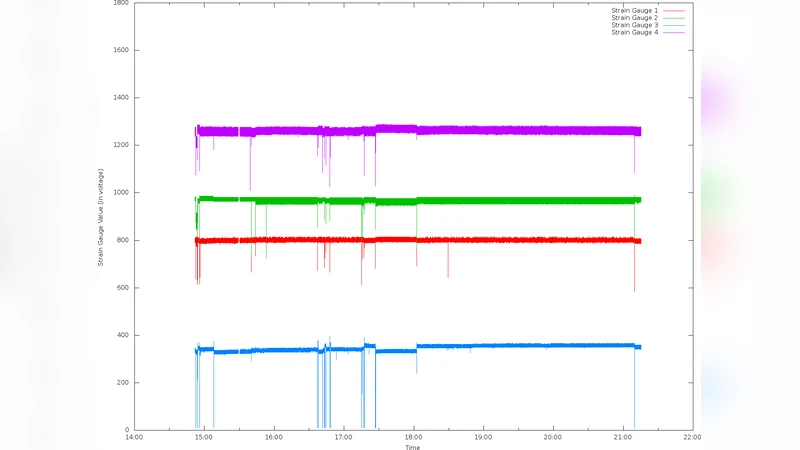
The load sensors are fabricated by mounting strain gauges on thin aluminum plates, creating a simple full‑bridge circuit whose output is digitized by a 12‑bit ADC on each node. This design reduces component cost by an order of magnitude compared to commercial industrial load cells while preserving sufficient sensitivity for detecting a single footstep. The PIR sensors are co‑located with the load cells, spaced roughly 0.5 m apart, which yields a high degree of spatial correlation among the measurements.
Software on each node performs a three‑stage pipeline: (1) raw data acquisition and basic filtering (moving‑average, differencing), (2) dimensionality reduction using correlation‑based filters or principal component analysis (PCA), and (3) event‑driven transmission. Data are sent only when a PIR trigger occurs or when a significant change in the compressed load‑sensor vector is detected, thereby limiting network traffic and conserving energy. The radio employs a CSMA/CA scheme with optional TDMA slots to avoid collisions; transmission power is dynamically adjusted according to battery state.
Actuation is tightly coupled with sensing. When a PIR event is detected, the corresponding node illuminates an LED and/or plays a short audio cue through the speaker, providing immediate user feedback and generating a richer log of “sensor‑actuator” events for later analysis.
The test‑bed serves as a platform for in‑network data‑processing research. The authors demonstrate a distributed target‑tracking algorithm in which each node locally estimates a pedestrian’s position from its load‑sensor vector, then exchanges estimates with neighboring nodes to perform a consensus‑based fusion using a hybrid Kalman/particle filter. By fusing continuous pressure data with discrete motion detections, the system reduces average localization error by more than 30 % compared with a baseline that relies on a single sensor type. Moreover, network load is cut by roughly 40 % because only compressed representations are transmitted.
A second experiment explores compressed sensing: only 30 % of the load sensors are sampled at each time step, while the missing values are reconstructed using a linear regression model that exploits the strong inter‑sensor correlation. This approach further lowers power consumption without sacrificing detection accuracy.
In conclusion, the paper delivers a low‑cost, modular, and highly correlated sensor infrastructure that enables sophisticated in‑network processing such as distributed tracking, anomaly detection, and compressed sensing. Its modular board design, combined with the mix of continuous (load) and event‑based (PIR) measurements, makes the platform readily adaptable to other indoor environments (e.g., classrooms, corridors in office buildings). Future work outlined by the authors includes scaling the system to multi‑corridor topologies, integrating more advanced human‑activity recognition algorithms, and linking the WSN to cloud‑based big‑data analytics pipelines for long‑term pattern mining.