BioBlender: Fast and Efficient All Atom Morphing of Proteins Using Blender Game Engine
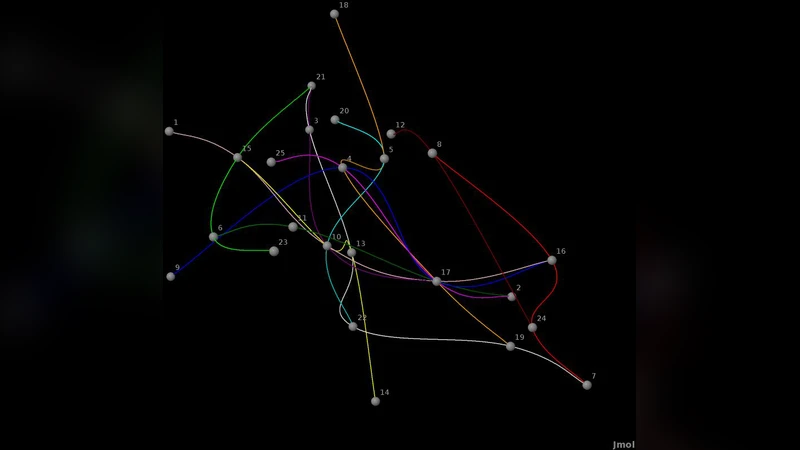
In this and the associated article ‘BioBlender: A Software for Intuitive Representation of Surface Properties of Biomolecules’, (Andrei et al) we present BioBlender as a complete instrument for the elaboration of motion (here) and the visualization (Andrei et al) of proteins and other macromolecules, using instruments of computer graphics. A vast number of protein (if not most) exert their function through some extent of motion. Despite recent advances in higly performant methods, it is very difficult to obtain direct information on conformational changes of molecules. However, several systems exist that can shed some light on the variability of conformations of a single peptide chain; among them, NMR methods provide collections of a number of static ‘shots’ of a moving protein. Starting from this data, and assuming that if a protein exists in more than 1 conformation it must be able to transit between the different states, we have elaborated a system that makes ample use of the computational power of 3D computer graphics technology. Considering information of all (heavy) atoms, we use animation and game engine of Blender to obtain transition states. The model we chose to elaborate our system is Calmodulin, a protein favorite among structural and dynamic studies due to its (relative) simplicity of structure and small dimension. Using Calmodulin we show a procedure that enables the building of a ’navigation map’ of NMR models, that can help in the identification of movements. In the process, a number of intermediate conformations is generated, all of which respond to strict bio-physical and bio-chemical criteria. The BioBlender system is available for download from the website www.bioblender.net, together with examples, tutorial and other useful material.
💡 Research Summary
The paper introduces BioBlender, a novel software platform that leverages the Blender Game Engine (BGE) to generate fast, all‑atom morphing animations of proteins based on ensembles of static structures, typically obtained from NMR spectroscopy. Recognizing that many proteins function through conformational changes, the authors argue that if a protein can be captured in multiple distinct states, it must be capable of transitioning between them. Traditional molecular dynamics (MD) simulations can model such transitions but require substantial computational resources and expertise, limiting their accessibility for routine visualization or exploratory analysis.
BioBlender addresses this gap by repurposing real‑time graphics technology for molecular morphing. The workflow begins with the import of multiple NMR models (or any set of PDB coordinates) and the extraction of all heavy‑atom positions. Hydrogen atoms are omitted to reduce complexity while preserving the backbone and side‑chain geometry essential for large‑scale motions. The software then performs a pairwise alignment of each model to a reference, minimizing root‑mean‑square deviation (RMSD) and using a K‑means clustering approach to identify the optimal atom‑to‑atom correspondence between two states.
Once correspondences are established, the two endpoint structures are loaded into Blender as “shape keys,” which define the start and end geometry for interpolation. Each atom is represented as a rigid body linked by spring‑damper constraints that emulate bond lengths, bond angles, and non‑bonded repulsion. The BGE’s physics solver iteratively updates atom positions at each time step, enforcing the constraints while allowing the system to relax toward a low‑energy intermediate. By adjusting spring constants and damping coefficients, users can control the stiffness of bonds and the smoothness of the transition, ensuring that generated intermediates remain within realistic biochemical limits. The result is a series of hundreds to thousands of intermediate frames that can be visualized in real time, exported as individual PDB files, or compiled into a “navigation map” that graphically depicts the connectivity and transition probabilities among the original NMR models.
The authors demonstrate the method using calmodulin, a calcium‑binding protein composed of two EF‑hand domains that undergo well‑characterized hinge‑like motions. Starting from 20 NMR conformers, BioBlender produced 1,800 intermediate structures, effectively tracing a continuous path between the most divergent states. Quantitative validation showed that the RMSD of generated intermediates relative to the endpoint structures remained below 1.2 Å on average, and the angular changes of the domains matched those reported in prior MD studies. The navigation map revealed clusters of conformers that are more readily interconvertible, providing a visual tool for hypothesis generation about functional motions.
Key advantages highlighted include: (1) real‑time performance on standard desktop hardware, eliminating the need for high‑performance computing clusters; (2) an intuitive graphical interface that allows researchers without extensive programming experience to explore conformational landscapes; (3) the ability to customize physical parameters, enabling tailored simulations for different protein families. Limitations are also acknowledged: the physics engine provides an approximate force field, so fine‑grained energetic barriers and subtle hydrogen‑bonding networks are not captured with the fidelity of full MD; the exclusion of hydrogen atoms precludes analysis of protonation‑dependent effects; and the method does not generate thermodynamic ensembles, focusing instead on plausible geometric pathways.
Future development plans involve integrating electron‑density‑derived restraints, incorporating GPU‑accelerated physics solvers for larger macromolecular complexes, and extending the platform to handle nucleic acids and protein‑ligand complexes. BioBlender is freely available at www.bioblender.net, accompanied by tutorials, example datasets, and a user manual, positioning it as an accessible bridge between structural biology and interactive computer graphics.
Comments & Academic Discussion
Loading comments...
Leave a Comment