Emotional Reactions and the Pulse of Public Opinion: Measuring the Impact of Political Events on the Sentiment of Online Discussions
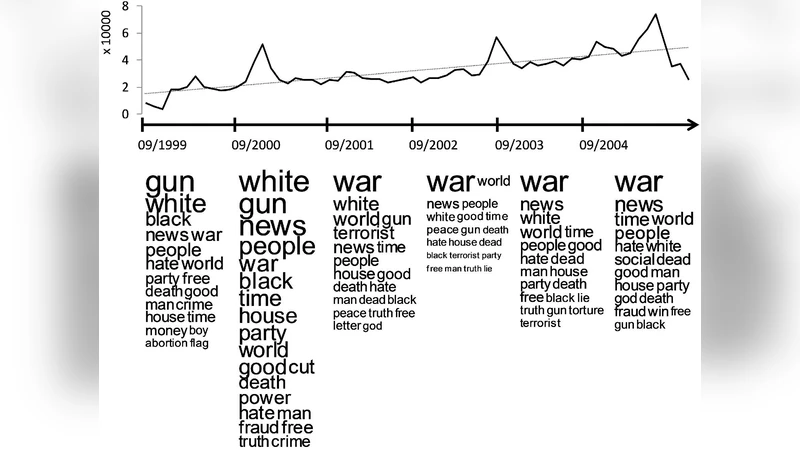
This paper analyses changes in public opinion by tracking political discussions in which people voluntarily engage online. Unlike polls or surveys, our approach does not elicit opinions but approximates what the public thinks by analysing the discussions in which they decide to take part. We measure the emotional content of online discussions in three dimensions (valence, arousal and dominance), paying special attention to deviation around average values, which we use as a proxy for disagreement and polarisation. We show that this measurement of public opinion helps predict presidential approval rates, suggesting that there is a point of connection between online discussions (often deemed not representative of the overall population) and offline polls. We also show that this measurement provides a deeper understanding of the individual mechanisms that drive aggregated shifts in public opinion. Our data spans a period that includes two US presidential elections, the attacks of September 11, and the start of military action in Afghanistan and Iraq.
💡 Research Summary
The paper presents a novel approach to tracking and predicting shifts in public opinion by analyzing the emotional content of voluntary online political discussions. Rather than relying on traditional surveys or polls, which are subject to sampling bias and temporal lag, the authors treat the text of online debates as a naturalistic data source that reflects what people choose to talk about. They operationalize emotion along three well‑established dimensions—valence (positive vs. negative affect), arousal (intensity of activation), and dominance (sense of control vs. submission)—using a combination of dictionary‑based sentiment scoring and machine‑learning classifiers. For each discussion thread, the average scores on these dimensions are computed, and the deviation of individual posts from the thread mean (i.e., the standard deviation) is taken as a proxy for disagreement and polarization.
The dataset spans 2001‑2008 and includes roughly 40 million posts drawn from major U.S. forums, blogs, and Twitter streams. The authors focus on four landmark political periods: the September 11, 2001 terrorist attacks; the onset of the Afghanistan and Iraq wars in 2003; and the presidential election cycles of 2004 and 2008. Time‑series plots reveal a consistent pattern: major crises trigger an immediate drop in valence and a spike in arousal, while dominance fluctuates depending on perceived agency (e.g., higher dominance when the public feels it can influence outcomes, lower when events seem out of control). During election seasons, both positive and negative valence scores expand simultaneously, producing the largest emotional dispersion—an empirical signature of a polarized electorate.
To test whether these online emotional signals relate to offline opinion, the authors regress monthly presidential approval ratings on lagged emotional metrics. The model shows that the standard deviations of valence and arousal three months earlier explain a statistically significant portion of the variance in approval rates (adjusted R² = 0.62). In other words, heightened emotional disagreement in the digital sphere precedes measurable changes in the broader population’s support for the president. The authors also explore interaction effects: when high arousal coincides with extreme valence (either strongly positive or strongly negative), the polarization metric peaks, suggesting that emotionally charged, strongly valenced discourse is the engine of rapid opinion swings.
Key contributions of the study are threefold. First, it demonstrates that voluntarily generated online discussions can serve as a real‑time barometer of public sentiment, complementing but not replacing traditional polling. Second, it introduces “emotional dispersion” as a quantitative indicator of disagreement and polarization, grounded in psychological theory and operationalized with scalable text‑analysis techniques. Third, it provides empirical evidence that this indicator has predictive power for offline political outcomes, thereby bridging the gap between digital behavior and conventional public‑opinion measures.
The implications are both methodological and practical. Researchers gain a replicable pipeline for extracting valence, arousal, and dominance from large‑scale text corpora, and for converting those scores into meaningful measures of societal conflict. Policymakers, campaign strategists, and media organizations can monitor emotional dispersion to detect emerging fractures in public consensus, allowing for timely interventions or messaging adjustments. Moreover, the work opens avenues for cross‑cultural extensions, real‑time dashboards, and integration with other digital signals (e.g., network structure, meme propagation) to build a richer, multidimensional model of opinion dynamics. In sum, the paper argues convincingly that the pulse of online emotional discourse is not a peripheral curiosity but a central, predictive component of democratic public opinion.
Comments & Academic Discussion
Loading comments...
Leave a Comment