Invariant Spectral Hashing of Image Saliency Graph
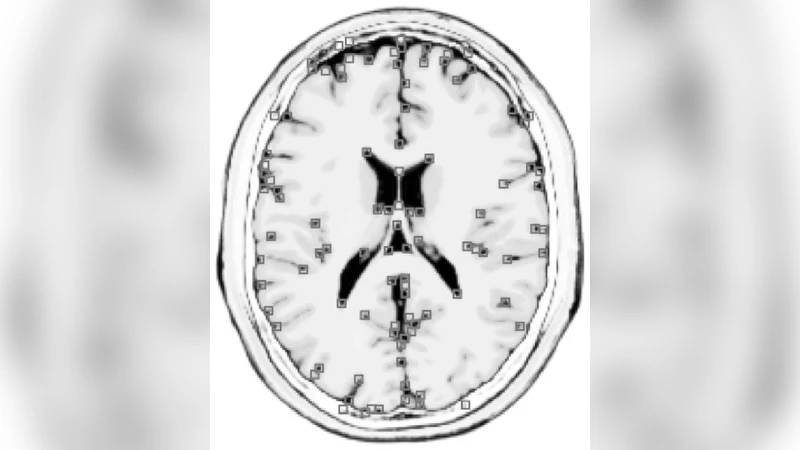
Image hashing is the process of associating a short vector of bits to an image. The resulting summaries are useful in many applications including image indexing, image authentication and pattern recognition. These hashes need to be invariant under transformations of the image that result in similar visual content, but should drastically differ for conceptually distinct contents. This paper proposes an image hashing method that is invariant under rotation, scaling and translation of the image. The gist of our approach relies on the geometric characterization of salient point distribution in the image. This is achieved by the definition of a “saliency graph” connecting these points jointly with an image intensity function on the graph nodes. An invariant hash is then obtained by considering the spectrum of this function in the eigenvector basis of the Laplacian graph, that is, its graph Fourier transform. Interestingly, this spectrum is invariant under any relabeling of the graph nodes. The graph reveals geometric information of the image, making the hash robust to image transformation, yet distinct for different visual content. The efficiency of the proposed method is assessed on a set of MRI 2-D slices and on a database of faces.
💡 Research Summary
The paper introduces a novel image hashing technique that remains invariant under common geometric transformations—rotation, scaling, and translation—while preserving discriminative power for distinct visual contents. The method builds upon a “saliency graph” constructed from a set of salient points detected in the image (e.g., using SIFT, Harris, or similar detectors). Each salient point becomes a vertex; edges are fully connected and weighted by a Gaussian kernel that depends on Euclidean distance and intensity differences between the vertices. This weighted adjacency matrix captures the spatial distribution and photometric relationships of the salient points.
From the adjacency matrix, the degree matrix and the graph Laplacian L = D – W are computed. The eigen‑decomposition of L yields eigenvalues and eigenvectors that form an orthogonal basis intrinsic to the graph’s structure. Crucially, this basis is independent of vertex labeling, meaning that any permutation of the point indices leaves the eigenvectors unchanged. The image intensity values sampled at the salient points are assembled into a signal f on the graph. Projecting f onto the Laplacian eigenbasis produces the graph Fourier transform f̂ = Uᵀf, where U contains the eigenvectors. The magnitude (or squared magnitude) of f̂ constitutes the hash. Because the transform is defined on the graph’s intrinsic geometry, the resulting spectrum is invariant to rotations, scalings, and translations that preserve the relative geometry of the salient points.
To evaluate the approach, the authors conduct experiments on two datasets: a collection of 2‑D MRI slices and a face image database. For each image, transformed versions are generated by rotating (±30°), scaling (0.8–1.2×), and translating (up to 10 pixels). Hashes are computed for original and transformed images, and similarity is measured using Euclidean distance or cosine similarity. Receiver Operating Characteristic (ROC) curves and Area Under Curve (AUC) metrics demonstrate that the proposed spectral hash outperforms traditional methods such as average hashing, DCT‑based hashing, and block‑based perceptual hashing in terms of robustness to geometric transformations and discriminability between different images.
The paper highlights several advantages: (1) invariance to vertex relabeling eliminates dependence on the order of salient points; (2) the distance‑and‑intensity based weighting captures both geometric and photometric cues; (3) the spectral representation is compact, leading to low storage and computational overhead compared with raw graph descriptors. Limitations are also discussed: the quality of salient point detection can be affected by noise or low‑contrast images, and the eigen‑decomposition cost grows with the number of points, potentially hindering real‑time applications. The authors suggest future work on adaptive point selection, dimensionality reduction, or approximate eigen‑solvers (e.g., Lanczos or randomized methods) to mitigate these issues.
In summary, the study presents a graph‑signal‑processing‑driven image hashing framework that achieves transformation invariance through the Laplacian spectrum of a saliency graph. The experimental results confirm its robustness and discriminative capability, making it a promising candidate for tasks such as image indexing, authentication, and content‑based retrieval where both invariance and uniqueness are essential.