Asymmetric impacts of near-Earth asteroids on the Moon
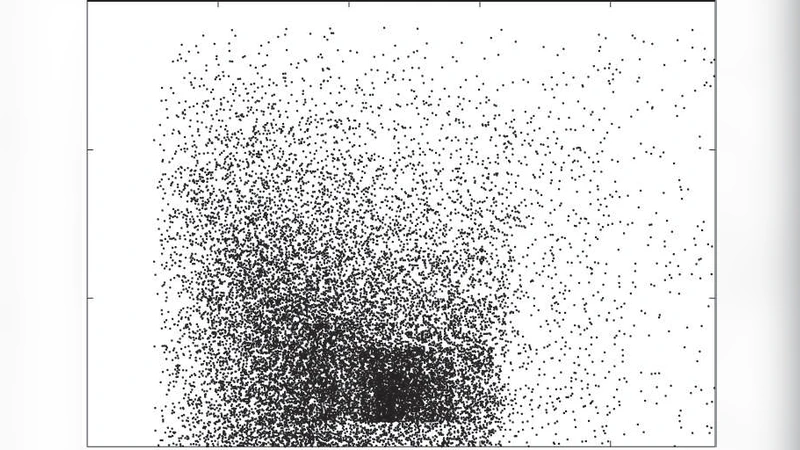
Recent lunar crater studies have revealed an asymmetric distribution of rayed craters on the lunar surface. The asymmetry is related to the synchronous rotation of the Moon: there is a higher density of rayed craters on the leading hemisphere compared with the trailing hemisphere. Rayed craters represent generally the youngest impacts. The purpose of this paper is to test the hypotheses that (i) the population of Near-Earth asteroids (NEAs) is the source of the impactors that have made the rayed craters, and (ii) that impacts by this projectile population account quantitatively for the observed asymmetry. We carried out numerical simulations of the orbital evolution of a large number of test particles representing NEAs in order to determine directly their impact flux on the Moon. The simulations were done in two stages. In the first stage we obtained encounter statistics of NEAs on the Earth’s activity sphere. In the second stage we calculated the direct impact flux of the encountering particles on the surface of the Moon; the latter calculations were confined within the activity sphere of the Earth. A steady-state synthetic population of NEAs was generated from a debiased orbital distribution of the known NEAs. We find that the near-Earth asteroids do have an asymmetry in their impact flux on the Moon: apex-to-antapex ratio of 1.32 +/- 0.01. However, the observed rayed crater distribution’s asymmetry is significantly more pronounced: apex-to-antapex ratio of 1.65 +/- 0.16. Our results suggest the existence of an undetected population of slower (low impact velocity) projectiles, such as a population of objects nearly coorbiting with Earth; more observational study of young lunar craters is needed to secure this conclusion.
💡 Research Summary
The paper investigates whether the population of Near‑Earth Asteroids (NEAs) can account for the observed leading‑trailing asymmetry of young, rayed craters on the Moon. Rayed craters are considered the freshest impact features, and previous surveys have shown a higher density on the Moon’s leading hemisphere (the apex) compared with the trailing hemisphere (the antapex). The authors formulate two hypotheses: (i) NEAs are the primary impactors that created these craters, and (ii) the impact flux from NEAs quantitatively reproduces the observed asymmetry.
To test these ideas, the authors conduct a two‑stage numerical experiment. In the first stage they generate a synthetic steady‑state NEA population based on a debiased orbital distribution of the known NEAs. This debiasing corrects for observational selection effects and yields a realistic representation of the true NEA orbital element space. They then integrate millions of test particles representing this population and record the statistics of their encounters with the Earth’s activity sphere (the region within which Earth’s gravity dominates, roughly 0.01 AU). The encounter data include approach velocities, incident angles, and spatial distribution relative to Earth.
In the second stage the same set of encounter particles is propagated inside the Earth’s activity sphere to determine their direct impact probabilities on the lunar surface. The Moon’s synchronous rotation is explicitly modeled, so that the impact probability can be distinguished between the apex (the direction of orbital motion) and the antapex (the opposite direction). By tracking each particle’s position and velocity at the moment of lunar impact, the authors compute the impact flux on the leading and trailing hemispheres.
The simulation results reveal a modest asymmetry: the impact flux on the apex is 1.32 ± 0.01 times that on the antapex. This translates to an apex‑to‑antapex ratio of 1.32 for NEA‑driven impacts. In contrast, the observed distribution of rayed craters yields a significantly larger ratio of 1.65 ± 0.16. The discrepancy indicates that the known NEA population alone cannot fully explain the crater asymmetry.
The authors discuss two plausible explanations. First, the current catalog of NEAs may be biased toward higher‑velocity objects, missing a substantial low‑velocity component that would preferentially strike the leading side. Second, there may exist an undetected cohort of Earth‑coorbital or near‑coorbital objects—small bodies that share a similar orbit with Earth and thus have low relative velocities when they encounter the Moon. Such a “co‑orbital” population would produce a higher apex‑to‑antapex impact ratio because their low impact speeds generate shallow impact angles that concentrate on the leading hemisphere.
The study also acknowledges methodological limitations. The encounter statistics are derived from a finite synthetic sample, and the long‑term dynamical evolution of NEAs (including Yarkovsky drift, resonant interactions, and planetary perturbations) is not fully modeled. The lunar gravitational field is treated as a point mass, ignoring topographic focusing effects that could modify local impact rates. Moreover, the preservation bias of rayed craters—differences in degradation rates between hemispheres—could affect the observed asymmetry.
In conclusion, while NEAs do produce a measurable leading‑trailing asymmetry, the magnitude falls short of observations, suggesting the presence of an additional, slower impactor population. The paper calls for more comprehensive observational campaigns to identify Earth‑coorbital small bodies and for higher‑resolution mapping and dating of young lunar craters. Such efforts will refine our understanding of the Moon’s recent impact history and improve models of the near‑Earth small‑body environment.
Comments & Academic Discussion
Loading comments...
Leave a Comment