Multiple-source single-sink maximum flow in directed planar graphs in $O(n^{1.5} log n)$ time
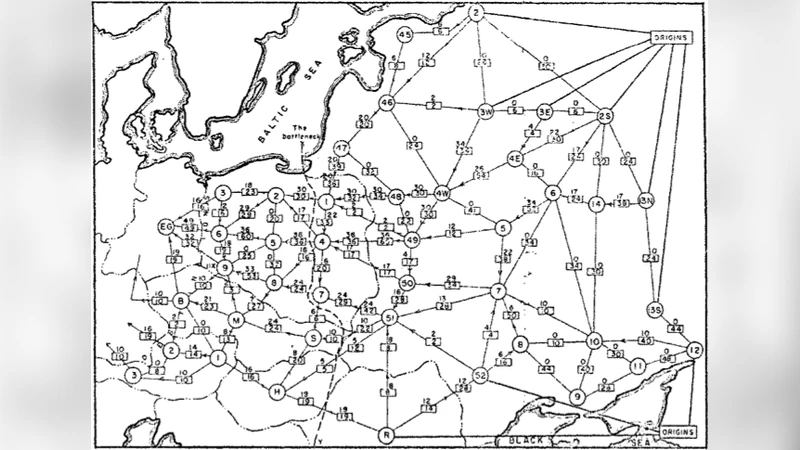
We give an $O(n^{1.5} \log n)$ algorithm that, given a directed planar graph with arc capacities, a set of source nodes and a single sink node, finds a maximum flow from the sources to the sink . This is the first subquadratic-time strongly polynomial algorithm for the problem.
💡 Research Summary
The paper addresses the problem of computing a maximum flow from multiple source vertices to a single sink in a directed planar graph. While the classic max‑st‑flow problem in planar graphs has been solved in O(n log n) time, extending this to multiple sources has traditionally required a reduction to a general‑graph max‑flow algorithm, incurring a quadratic‑ish O(n² log n) bound. The authors present the first strongly polynomial algorithm that solves the multiple‑source single‑sink (MSS) max‑flow problem in O(n¹·⁵ log n) time, thereby breaking the subquadratic barrier for this setting.
Key ideas and technical contributions
-
Recursive planar decomposition using Jordan separators – The algorithm repeatedly finds a balanced Jordan separator (a simple cycle that separates the graph into interior and exterior parts, each containing at most 2/3 of the vertices). Miller’s linear‑time separator construction is employed after triangulating the graph with zero‑capacity edges. The separator has O(√n) boundary vertices.
-
Handling the interior subgraph – For each separator Sᵢ, the interior subgraph Hᵢ is isolated. Its external face Cᵢ is turned into an artificial sink t₀ by adding infinite‑capacity edges parallel to Cᵢ. The problem inside Hᵢ then becomes a multiple‑source to t₀ flow, which can be solved recursively.
-
Use of a limited single‑source max‑flow subroutine – The authors rely on the existing O(n log n) planar max‑st‑flow algorithm, adapted to a “limited” version where the source’s total outflow is bounded by its supply σ(s). This subroutine is invoked both in the recursive calls (to compute a preflow inside Hᵢ) and in the final phase (to push remaining flow from each boundary vertex to the real sink).
-
Preflow to flow conversion – The recursive procedure first computes a maximum feasible preflow (which may violate flow conservation at intermediate vertices). Lemmas 3.2–3.5 prove that after each recursive step and after the final limited‑flow pushes, no admissible augmenting paths remain, implying optimality of the preflow. A standard post‑processing step then converts the preflow into a feasible flow without decreasing its value.
-
Complexity analysis – Each cycle (separator boundary) appears at most twice in the recursion (Lemma 3.6). The recurrence for the running time is T(n)=T(αn)+T((1−α)n)+O(n log n) with α≈2/3, which solves to O(n¹·⁵ log n). The limited‑source max‑flow subroutine contributes only O(n log n) per level, preserving the overall bound.
Algorithm outline
- Preprocessing: Triangulate the input planar embedding using zero‑capacity edges.
- Main loop: While the current graph has more than a constant number of vertices, find a balanced Jordan separator Sᵢ, define interior Hᵢ, and treat its external face Cᵢ as an artificial sink. Recursively compute a maximum preflow in Hᵢ.
- Cleanup: Remove the artificial infinite‑capacity edges, update the remaining graph Gᵢ (the exterior of Sᵢ), and repeat.
- Final phase: For every vertex on the separator cycles, run a limited max‑flow to the real sink, respecting each vertex’s original supply.
- Post‑processing: Convert the resulting preflow into a genuine flow.
Significance and applications
The result is particularly relevant for image segmentation, network interdiction, and any planar‑structured optimization where multiple sources naturally arise (e.g., multiple foreground regions in a grid). The algorithm matches or improves upon the best known bounds for integer capacities (previously O(n¹·⁵ log n log U) or matrix‑multiplication‑based O(n¹·⁵⁹⁵ log U)). Moreover, the authors note that an independent work by Borradaile and Wulff‑Nilsen obtained the same theorem, underscoring the robustness of the approach.
In summary, the paper delivers a conceptually clean, recursion‑based algorithm that leverages planar separators and existing planar max‑flow techniques to achieve a subquadratic, strongly polynomial solution for the multiple‑source single‑sink max‑flow problem in directed planar graphs.
Comments & Academic Discussion
Loading comments...
Leave a Comment