Mapping Cloud Computing onto Useful e-Governance
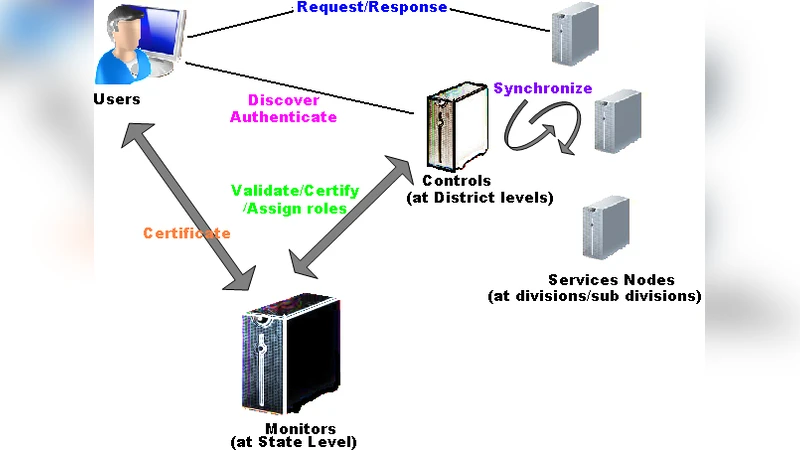
Most of the services viewed in context to grid and cloud computing are mostly confined to services that are available for intellectual purposes. The grid or cloud computing are large scale distributed systems. The essence of large scale distribution can only be realized if the services are rendered to common man. The only organization which has exposure to almost every single resident is the respective governments in every country. As the size of population increases so the need for a larger purview arises. The problem of having a large purview can be solved by means of large scale grid for online services. The government services can be rendered through fully customized Service-oriented Clouds. In this paper we are presenting tight similarities between generic government functioning and the service oriented grid/cloud approach. Also, we will discuss the major issues in establishing services oriented grids for governmental organization.
💡 Research Summary
The paper “Mapping Cloud Computing onto Useful e‑Governance” puts forward a conceptual framework for leveraging large‑scale distributed systems—specifically grid and cloud computing—to transform traditional e‑government services into citizen‑centric, scalable, and cost‑effective offerings. The authors begin by observing that most existing grid and cloud research focuses on academic or intellectual use cases, leaving a gap between the technological potential of these platforms and the everyday needs of the general public. They argue that governments, by virtue of their universal reach, are uniquely positioned to bridge this gap and that the growing size of national populations demands an infrastructure capable of handling massive, variable workloads.
In the core of the paper the authors map generic government functions to the three canonical layers of cloud service models: Infrastructure‑as‑a‑Service (IaaS), Platform‑as‑a‑Service (PaaS), and Software‑as‑a‑Service (SaaS). They illustrate this mapping with four representative use cases: (1) citizen‑centric “e‑service” portals become SaaS‑based workflow engines that auto‑scale during peak demand; (2) inter‑agency data sharing is realized through an IaaS‑hosted data lake equipped with a metadata catalog to ensure semantic consistency; (3) public information portals are built on PaaS web frameworks and accelerated by content‑delivery networks; and (4) emergency‑response systems are implemented as real‑time analytics pipelines that trigger automated alerts. The proposed “customized service‑oriented cloud” architecture consists of a virtualized infrastructure layer, a container‑orchestrated platform layer, and a micro‑service‑based application layer, all exposed through a unified API gateway and service registry that facilitate integration with legacy government information systems.
The authors claim five primary benefits from this approach: (i) elastic scalability, allowing the system to absorb sudden spikes in citizen traffic; (ii) cost efficiency, because pay‑as‑you‑go pricing reduces idle capacity; (iii) agility, enabling rapid rollout of new policies or digital services; (iv) standardization, as service‑oriented interfaces promote common data models across ministries; and (v) transparency and oversight, achieved through centralized logging, monitoring, and audit trails that make policy execution observable in real time.
However, the paper also acknowledges a series of substantial challenges that must be addressed before such a cloud‑enabled e‑government can be realized. Security and privacy are highlighted as paramount concerns; the authors note the need for robust encryption, key‑management, fine‑grained access control, and immutable audit logs to protect sensitive citizen data and to satisfy data‑sovereignty requirements. Integration with entrenched legacy systems is another obstacle; the authors suggest the use of API gateways and phased migration strategies but provide no concrete migration roadmap or data‑integrity guarantees. Legal and regulatory issues are also raised, including the formulation of service‑level agreements (SLAs) with third‑party cloud providers, compliance with national privacy statutes, and the negotiation of cross‑border data‑hosting arrangements. Finally, the paper points out organizational and human‑resource challenges, emphasizing the need for skilled cloud‑operations staff, inter‑agency governance structures, and change‑management programs to overcome institutional inertia.
The authors conclude by calling for future work that moves beyond conceptual mapping to empirical validation. They propose pilot deployments in selected ministries, the development of a detailed security and privacy framework, quantitative cost‑benefit modeling, and alignment with international standards such as ISO/IEC 38505 (cloud governance) and NIST SP 800‑53 (security controls). In summary, while the paper convincingly argues that cloud and grid technologies hold transformative potential for large‑scale e‑governance, it stops short of delivering a concrete implementation plan. Realizing the envisioned benefits will require coordinated advances in technology, policy, and organizational culture.
Comments & Academic Discussion
Loading comments...
Leave a Comment