Some New Equiprojective Polyhedra
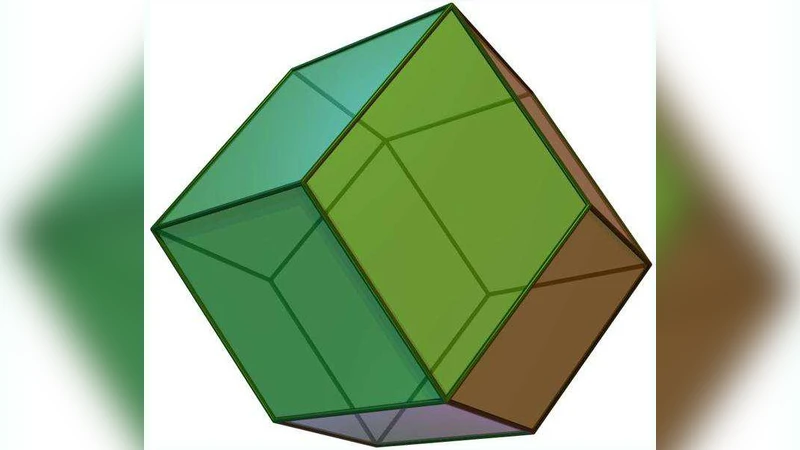
A convex polyhedron $P$ is $k$-equiprojective if all of its orthogonal projections, i.e., shadows, except those parallel to the faces of $P$ are $k$-gon for some fixed value of $k$. Since 1968, it is an open problem to construct all equiprojective polyhedra. Recently, Hasan and Lubiw [CGTA 40(2):148-155, 2008] have given a characterization of equiprojective polyhedra. Based on their characterization, in this paper we discover some new equiprojective polyhedra by cutting and gluing existing polyhedra.
💡 Research Summary
The paper tackles the long‑standing problem of characterizing and constructing all equiprojective polyhedra—convex solids whose orthogonal shadows are identical k‑gons for every viewing direction that is not parallel to a face. After a brief historical overview, the authors revisit the 2008 characterization by Hasan and Lubiw, which states that a polyhedron is k‑equiprojective if (i) every face has the same number of edges and the set of edge‑direction vectors can be partitioned into two parallel families, and (ii) each edge pair belonging to the same family maintains equal length and dihedral angle under any projection. These conditions enforce a strict face‑pairing and edge‑direction symmetry that severely limits admissible shapes.
Building on this theoretical foundation, the authors introduce a constructive methodology they call “cut‑and‑glue.” The first step, cutting, selects one or more planes that intersect the original polyhedron in such a way that the resulting cut surface inherits the same edge‑direction families as the original faces. The cut is performed only along planes that keep the polyhedron convex, i.e., the cut surface lies entirely inside the solid and does not create re‑entrant angles. After the cut, the polyhedron is split into two pieces, each of which still satisfies the Hasan‑Lubiw conditions because the edge‑direction sets are preserved.
The second step, gluing, aligns the two cut boundaries by a rigid motion (rotation and translation) so that they match perfectly, thereby creating a new face. Crucially, the alignment is chosen so that the new face’s edges belong to one of the two parallel direction families, ensuring that the overall edge‑direction symmetry is unchanged. The authors provide explicit formulas for the required transformation matrices and demonstrate how to verify that the resulting solid remains convex.
Using this framework, the paper constructs a series of previously unknown equiprojective polyhedra. Starting from classic solids such as the regular pentagonal prism, hexagonal prism, and various pyramids, the authors apply single or multiple cut‑and‑glue operations to obtain new k‑equiprojective examples for k = 5, 6, 7, 8. Notably, they produce a non‑symmetric 6‑equiprojective polyhedron that nevertheless satisfies all projection requirements, and a compound 8‑equiprojective solid obtained by two successive cuts and glues. For each construction, the authors supply (1) a precise geometric description of the cut plane, (2) the transformation used to glue the pieces, (3) a proof that convexity is retained, and (4) a rigorous verification that every non‑face‑parallel orthogonal projection yields a congruent k‑gon. Computational experiments, including rendered shadow images from many directions, confirm the theoretical predictions.
The paper concludes with a comprehensive catalog of known equiprojective polyhedra, highlighting how the new constructions expand the list. It discusses practical implications for fields that rely on uniform shadow properties—computer graphics, architectural shading analysis, and optical device design—where a predictable silhouette can simplify rendering or fabrication. Finally, the authors outline future research directions: automating the cut‑and‑glue process via algorithmic search, investigating the existence of non‑convex equiprojective solids, and extending the equiprojection concept to higher dimensions. In sum, the work bridges the gap between abstract characterization and concrete construction, offering a versatile toolkit for generating an unlimited family of equiprojective polyhedra.
Comments & Academic Discussion
Loading comments...
Leave a Comment