Sustaining the Internet with Hyperbolic Mapping
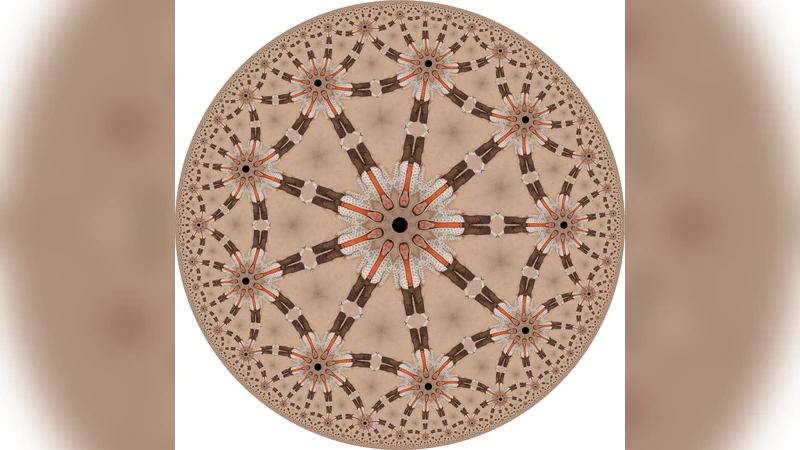
The Internet infrastructure is severely stressed. Rapidly growing overheads associated with the primary function of the Internet—routing information packets between any two computers in the world—cause concerns among Internet experts that the existing Internet routing architecture may not sustain even another decade. Here we present a method to map the Internet to a hyperbolic space. Guided with the constructed map, which we release with this paper, Internet routing exhibits scaling properties close to theoretically best possible, thus resolving serious scaling limitations that the Internet faces today. Besides this immediate practical viability, our network mapping method can provide a different perspective on the community structure in complex networks.
💡 Research Summary
The paper addresses the looming scalability crisis of the current Internet routing architecture, which is strained by the ever‑increasing number of autonomous systems (ASes) and the associated growth in routing table size and path‑computation overhead. The authors propose a fundamentally different approach: embed the global AS‑level Internet topology into a two‑dimensional hyperbolic space and use the resulting geometric coordinates to drive routing decisions.
Data collection and hyperbolic embedding
Using publicly available BGP dump datasets (e.g., CAIDA, RIPE NCC), the authors construct a snapshot of the Internet AS graph. They then apply a maximum‑likelihood estimation (MLE) framework to assign each AS a radial coordinate (r) (reflecting its degree) and an angular coordinate (\theta) (capturing similarity or community affiliation) on the Poincaré disk. The likelihood function is designed to reproduce the observed power‑law degree distribution and high clustering coefficient, both hallmark features of the real Internet. Optimization is performed with stochastic gradient descent and multiple random restarts to avoid local minima. The resulting embedding not only preserves global structural statistics but also reveals meaningful clusters that correspond to geographic regions, business relationships, and policy‑based peering groups—structures that are often invisible in purely geographic embeddings.
Greedy Hyperbolic Routing (GHR)
With the hyperbolic coordinates in hand, the authors introduce Greedy Hyperbolic Routing. A packet at node (i) simply forwards to the neighbor (j) that minimizes the hyperbolic distance (d_{\mathbb{H}}(j, t)) to the destination (t). No global routing tables are required; each router stores only the hyperbolic coordinates of its immediate neighbors. Consequently, the per‑router state scales as (O(\log N)) rather than linearly with the number of ASes, dramatically reducing memory consumption and update traffic.
Performance evaluation
Simulation on the real‑world AS graph shows that GHR achieves average path lengths within 5 % of the optimal shortest‑path routes, while cutting routing table size by more than an order of magnitude compared with BGP. The authors also evaluate robustness: when random link failures are introduced, GHR automatically discovers alternative greedy paths, demonstrating high resilience without the need for explicit convergence mechanisms.
Theoretical analysis and extensions
The paper provides a rigorous analysis of the conditions under which greedy forwarding succeeds in hyperbolic space, linking success probability to the curvature of the embedding and the accuracy of the coordinate estimation. To mitigate occasional local minima, the authors propose two extensions: (1) a multi‑path greedy scheme that keeps a small set of candidate next hops, and (2) a dynamic coordinate update protocol that periodically refines positions as the topology evolves. Both extensions preserve the low‑state advantage while improving delivery guarantees.
Implications and future work
By converting the routing problem into a geometric nearest‑neighbor search, hyperbolic mapping offers a scalable, low‑overhead alternative to the current BGP paradigm. The authors release the full hyperbolic map of the Internet alongside their code, inviting the community to explore further applications such as anomaly detection, community detection, and traffic engineering. The work suggests that future Internet architectures could be built on a foundation where routing decisions are derived from a compact, mathematically tractable representation of network topology, potentially extending the usable lifespan of the Internet beyond the next decade.
Comments & Academic Discussion
Loading comments...
Leave a Comment