The effect of internal and global modes on the radial distribution function of confined semiflexible polymers
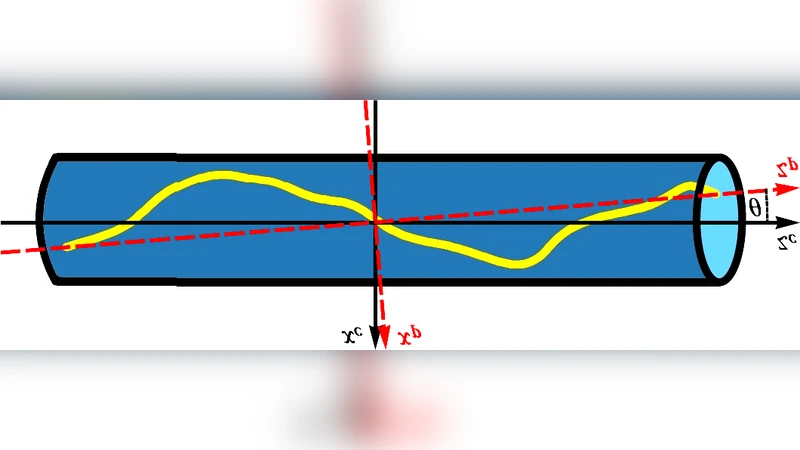
The constraints imposed by nano- and microscale confinement on the conformational degrees of freedom of thermally fluctuating biopolymers are utilized in contemporary nano-devices to specifically elongate and manipulate single chains. A thorough theoretical understanding and quantification of the statistical conformations of confined polymer chains is thus a central concern in polymer physics. We present an analytical calculation of the radial distribution function of harmonically confined semiflexible polymers in the weakly bending limit. Special emphasis has been put on a proper treatment of global modes, i.e. the possibility of the chain to perform global movements within the channel. We show that the effect of these global modes significantly impacts the chain statistics in cases of weak and intermediate confinement. Comparing our analytical model to numerical data from Monte Carlo simulations we find excellent agreement over a broad range of parameters.
💡 Research Summary
This paper addresses a fundamental problem in polymer physics: how confinement at the nano‑ and microscale reshapes the statistical conformations of semiflexible biopolymers such as DNA or actin filaments. The authors focus on the radial distribution function (RDF), which quantifies the probability of finding the polymer’s end‑to‑end vector at a given distance from the channel axis. Their analytical treatment is carried out in the weakly bending limit, where the polymer’s contour length L is much larger than its persistence length ℓp, allowing a small‑angle expansion of the chain’s geometry.
A central novelty of the work is the explicit inclusion of global modes—collective translations and rotations of the entire chain within the confining channel. In many previous studies the polymer was assumed to be fixed at the channel centre, effectively suppressing these degrees of freedom. The authors argue that for weak and intermediate confinement the chain can freely wander inside the channel, and that neglecting this motion leads to systematic errors in the RDF, especially in the tail region.
The model combines a worm‑like chain description of the semiflexible polymer with a harmonic confinement potential V(r)=½kr², where k is the stiffness of the channel walls. The Hamiltonian is split into an internal part (bending energy) and a global part (center‑of‑mass translation and overall rotation). By performing a normal‑mode expansion of the internal fluctuations and integrating over the global coordinates using a path‑integral formalism, the authors derive a closed‑form expression for the RDF. The expression contains two distinct contributions: (i) a narrow Gaussian‑like peak arising from internal bending modes, and (ii) a broader, asymmetric tail generated by the global translational and rotational freedom. The relative weight of these contributions is controlled by the dimensionless confinement parameter κ = kℓp². In the limit κ → 0 (very weak confinement) the global modes dominate and the RDF approaches a simple Gaussian centred at the origin. For κ ≈ 1 (intermediate confinement) both contributions are comparable, producing a markedly non‑Gaussian shape. In the strong‑confinement limit κ → ∞ the global modes are frozen out, and the RDF reduces to the classic result for a tightly confined worm‑like chain.
To validate the theory, extensive Monte‑Carlo simulations were performed for a range of contour‑to‑persistence ratios (L/ℓp = 0.5–10) and confinement strengths (kℓp² spanning three orders of magnitude). The simulated RDFs match the analytical predictions with high precision across the entire parameter space. In particular, the simulations confirm that the inclusion of global modes dramatically improves agreement for weak and intermediate confinement, whereas the traditional fixed‑center approximation fails to capture the observed broadening of the distribution.
The paper concludes that global modes are an essential ingredient for any quantitative description of confined semiflexible polymers unless the confinement is extremely strong. This insight has immediate implications for the design and interpretation of nano‑fluidic devices that manipulate single molecules, such as DNA stretching platforms, nanopore sequencing technologies, and force‑spectroscopy setups. The authors also outline future extensions, including non‑harmonic confinement geometries, the influence of external fields (electric, flow), and the coupling between global modes and hydrodynamic interactions. These extensions promise to broaden the applicability of the present framework to more realistic biological and nanotechnological environments.
Comments & Academic Discussion
Loading comments...
Leave a Comment