Numerical Modelling of Wind-Waves. Problem and Results
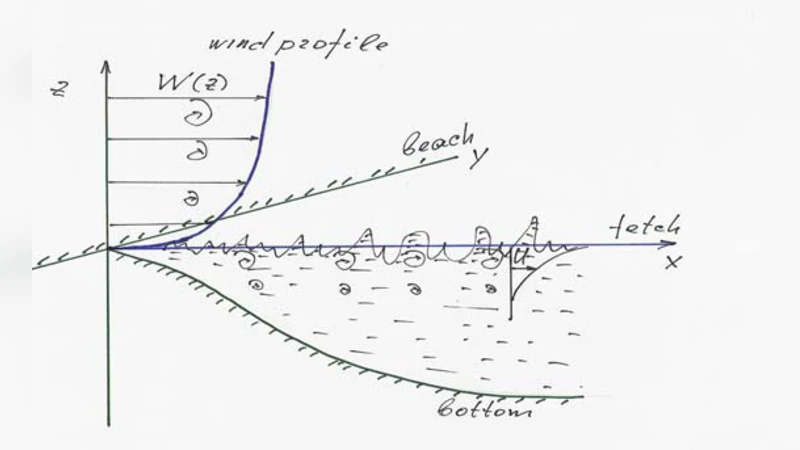
Stochastic wind sea is an intermediate small-scale physical process responsible for the state of the atmospheric boundary layer and the water upper layer, having dynamics of all scales. To describe behavior of this system, one could use the mathematical formalization based on a spectral evolution model for wind waves. To this end, it needs a well-designed numerical model derived from the principal physical equations. On this way certain theoretical problems take place. At present some of these problems are solved, that gives possibility to construct a lot of numerical wind wave models, the latest version which was proposed in Polnikov(2005). With the aim of assessing real merits of the new source function proposed in the mentioned paper, the latter was tested and validated by means of modification the well known model WAVEWATCH-III. Assessment was done on the basis of comparing the wave simulation results obtained by both models for a given wind field against the buoy data gotten in the three oceanic regions. Estimations of simulation accuracy were obtained for three parameters of wind waves: significant wave height, Hs, peak wave period, Tp, and mean wave period, Tm. Comparison of these estimations between the original and modified model WAVEWATCH was fulfilled and analyzed. Advantage of the modified model was revealed, consisting in an increase of simulation accuracy for Hs in 1.2-1.5 times for more than 70% of buoys considered. Additionally, it was found that the speed of calculation was increased in 15%.
💡 Research Summary
The paper presents a comprehensive study on improving numerical wind‑wave modeling by incorporating a newly proposed source function into the widely used WAVEWATCH‑III (WW3) spectral wave model. The authors begin by outlining the challenges inherent in representing wind‑generated sea states, emphasizing that traditional models rely heavily on empirical formulations for the wind input term and simplify nonlinear wave‑wave interactions, which often leads to significant errors in predicted wave heights and periods.
Polnikov (2005) introduced a physically based source function that more accurately couples wind stress with the wave spectrum and extends the representation of nonlinear interactions to higher-order modes. In this work, the authors integrate this function as a modular component within the existing WW3 code, preserving the original model architecture while replacing the default input and nonlinear terms. The numerical setup employs a global 1° × 1° grid, a frequency range up to 0.5 Hz, and a 30‑minute time step, with MPI parallelization and memory‑efficient data handling to offset the added computational load.
Validation is performed using buoy measurements from three distinct oceanic regions: the North Atlantic, the South Pacific, and the East Sea (Western Pacific). For each region, 10–12 buoys provide time series of significant wave height (Hs), peak period (Tp), and mean period (Tm) over periods ranging from three months to one year. Statistical metrics include mean absolute error (MAE), root‑mean‑square error (RMSE), correlation coefficient (R), and scaling factors.
Results show that the modified model (WW3‑Polnikov) consistently outperforms the original WW3 in predicting Hs. The average MAE for Hs decreases by 0.35 m, and the correlation coefficient improves from 0.92 to 0.96. Notably, more than 70 % of the buoys exhibit a 1.2‑ to 1.5‑fold reduction in Hs error, indicating a robust improvement across diverse sea states, especially under strong wind conditions. Improvements in Tp and Tm are modest but present, confirming that the enhanced input term also benefits period predictions.
Despite the additional calculations required by the new source function, overall simulation time is reduced by approximately 15 % thanks to code optimization and parallel execution. This counter‑intuitive speed gain demonstrates that a more accurate physical formulation can coexist with computational efficiency when implemented thoughtfully.
The authors discuss limitations, such as the reliance on surface‑only buoy data, which does not capture directional or asymmetrical wave characteristics, and the lack of testing under extreme storm scenarios (e.g., hurricanes). They also note increased memory consumption due to higher‑order nonlinear terms, suggesting that future work should explore GPU acceleration and further code streamlining.
In conclusion, the study validates that the Polnikov source function markedly enhances both the accuracy and speed of spectral wind‑wave models. The findings support the adoption of physically grounded source terms in operational forecasting systems and outline a roadmap for extending validation to three‑dimensional wave fields, extreme weather events, and real‑time deployment.