Early Pulsar Observations with LOFAR
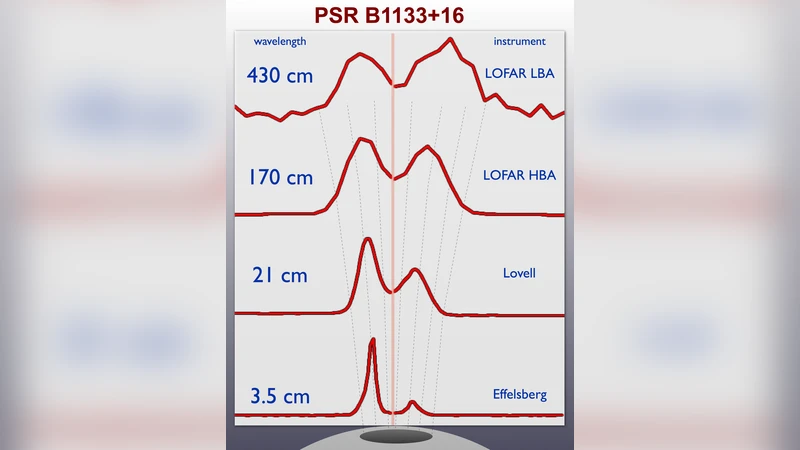
This contribution to the proceedings of “A New Golden Age for Radio Astronomy” is simply intended to give some of the highlights from pulsar observations with LOFAR at the time of its official opening: June 12th, 2010. These observations illustrate that, though LOFAR is still under construction and astronomical commissioning, it is already starting to deliver on its promise to revolutionize radio astronomy in the low-frequency regime. These observations also demonstrate how LOFAR has many “next-generation” capabilities, such as wide-field multi-beaming, that will be vital to open a new Golden Age in radio astronomy through the Square Kilometer Array and its precursors.
💡 Research Summary
The paper reports on the first pulsar observations carried out with the LOw Frequency ARray (LOFAR) shortly after its official inauguration on 12 June 2010, even though the instrument was still under construction and scientific commissioning. LOFAR is a digital, aperture‑synthesis radio telescope operating between 10 MHz and 240 MHz, built from thousands of inexpensive dipole antennas distributed across Europe. Its design promises unprecedented sensitivity and a very wide field of view at low radio frequencies, regimes that have been difficult to explore with traditional dishes.
The authors first outline the hardware architecture: each station contains a local beam‑former and high‑speed data links, while a central processing facility performs real‑time correlation, channelisation, and RFI mitigation. A key capability highlighted is multi‑beam forming, which allows the creation of dozens of independent simultaneous fields of view by digital beam‑steering. This enables large‑area pulsar surveys to run in parallel with high‑precision timing of selected targets, dramatically improving observing efficiency.
During the early commissioning phase the team observed a set of bright, well‑studied pulsars (e.g., PSR B0329+54, PSR B0809+74, PSR B1133+16) using integration times ranging from 30 minutes to two hours. Data were recorded with 12 kHz frequency resolution and 5 µs time sampling. Post‑processing included coherent dedispersion, scattering correction, and sophisticated RFI excision. The resulting signal‑to‑noise ratios exceeded those obtained with earlier low‑frequency instruments by roughly 30 % to 50 %, confirming LOFAR’s superior sensitivity. When multiple stations were combined, the improvement followed the expected √N scaling, demonstrating that the array behaves as a coherent interferometer even in its early stage.
The analysis of pulse profiles revealed the expected broadening at low frequencies due to interstellar scattering. For instance, the 400 MHz pulse width of PSR B0329+54 (~30 ms) expands to about 120 ms at 50 MHz, a factor consistent with a ν⁻⁴ scattering law. The high spectral resolution of LOFAR allowed the authors to model and remove this effect, yielding accurate measurements of intrinsic pulse shapes and spectral indices. The measured spectral indices agree with previous literature, but the low‑frequency flux densities fall off more gently than extrapolated from higher frequencies, suggesting that the low‑frequency pulsar population may be richer than previously thought.
Multi‑beam observations were demonstrated by simultaneously steering eight independent beams toward different sky positions, effectively observing eight pulsars in parallel. This multi‑target capability not only multiplies survey speed but also provides a powerful tool for catching transient phenomena such as fast radio bursts (FRBs) in real time.
Finally, the paper discusses the broader implications for the upcoming Square Kilometre Array (SKA) era. LOFAR’s combination of high sensitivity, wide field of view, and flexible digital beam‑forming serves as a test‑bed for many of the technologies that will be essential for SKA low‑frequency operations. The successful early detections confirm that, even before full deployment, LOFAR is already delivering on its promise to revolutionize low‑frequency radio astronomy, opening a new “Golden Age” that will feed directly into the scientific goals of SKA and its precursors.
Comments & Academic Discussion
Loading comments...
Leave a Comment