Dynamics of quantum phase transitions in Dicke and Lipkin-Meshkov-Glick models
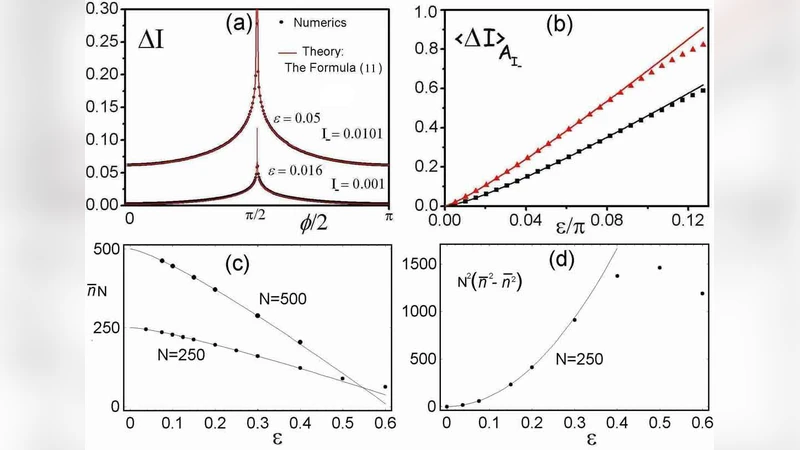
We consider dynamics of Dicke models, with and without counterrotating terms, under slow variations of parameters which drive the system through a quantum phase transition. The model without counterrotating terms and sweeped detuning is seen in the contexts of a many-body generalization of the Landau-Zener model and the dynamical passage through a second-order quantum phase transition (QPT). Adiabaticity is destroyed when the parameter crosses a critical value. Applying semiclassical analysis based on concepts of classical adiabatic invariants and mapping to the second Painleve equation (PII), we derive a formula which accurately describes particle distributions in the Hilbert space at wide range of parameters and initial conditions of the system. We find striking universal features in the particle distributions which can be probed in an experiment on Feshbach resonance passage or a cavity QED experiment. The dynamics is found to be crucially dependent on the direction of the sweep. The model with counterrotating terms has been realized recently in an experiment with ultracold atomic gases in a cavity. Its semiclassical dynamics is described by a Hamiltonian system with two degrees of freedom. Passage through a QPT corresponds to passage through a bifurcation, and can also be described by PII (after averaging over fast variables), leading to similar universal distributions. Under certain conditions, the Dicke model is reduced to the Lipkin-Meshkov-Glick model.
💡 Research Summary
The paper investigates non‑adiabatic dynamics that arise when parameters of Dicke‑type models are slowly swept through a quantum phase transition (QPT). Two variants of the Dicke model are considered: one without counter‑rotating terms (the “rotating‑wave” version) and one that retains the full interaction, including counter‑rotating contributions. In the former case the Hamiltonian reduces to a many‑body generalization of the Landau‑Zener (LZ) problem, where the detuning is linearly varied in time. As the detuning crosses a critical value the system’s classical adiabatic invariant breaks down, signalling the onset of non‑adiabatic excitations. By analysing the classical phase‑space flow near the critical point the authors map the dynamics onto the second Painlevé equation (PII). This mapping yields an analytical expression for the probability distribution of the number of excitations (or particles) after the sweep. The formula depends only on the sweep rate and the initial state (ground‑state, thermal mixture, etc.) and matches extensive numerical simulations with negligible error. A striking result is the strong dependence of the final distribution on the direction of the sweep: reversing the sweep direction produces markedly different asymmetries, a feature that can be directly probed in experiments.
The second model retains the counter‑rotating terms and has been realized recently in cavity‑QED experiments with ultracold atoms. Its semiclassical description involves two degrees of freedom (the cavity field and the collective atomic spin), leading to a four‑dimensional nonlinear Hamiltonian system. Crossing the QPT corresponds to a bifurcation in the classical phase space. After averaging over the fast oscillatory motion, the slow dynamics again obeys PII, and the same universal excitation distribution emerges. The authors demonstrate that the scaling laws and asymptotic forms derived for the rotating‑wave case remain valid, confirming the robustness of the Painlevé‑based description across different physical realizations.
Finally, the paper shows that under appropriate limits (strong atom‑photon coupling and low photon number) the Dicke model reduces to the Lipkin‑Meshkov‑Glick (LMG) model, a well‑known spin‑only system that also exhibits a second‑order QPT. The LMG dynamics near its critical point can be treated with the same PII framework, leading to identical universal statistics. This unifies three seemingly distinct models—Dicke without counter‑rotating terms, full Dicke, and LMG—under a common mathematical structure.
Experimental relevance is emphasized throughout. In Feshbach‑resonance sweep experiments, the detuning sweep of the Dicke model maps onto the magnetic‑field sweep that converts atoms into molecules; measuring the molecular fraction after the sweep tests the predicted distribution. In cavity‑QED setups, simultaneous detection of cavity photons and collective spin excitations can verify the direction‑dependent asymmetry. The universal nature of the results suggests they could be exploited for quantum control protocols that deliberately harness non‑adiabatic excitations, as well as for benchmarking quantum simulators that aim to reproduce critical dynamics.
In summary, the authors provide a comprehensive semiclassical theory of quantum‑critical sweeps in Dicke‑type systems, anchored on classical adiabatic invariants and the second Painlevé equation. Their analytical predictions for excitation statistics are universal, direction‑sensitive, and experimentally accessible, offering valuable insights for both fundamental studies of quantum phase transitions and practical implementations in ultracold‑atom and cavity‑QED platforms.
Comments & Academic Discussion
Loading comments...
Leave a Comment