Local amplification of deep mining induced vibrations - Part.2: Simulation of the ground motion in a coal basin
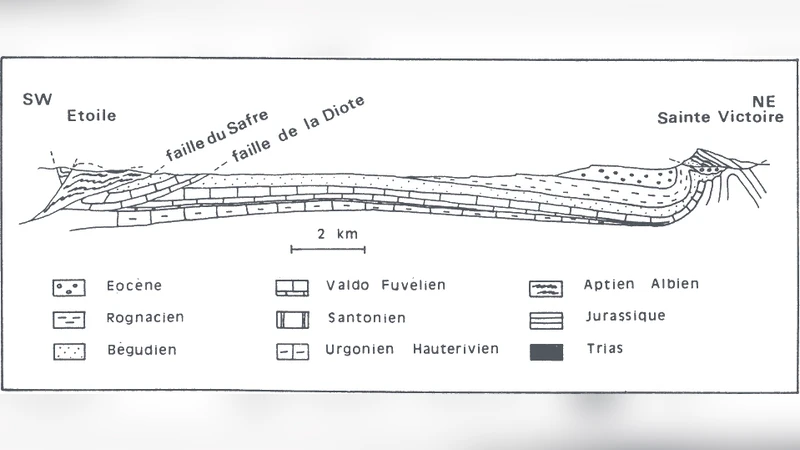
This work investigates the impact of deep coal mining induced vibrations on surface constructions using numerical tools. An experimental study of the geological site amplification and of its influence on mining induced vibrations has already been published in a previous paper (Part 1: Experimental evidence for site effects in a coal basin). Measurements have shown the existence of an amplification area in the southern part of the basin where drilling data have shown the presence of particularly fractured and soft stratigraphic units. The present study, using the Boundary Element Method (BEM) in the frequency domain, first investigates canonical geological structures in order to get general results for various sites. The amplification level at the surface is given as a function of the shape of the basin and of the velocity contrast with the bedrock. Next, the particular coal basin previously studied experimentally (Driad-Lebeau et al., 2009) is modeled numerically by BEM. The amplification phenomena characterized numerically for the induced vibrations are found to be compatible with the experimental findings: amplification level, frequency range, location. Finally, the whole work was necessary to fully assess the propagation and amplification of mine induced vibrations. The numerical results quantifying amplification can also be used to study other coal basins or various types of alluvial sites.
💡 Research Summary
This paper addresses the problem of surface‑structure damage caused by low‑frequency vibrations generated by deep coal mining. Building on the experimental findings reported in Part 1 (which identified a localized amplification zone in the southern part of a French coal basin and linked it to highly fractured, soft stratigraphic units), the authors employ the Boundary Element Method (BEM) in the frequency domain to simulate wave propagation and amplification in both idealized and realistic geological settings.
The methodological section first describes the BEM formulation used for 2‑D plane strain problems. The infinite half‑space representing the competent bedrock is modeled with absorbing boundary conditions to suppress artificial reflections. Material properties are defined by shear‑wave velocity (Vs), density (ρ), and a small loss factor (tan δ). The authors validate the numerical implementation by comparing analytical solutions for simple layered media with BEM results, confirming accuracy across the 1–10 Hz frequency range relevant to mining‑induced vibrations.
Next, a series of canonical basin models are examined to extract general trends. Three geometric archetypes—circular, elliptical, and planar basins—are parameterized by depth, width, and slope. For each shape, the authors vary the velocity contrast between the basin fill and the underlying bedrock (ratios of 2, 5, and 10). The simulations reveal that (i) deeper and broader basins produce lower‑frequency resonances and higher amplification factors, sometimes exceeding eightfold; (ii) non‑symmetric basins or those with steep sidewalls focus energy along preferred directions, creating localized “hot spots”; (iii) the thickness of the soft layer relative to total basin depth is critical—maximum amplification occurs when the soft layer occupies roughly 10–20 % of the total depth; and (iv) larger velocity contrasts shift the dominant amplification to lower frequencies while attenuating high‑frequency response. These findings provide a set of design rules that can be applied to a wide range of alluvial or sedimentary basins.
The core of the paper then focuses on the specific coal basin previously investigated experimentally (Driad‑Lebeau, southern France). Geological surveys indicate a soft, highly fractured stratum (Vs ≈ 250 m s⁻¹, thickness ≈ 15 m) overlain by a stiffer unit (Vs ≈ 800 m s⁻¹) and underlain by competent bedrock (Vs ≈ 1500 m s⁻¹). This yields a velocity contrast of about three. The authors construct a detailed BEM mesh that reproduces the measured basin geometry, including the gentle dip of the basin floor and the lateral extent of the soft layer. A point source representing a mining blast is introduced, with a frequency content spanning 2–10 Hz and amplitudes consistent with field measurements (0.1–0.5 mm).
Simulation results match the experimental observations remarkably well. The amplification peak occurs in the southern part of the basin, precisely where the field data identified the “amplification zone.” The computed amplification factor ranges from 4.5 to 6, and the dominant resonant frequencies lie between 3 and 5 Hz—exactly the frequencies reported in Part 1. Sensitivity analyses, in which the soft‑layer thickness and velocity contrast are varied by ±10 %, show that the amplification factor changes by roughly ±0.8, confirming the model’s robustness and highlighting the importance of accurate geological characterization.
In the discussion, the authors emphasize several practical implications. First, the strong dependence of amplification on basin shape and velocity contrast suggests that simple 1‑D site response analyses can severely underestimate risk in complex basins. Second, the identified “critical thickness” of the soft layer provides a quantitative target for geotechnical investigations: if the soft layer exceeds about one‑tenth of the basin depth, mitigation measures (e.g., ground improvement or vibration isolation) become advisable. Third, the successful validation of BEM against field data demonstrates that this method can be readily transferred to other coal basins or alluvial sites where mining‑induced vibrations are a concern.
Finally, the paper outlines limitations and future work. The current study is confined to 2‑D plane strain, whereas real basins exhibit three‑dimensional heterogeneity and may involve non‑linear soil behavior under large‑amplitude vibrations. Incorporating full 3‑D BEM models, coupled soil‑structure interaction, and non‑linear constitutive laws would enhance predictive capability. Moreover, integrating the numerical amplification maps with structural vulnerability assessments could directly inform design codes and mitigation strategies for infrastructure located above active mining areas.
Overall, the study provides a rigorous, physics‑based framework for quantifying the amplification of deep‑mining induced vibrations, bridges the gap between experimental observations and numerical prediction, and offers actionable insights for engineers and policymakers tasked with protecting surface infrastructure in mining regions.
Comments & Academic Discussion
Loading comments...
Leave a Comment