Search for gamma-ray emission from magnetars with the Fermi Large Area Telescope
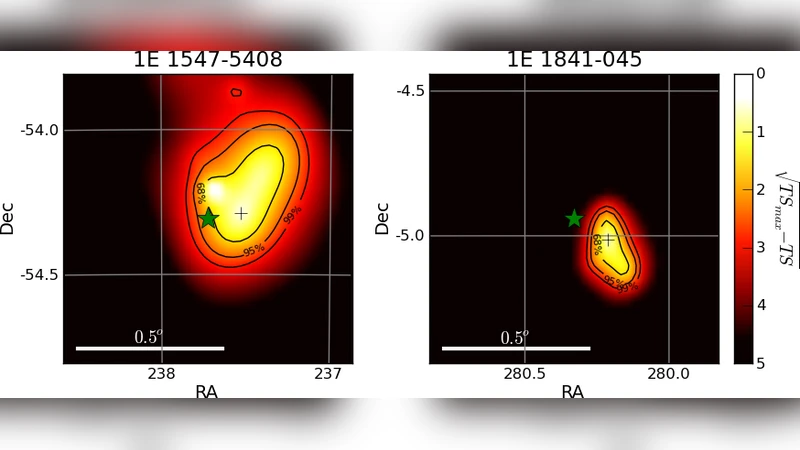
We report on the search for 0.1-10 GeV emission from magnetars in 17 months of Fermi Large Area Telescope (LAT) observations. No significant evidence for gamma-ray emission from any of the currently-known magnetars is found. The most stringent upper limits to date on their persistent emission in the Fermi-LAT energy range are estimated between ~10^{-12}-10^{-10} erg/s/cm2, depending on the source. We also searched for gamma-ray pulsations and possible outbursts, also with no significant detection. The upper limits derived support the presence of a cut-off at an energy below a few MeV in the persistent emission of magnetars. They also show the likely need for a revision of current models of outer gap emission from strongly magnetized pulsars, which, in some realizations, predict detectable GeV emission from magnetars at flux levels exceeding the upper limits identified here using the Fermi-LAT observations.
💡 Research Summary
This paper presents a systematic search for high‑energy gamma‑ray emission from the known population of magnetars using 17 months of observations with the Fermi Large Area Telescope (LAT). Magnetars—highly magnetized neutron stars with surface fields of 10¹⁴–10¹⁵ G—are prolific emitters in the X‑ray and soft‑gamma (keV–MeV) bands, but theoretical models, particularly outer‑gap scenarios, have predicted that some of them could also be detectable in the GeV regime. To test these predictions, the authors selected 17 magnetars (both Anomalous X‑ray Pulsars and Soft Gamma Repeaters) with well‑determined positions and distances, and defined a 10° region of interest (ROI) around each source. They processed Pass 8 SOURCE class events, applied a zenith‑angle cut of < 90° to suppress Earth‑limb contamination, and restricted the analysis to the 100 MeV–10 GeV energy range.
The analysis proceeded in two complementary stages. First, a binned likelihood analysis was performed for each ROI using the standard Fermi Science Tools. Both a simple power‑law and a power‑law with an exponential cutoff were tested as spectral models. The Galactic diffuse emission (gll_iem_v06) and the isotropic background (iso_P8R2_SOURCE_V6) were simultaneously fitted to account for the dominant background components. The Test Statistic (TS) was used as the detection metric; a TS > 25 corresponds roughly to a 5σ detection. All sources yielded TS values well below this threshold (TS ≤ 20), indicating no statistically significant persistent emission. Upper limits on the 0.1–10 GeV flux were derived at the 95 % confidence level, ranging from ≈10⁻¹² to 10⁻¹⁰ erg s⁻¹ cm⁻² depending on the source distance and background conditions.
Second, the authors searched for pulsed emission by folding the LAT photon arrival times with the known spin ephemerides of each magnetar. Updated timing solutions from contemporaneous X‑ray observations were employed, and phase histograms were examined using the H‑test and Z²ₙ statistics. No significant pulsations were detected. In addition, the authors performed a time‑dependent analysis around known X‑ray outbursts (e.g., the giant flare of SGR 1806‑20) to look for transient gamma‑ray flares, but again found no evidence for flux enhancements.
The derived upper limits are among the most stringent ever obtained for magnetars in the GeV band. They are consistent with a spectral cutoff occurring below a few MeV, as inferred from X‑ray/soft‑gamma observations, and they lie well below the flux levels predicted by many outer‑gap models. In several model realizations, the expected GeV flux exceeds the observed limits by one to two orders of magnitude, implying that the simple extrapolation of outer‑gap emission mechanisms to ultra‑strong magnetic fields is not viable. The authors discuss possible reasons for this discrepancy: (i) the extreme magnetic field may suppress particle acceleration in the outer magnetosphere, (ii) photon‑photon pair production and magnetic pair creation could attenuate GeV photons before they escape, and (iii) alternative emission zones such as inner‑gap or slot‑gap regions, or even magnetospheric reconnection processes, might dominate the high‑energy output but produce spectra that cut off sharply at MeV energies.
The paper concludes that, within the sensitivity of the current LAT dataset, magnetars do not emit detectable persistent or pulsed GeV gamma rays. This result places strong constraints on theoretical models of high‑energy emission from strongly magnetized pulsars and suggests that the high‑energy spectrum of magnetars is likely truncated well below the LAT band. The authors recommend longer LAT exposure, coordinated multi‑wavelength campaigns during magnetar outbursts, and future missions with improved MeV sensitivity (e.g., AMEGO, e‑ASTROGAM) or ground‑based Cherenkov arrays (CTA) to probe the critical MeV–GeV transition region. Such observations will be essential to refine our understanding of particle acceleration, radiation processes, and QED effects in the most extreme magnetic environments known in the universe.
Comments & Academic Discussion
Loading comments...
Leave a Comment