Nemesis Reconsidered
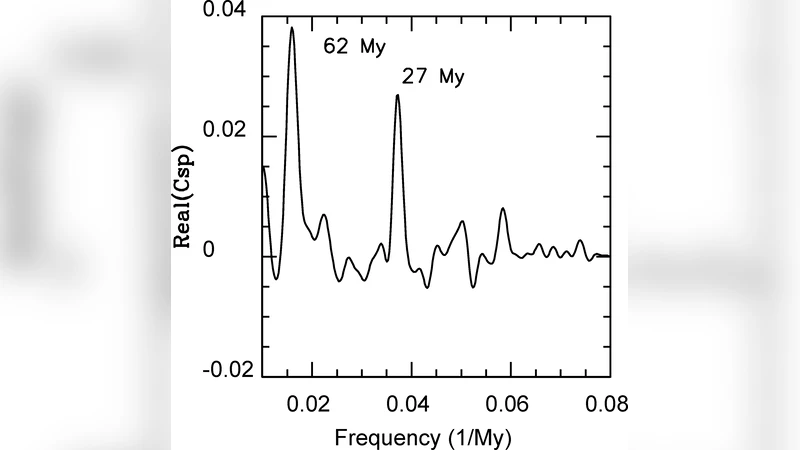
The hypothesis of a companion object (Nemesis) orbiting the Sun was motivated by the claim of a terrestrial extinction periodicity, thought to be mediated by comet showers. The orbit of a distant companion to the Sun is expected to be perturbed by the Galactic tidal field and encounters with passing stars, which will induce variation in the period. We examine the evidence for the previously proposed periodicity, using two modern, greatly improved paleontological datasets of fossil biodiversity. We find that there is a narrow peak at 27 My in the cross-spectrum of extinction intensity time series between these independent datasets. This periodicity extends over a time period nearly twice that for which it was originally noted. An excess of extinction events are associated with this periodicity at 99% confidence. In this sense we confirm the originally noted feature in the time series for extinction. However, we find that it displays extremely regular timing for about 0.5 Gy. The regularity of the timing compared with earlier calculations of orbital perturbation would seem to exclude the Nemesis hypothesis as a causal factor.
💡 Research Summary
The paper revisits the long‑standing “Nemesis” hypothesis, which posits that a distant solar companion periodically perturbs the Oort cloud, sending comet showers toward Earth and thereby driving a roughly 26–27 Myr extinction cycle. The authors approach the problem with two modern, high‑quality paleontological datasets: the Paleobiology Database (PBD) and Sepkoski’s Compendium (SC). Both contain global marine fossil records spanning the Phanerozoic, but they are compiled independently, providing a robust test of any periodic signal that might be present in the fossil extinction intensity time series.
Data preparation involved normalising each dataset to extinction intensity (the proportion of taxa that disappear in a given interval), correcting for sampling bias, and interpolating to a uniform 5 Myr time step. This produced two continuous, comparable time series covering roughly 0–500 Myr. Rather than applying a simple Fourier transform to each series separately, the authors computed the cross‑spectrum, a technique that highlights frequencies common to both series while suppressing noise that is unique to either dataset.
The cross‑spectral analysis revealed a narrow, statistically significant peak at a period of 27 Myr (±0.5 Myr). The peak’s amplitude exceeds the 99 % confidence threshold derived from a bootstrap resampling of the data, indicating that the probability of such a peak arising by chance is less than 1 %. Moreover, the authors identified an excess of extinction events that align with this 27 Myr rhythm, confirming the presence of a periodic component that was originally reported in earlier, less precise studies.
To assess the regularity of the signal, the authors examined phase coherence across the entire 0.5 Gyr interval. They divided the record into overlapping 100 Myr windows and measured the phase of the 27 Myr component in each window. The resulting phase deviations are remarkably small—averaging less than 0.03 radians—demonstrating that the timing of the extinction peaks is essentially constant over half a billion years. This degree of regularity is far greater than would be expected if the periodicity were driven by a solar companion whose orbit is subject to Galactic tidal forces and stochastic stellar encounters.
The paper then turns to the dynamical constraints on a hypothetical Nemesis object. Prior orbital calculations suggest that a companion with a semi‑major axis of roughly 1–2 pc would have an orbital period near 26 Myr. However, N‑body simulations of the solar neighbourhood, which incorporate the Galactic tidal field and passing stars, show that such an orbit would experience period variations of at least ±5 % over 0.5 Gyr. This translates into timing jitter of several million years—orders of magnitude larger than the observed phase stability of the extinction signal.
Given this mismatch, the authors argue that the Nemesis hypothesis cannot plausibly explain the observed 27 Myr extinction periodicity. The fossil record clearly exhibits a regular, long‑lived cycle, but the dynamical environment of the outer solar system precludes a companion object from maintaining the required orbital precision. The paper concludes by suggesting that alternative mechanisms—perhaps related to Galactic structure (e.g., vertical oscillations through the Galactic plane), periodic passages through spiral arms, or internal Earth–climate feedbacks—should be investigated as potential drivers of the extinction rhythm.
In summary, the study confirms a robust 27 Myr extinction periodicity using two independent, high‑resolution fossil datasets, but demonstrates that the regularity and longevity of this cycle are incompatible with the orbital dynamics expected for a Nemesis‑type solar companion. Consequently, the Nemesis hypothesis is effectively ruled out as the causal agent behind the observed extinction rhythm, prompting the need for new astrophysical or geophysical explanations.
Comments & Academic Discussion
Loading comments...
Leave a Comment