Fano resonances in nanoscale structures
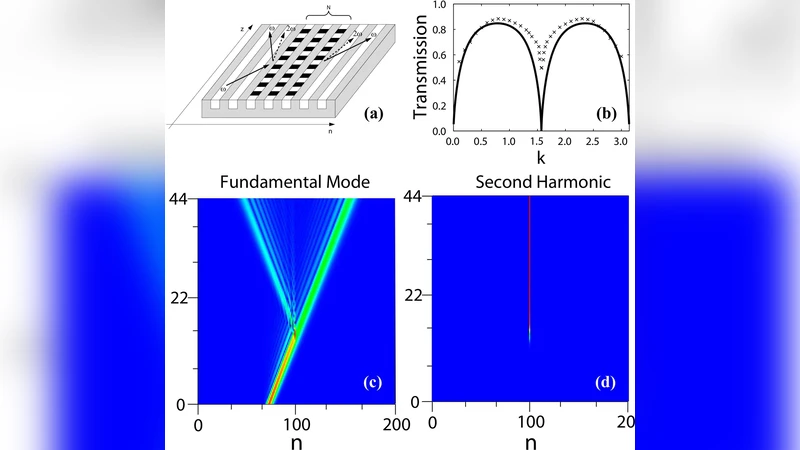
Nowadays nanotechnology allows to scale-down various important devices (sensors, chips, fibres, etc), and, thus, opens up new horizon for their applications. Nevertheless, the efficiency most of them is still based on the fundamental physical phenomena, such as resonances. Thus, the understanding of the resonance phenomena will be beneficial. One of the well-known examples is the resonant enhancement of the transmission known as Breit-Wigner resonances, which can be described by a Lorentzian function. But, in many physical systems the scattering of waves involves propagation along different paths, and, as a consequence, results in interference phenomena, where constructive interference corresponds to resonant enhancement and destructive interference to resonant suppression of the transmission. Recently, a variety of experimental and theoretical work has revealed such patterns in different branches of physics. The purpose of this Review is to demonstrate that this kind of resonant scattering is related to the Fano resonances, known from atomic physics. One of the main features of the Fano resonances is the asymmetric profile. The asymmetry comes from the close coexistence of resonant transmission and resonant reflection. Fano successfully explained such a phenomenon in his seminal paper in 1961 in terms of interaction of a discrete (localized) state with a continuum of propagation modes. It allows to describe both resonant enhancement and resonant suppression in a unified manner. All of these properties can be demonstrated in the frame of a very simple model, which will be used throughout the Review to show that resonant reflections observed in different complex systems are indeed closely related to the Fano resonances.
💡 Research Summary
This review article surveys the phenomenon of Fano resonances in nanoscale structures and demonstrates how they provide a unified framework for understanding both resonant transmission enhancement and resonant suppression observed in a wide variety of nanophotonic, nanoacoustic, and nanoelectronic devices. The authors begin by contrasting the familiar Breit‑Wigner (Lorentzian) resonance, which yields a symmetric transmission peak, with the asymmetric line shapes that arise when a discrete, localized state interferes with a continuum of propagation modes. This interference produces a characteristic profile first described by Ugo Fano in 1961: a sharp peak accompanied by a deep dip, mathematically expressed as
\
Comments & Academic Discussion
Loading comments...
Leave a Comment