A Study of Medium Access Control Protocols for Wireless Body Area Networks
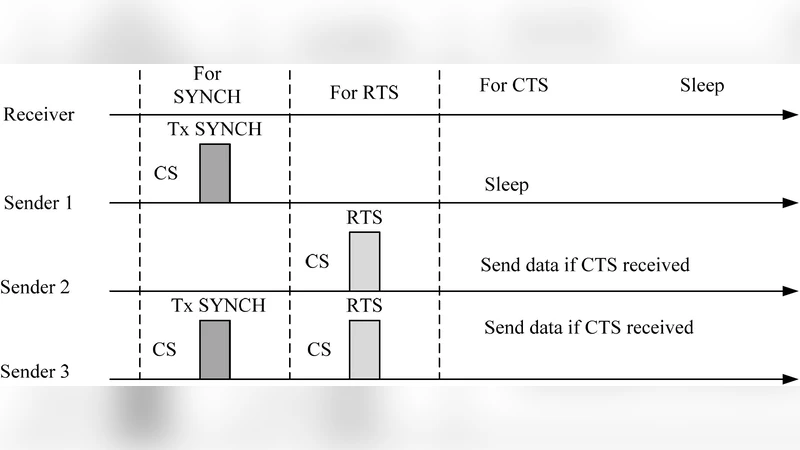
The seamless integration of low-power, miniaturised, invasive/non-invasive lightweight sensor nodes have contributed to the development of a proactive and unobtrusive Wireless Body Area Network (WBAN). A WBAN provides long-term health monitoring of a patient without any constraint on his/her normal dailylife activities. This monitoring requires low-power operation of invasive/non-invasive sensor nodes. In other words, a power-efficient Medium Access Control (MAC) protocol is required to satisfy the stringent WBAN requirements including low-power consumption. In this paper, we first outline the WBAN requirements that are important for the design of a low-power MAC protocol. Then we study low-power MAC protocols proposed/investigated for WBAN with emphasis on their strengths and weaknesses. We also review different power-efficient mechanisms for WBAN. In addition, useful suggestions are given to help the MAC designers to develop a low-power MAC protocol that will satisfy the stringent WBAN requirements.
💡 Research Summary
The paper provides a comprehensive review and technical analysis of medium‑access‑control (MAC) protocols tailored for Wireless Body Area Networks (WBANs), which consist of miniature, low‑power sensor nodes placed on or inside the human body for continuous health monitoring. The authors begin by outlining the unique constraints of WBANs: extremely limited energy resources, severe path loss and multipath fading caused by human tissue, stringent latency requirements for critical medical data, and the need for robust security and privacy. These constraints dictate that a MAC layer must simultaneously achieve ultra‑low power consumption, high reliability, and adaptable latency.
The study categorizes existing low‑power MAC solutions into three main families: TDMA‑based, CSMA/CA‑based, and hybrid approaches. TDMA protocols allocate fixed time slots to each node, eliminating collisions and enabling precise sleep‑wake scheduling. While this yields excellent energy efficiency under stable traffic, the fixed slot structure leads to increased queuing delay and control overhead when traffic bursts occur, which is common in event‑driven medical monitoring. CSMA/CA protocols, by contrast, offer flexibility in handling variable traffic but suffer from collision detection, retransmission penalties, and reduced sensitivity in the highly attenuated body channel, resulting in higher energy expenditure.
Hybrid schemes attempt to combine the strengths of both worlds. For instance, an emergency channel based on ALOHA‑like rapid transmission can be opened for urgent physiological alerts, while routine data are conveyed through scheduled TDMA slots. Dynamic mode switching requires accurate network‑state awareness, traffic prediction, and power‑budget management, making it a promising but complex design direction.
The authors then examine specific power‑saving mechanisms that can be integrated into any MAC design. Asynchronous sleep scheduling allows nodes to wake only when they detect a locally generated event, achieving 30‑40 % more energy savings compared to synchronous schedules. Event‑driven data compression reduces the volume of transmitted bits, and transmit‑power control adapts the radio output to compensate for body‑induced loss without wasting energy. Cooperative routing and load‑balancing among relay nodes further distribute the energy burden across the network.
In addition to protocol‑level techniques, the paper emphasizes the importance of realistic channel modeling. Most prior work relies on generic indoor or outdoor channel models, which do not capture the variability of tissue composition, posture, and movement among patients. Accurate body‑centric models are essential for setting appropriate carrier‑sense thresholds, slot lengths, and retransmission policies.
Future research directions identified include: (1) machine‑learning‑driven traffic prediction and adaptive slot reallocation, (2) lightweight authentication and encryption schemes that preserve the low‑power budget, (3) multi‑band or frequency‑diversity strategies to mitigate deep fades, and (4) cross‑layer designs that jointly optimize MAC scheduling, routing, and application‑level sampling rates.
In conclusion, the paper argues that a next‑generation WBAN MAC protocol must be a highly adaptive, hybrid system that leverages asynchronous sleep, dynamic slot management, and body‑aware channel information to meet the trifecta of ultra‑low power, minimal latency, and high reliability. By following the design guidelines and research avenues outlined, future MAC solutions can enable truly unobtrusive, long‑term health monitoring without compromising patient safety or device longevity.
Comments & Academic Discussion
Loading comments...
Leave a Comment