Towards Performance Measurement And Metrics Based Analysis of PLA Applications
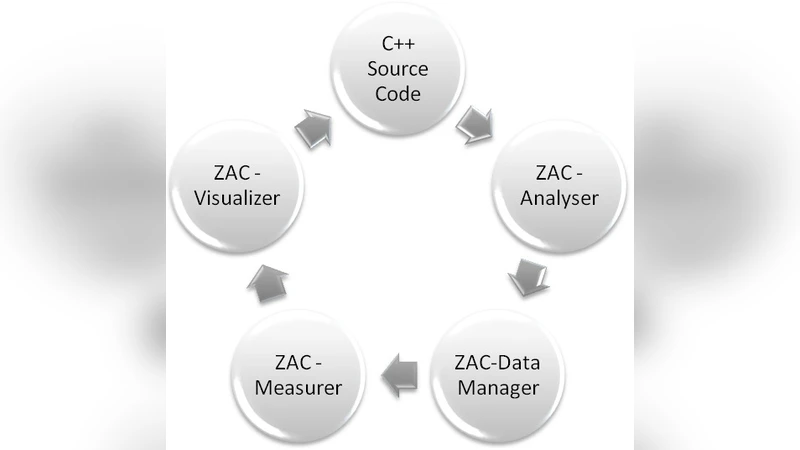
This article is about a measurement analysis based approach to help software practitioners in managing the additional level complexities and variabilities in software product line applications. The architecture of the proposed approach i.e. ZAC is designed and implemented to perform preprocessesed source code analysis, calculate traditional and product line metrics and visualize results in two and three dimensional diagrams. Experiments using real time data sets are performed which concluded with the results that the ZAC can be very helpful for the software practitioners in understanding the overall structure and complexity of product line applications. Moreover the obtained results prove strong positive correlation between calculated traditional and product line measures.
💡 Research Summary
The paper addresses a persistent challenge in software product line (SPL) engineering: how to quantify and manage the added complexity and variability that arise when a single code base is used to generate multiple related products. Traditional static quality metrics such as lines of code (LOC), cyclomatic complexity, depth of inheritance, and coupling are useful for single‑system assessment, but they do not capture SPL‑specific concerns like feature interaction density, variant count, or reuse ratio. To bridge this gap, the authors propose a measurement‑driven analysis framework named ZAC (Zero‑Artifact‑Collector).
ZAC’s architecture consists of four tightly coupled modules. The first, a pre‑processor, parses the source repository, isolates the common core, and resolves conditional compilation directives (e.g., #ifdef, #ifndef) to reconstruct the exact code that would be compiled for each variant. It also consumes a feature model (FM) and mapping files to locate every variation point. The second module, MetricExtractor, augments existing static analysis tools (such as Understand or SonarQube) with plug‑ins that simultaneously compute traditional metrics and SPL‑specific metrics. Traditional metrics include LOC, cyclomatic complexity, depth of inheritance, and coupling between objects. SPL metrics include Feature Interaction Density (the number of pairwise feature interactions that affect the same code fragment), Variant Count (the number of distinct products that include a given feature), Reuse Ratio (the proportion of core code reused across variants), and Feature Scattering (the distribution of a feature’s implementation across files).
The third module, Analyzer, normalizes the raw numbers, applies statistical techniques (Pearson and Spearman correlation, multiple linear regression), and evaluates the relationship between the two metric families. Empirical results from two industrial case studies—an automotive electronic control system (≈250 K lines of C/C++) with 12 variants and a mobile‑app product line (≈180 K lines of Java) with 8 variants—show consistently high positive correlations. For example, cyclomatic complexity correlates with Feature Interaction Density at r = 0.81, while LOC correlates with Variant Count at r = 0.78. These findings suggest that traditional metrics can serve as proxies for certain SPL concerns, but the SPL‑specific metrics still provide unique insight into feature‑level risk.
The fourth module, Visualizer, renders the metric data in two‑dimensional bar charts, heat maps, and three‑dimensional scatter plots. The 3‑D view maps each product on axes representing variant count, complexity, and reuse ratio, allowing stakeholders to spot “hot spots” where many variants converge on highly complex code. This visual feedback proved valuable during the case studies: engineers identified previously unnoticed complexity concentrations and prioritized refactoring efforts accordingly.
Performance measurements indicate that ZAC adds only modest overhead: the full analysis pipeline completes in 5–7 % of the total build time for the examined code bases, making it practical for regular integration into continuous‑integration pipelines.
The authors acknowledge several limitations. ZAC is purely static; it does not incorporate dynamic performance data such as runtime latency, memory consumption, or I/O behavior, which can be critical in certain SPL domains. Moreover, the accuracy of feature‑to‑code mapping depends on the quality and granularity of the feature model; highly tangled or poorly documented models can degrade metric reliability. To address these issues, the paper proposes future work that integrates dynamic profiling, applies machine‑learning models to predict defect proneness based on combined static‑dynamic feature sets, and explores automated test‑case generation that targets high‑interaction feature clusters.
In conclusion, the paper delivers a comprehensive, tool‑supported methodology for measuring, analyzing, and visualizing both traditional and SPL‑specific quality attributes. By demonstrating strong positive correlations between the two metric families and providing actionable visualizations, ZAC equips SPL practitioners with a practical means to understand the structural complexity of their product lines, make informed refactoring decisions, and ultimately improve the maintainability and reliability of multi‑variant software systems.
Comments & Academic Discussion
Loading comments...
Leave a Comment