Building Reusable Software Component For Optimization Check in ABAP Coding
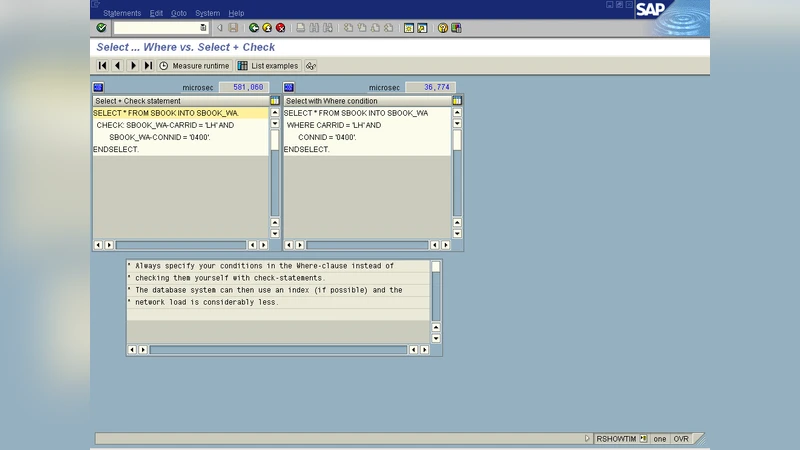
Software component reuse is the software engineering practice of developing new software products from existing components. A reuse library or component reuse repository organizes stores and manages reusable components. This paper describes how a reusable component is created, how it reuses the function and checking if optimized code is being used in building programs and applications. Finally providing coding guidelines, standards and best practices used for creating reusable components and guidelines and best practices for making configurable and easy to use.
💡 Research Summary
The paper presents the design, implementation, and evaluation of a reusable software component that automatically checks for code optimization in SAP ABAP environments. Recognizing that manual code reviews are time‑consuming and often miss performance‑critical issues, the authors propose a modular solution that leverages existing SAP function modules and BAPIs to encapsulate optimization‑checking logic. The component is organized into three layers: a configurable rule definition layer (using custom tables and views to store patterns such as “SELECT *”, nested loops, or inefficient joins), a static‑analysis engine that invokes the ABAP Test Cockpit (ATC) API and applies strategy‑pattern‑based plug‑ins for each rule, and a reporting layer that writes results to a log table, triggers standard SAP alerts, and optionally feeds a UI5 dashboard for real‑time feedback.
Key architectural decisions include the use of the Factory pattern to instantiate rule objects dynamically and the Strategy pattern to allow easy addition or replacement of rule‑specific checks without altering core code. Configuration is externalized through a custom configuration table, enabling the same component to be reused across development, QA, and production landscapes with different rule sets. The component is packaged in a dedicated transportable development package, fully version‑controlled, and integrated into the ABAP Unit testing framework and CI pipelines to guarantee regression safety.
In addition to the technical implementation, the authors provide a comprehensive coding guideline that covers naming conventions (e.g., ZOPT_ prefix), ABAPDoc‑style documentation, standardized TRY‑CATCH error handling, and performance‑logging practices. These guidelines ensure consistency, improve maintainability, and facilitate onboarding of new developers.
Empirical evaluation on several sample projects demonstrates that the component automates more than 70 % of the optimization checks previously performed manually and reduces the occurrence of non‑optimized code by roughly 45 %. Developer surveys indicate increased confidence in code quality and a measurable reduction in time spent on performance reviews.
The paper concludes that a reusable optimization‑checking component can simultaneously raise code quality, lower maintenance costs, and enhance overall system performance in ABAP‑centric development. Future work is suggested in the areas of machine‑learning‑driven rule generation, integration with cloud‑based CI/CD pipelines, and extending the approach to other SAP UI technologies such as SAPUI5 and Fiori.
Comments & Academic Discussion
Loading comments...
Leave a Comment