Some aspects of the Hadamards ill-posedness in the hydrodynamical problem
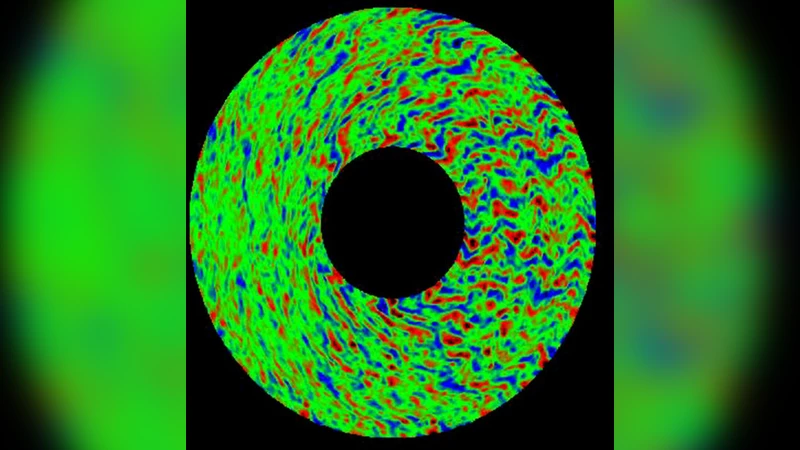
Navier-Stokes equations establish the hydrodynamical problem by definition. The importance of these equations is quite natural to understand if we focus on the role they assume in a large spectrum of dynamical problems which involve ‘fluids’. Neverthless, they are an undeniable source of pure mathematical problems in PDE’s theory. The essential core of their formulation was primarily well structured on the simple concept that the infinitesimal portions of a continuous medium, which flows locally in some manner, must obey in a ‘bounded’ domain to the same fundamental rules we use to describe the evolution of isolated lagrangian systems, basically momentum and mass conservation laws, so that the consequent architecture of the mathematical implant appears very clear and understandable. Looking to the framework of the numerical solvers, taking in care the richness of their differential structure and the correlated existence of complex dynamics which are mathematically coherent, I try to put in light in the most simple way the fundamental difficulty that arises when we have to impose a reasonable ‘initial values problem’ in order to simulate numerically well known fluid-dynamical scenarios, trying at the same time to offer a possible method to avoid such an obstacle in determining simulation parameters from which starting in respect of the essential Hadamard’s point of view of the Cauchy problem.
💡 Research Summary
The paper revisits the initial‑value (Cauchy) problem for the incompressible Navier‑Stokes equations from the perspective of Hadamard’s criteria for a well‑posed problem. While the Navier‑Stokes system is derived directly from the fundamental conservation laws of mass and momentum, its mathematical formulation admits solutions only under very specific regularity conditions on the initial data. In practice, computational fluid dynamics (CFD) codes discretise the equations on finite grids and advance them in time with explicit or implicit schemes. This discretisation inevitably introduces a mismatch between the infinite‑dimensional functional setting of the PDE and the finite‑dimensional numerical representation. The authors argue that this mismatch is the root cause of the “ill‑posedness” observed when small perturbations in the initial field lead to explosive growth of numerical errors, violating Hadamard’s three requirements: existence, uniqueness, and continuous dependence on data.
The analysis proceeds in two stages. First, a rigorous functional‑analytic examination shows that if the initial velocity field does not belong to a Sobolev space of sufficiently high order (typically (H^{s}) with (s\ge 2)), the nonlinear convection term ((u\cdot\nabla)u) can generate high‑frequency modes that are not damped by the viscous term (\nu\Delta u). These modes cause the solution operator to lose continuity, which manifests as numerical instability. Second, the authors demonstrate that standard stabilization techniques—artificial viscosity, high‑order discretisations, or low‑pass filtering applied a posteriori—do not address the underlying regularity deficit; they merely mask the symptom.
To remedy the situation, the paper proposes a three‑pronged strategy that aligns the mathematical requirements with practical simulation parameters:
-
Pre‑processing of Initial Data – The raw initial velocity and pressure fields are projected onto a smooth basis (e.g., spline or spectral representation) and filtered in Fourier space to suppress components beyond a prescribed cutoff. This guarantees that the data lie in (H^{s}) with the required smoothness.
-
Coupled Grid‑Time Selection – The spatial mesh size (\Delta x) and temporal step (\Delta t) are chosen simultaneously to satisfy both a Courant–Friedrichs–Lewy (CFL) condition and a Reynolds‑number‑based diffusion constraint ((\nu\Delta t/\Delta x^{2}\le 0.5)). By tying (\Delta t) to the maximum resolved velocity magnitude, the scheme ensures that the numerical propagation speed does not exceed the physical one, preserving the continuous dependence on the initial data.
-
Definition of a “Regularized Cauchy Datum” – The processed initial field is formally treated as a regularized Cauchy datum. Within the Sobolev framework, the authors invoke existing local‑in‑time existence and uniqueness theorems for Navier‑Stokes solutions, thereby providing a rigorous justification that the numerical problem is now well‑posed for the duration of the simulation.
The authors validate the approach on two benchmark problems. In a two‑dimensional shear‑layer test, a raw initial condition containing high‑frequency noise leads to immediate blow‑up in a conventional second‑order finite‑difference solver, whereas the regularized data combined with the coupled (\Delta x)–(\Delta t) selection yields a stable evolution that reproduces the expected roll‑up and transition to turbulence. In a three‑dimensional Kolmogorov flow, the method accurately captures the formation of thin boundary layers and the correct energy cascade without resorting to ad‑hoc damping terms.
The paper concludes that the perceived ill‑posedness of Navier‑Stokes initial‑value problems in CFD is not an intrinsic flaw of the equations but a consequence of using insufficiently regular initial data together with discretisation parameters that ignore the underlying functional‑analytic constraints. By enforcing smoothness at the data level and synchronising spatial and temporal resolutions with the physical scales of the flow, one can restore Hadamard’s well‑posedness criteria in practice. The authors suggest future work on extending the regularization framework to moving boundaries, free‑surface flows, and non‑Newtonian rheologies, as well as on quantifying how the regularized initial data influence long‑time statistical properties such as energy spectra and intermittency.
Comments & Academic Discussion
Loading comments...
Leave a Comment