Software Effort Estimation using Radial Basis and Generalized Regression Neural Networks
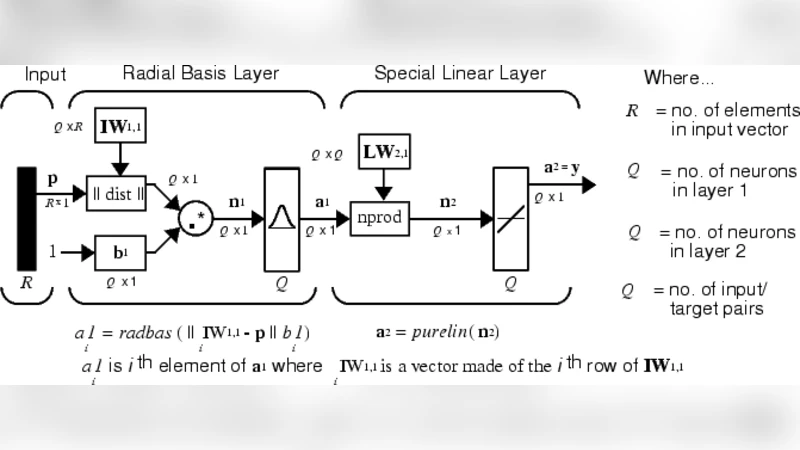
Software development effort estimation is one of the most major activities in software project management. A number of models have been proposed to construct a relationship between software size and effort; however we still have problems for effort estimation. This is because project data, available in the initial stages of project is often incomplete, inconsistent, uncertain and unclear. The need for accurate effort estimation in software industry is still a challenge. Artificial Neural Network models are more suitable in such situations. The present paper is concerned with developing software effort estimation models based on artificial neural networks. The models are designed to improve the performance of the network that suits to the COCOMO Model. Artificial Neural Network models are created using Radial Basis and Generalized Regression. A case study based on the COCOMO81 database compares the proposed neural network models with the Intermediate COCOMO. The results were analyzed using five different criterions MMRE, MARE, VARE, Mean BRE and Prediction. It is observed that the Radial Basis Neural Network provided better results
💡 Research Summary
Software effort estimation remains a critical yet challenging activity in project management, especially during the early phases when data are often incomplete, inconsistent, and noisy. Traditional algorithmic models such as the Constructive Cost Model (COCOMO) rely on empirically derived equations that assume relatively linear relationships between size, cost drivers, and effort. In practice, however, the interactions among these variables are highly non‑linear, and the presence of uncertainty degrades the accuracy of such models. This paper addresses these shortcomings by developing two artificial neural network (ANN) based estimators: a Radial Basis Function Neural Network (RBFNN) and a Generalized Regression Neural Network (GRNN). Both networks are designed to complement the Intermediate COCOMO framework and to improve prediction performance on the classic COCOMO81 dataset.
The RBFNN architecture consists of an input layer, a single hidden layer populated with radial basis functions (Gaussian kernels), and a linear output layer. Training proceeds in two stages: (1) the centers of the radial functions are initialized using k‑means clustering, and (2) the output weights are obtained by solving a linear least‑squares problem. This approach yields fast convergence, reduces the risk of over‑fitting, and requires relatively few parameters. The GRNN, by contrast, is a non‑parametric kernel regression model that stores all training samples and computes the output as a weighted average of target values, where the weights are determined by a Gaussian kernel with a single smoothing parameter (σ). Because only σ must be tuned, GRNN is simple to implement and robust to small, noisy datasets.
The experimental protocol uses the 81‑project COCOMO81 database, which provides KLOC, fifteen cost‑driver ratings, and actual effort (person‑months) for each project. After normalizing all inputs to the
Comments & Academic Discussion
Loading comments...
Leave a Comment