A rate-distortion scenario for the emergence and evolution of noisy molecular codes
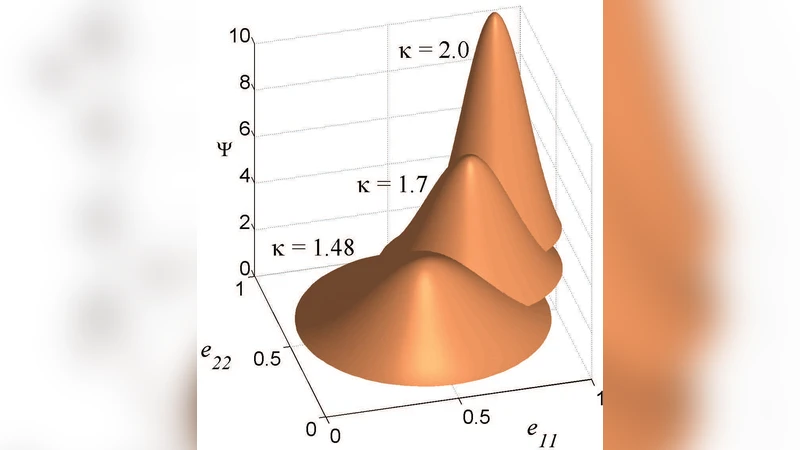
We discuss, in terms of rate-distortion theory, the fitness of molecular codes as the problem of designing an optimal information channel. The fitness is governed by an interplay between the cost and quality of the channel, which induces smoothness in the code. By incorporating this code fitness into population dynamics models, we suggest that the emergence and evolution of molecular codes may be explained by simple channel design considerations.
💡 Research Summary
The paper presents a novel perspective on the evolution of molecular coding systems—such as the genetic code—by framing them as optimal information channels governed by rate‑distortion theory. The authors begin by noting that biological codes must transmit functional meaning (e.g., amino‑acid identity) through noisy molecular processes while operating under strict energetic and material constraints. Traditional evolutionary models often treat cost and fidelity separately, but the authors argue that a unified fitness function naturally emerges when the two are combined in a rate‑distortion framework.
In the theoretical section, the authors define an input alphabet (e.g., codons) and an output alphabet (e.g., amino acids) linked by a stochastic mapping p(y|x). The average distortion D quantifies the expected functional error between intended and realized symbols, while the average rate R corresponds to the mutual information required to encode the mapping. By introducing a cost term C that captures the energetic and structural burden of maintaining a particular mapping, they construct a fitness function F = −λ C − (1 − λ) D, where λ balances the relative importance of cost versus accuracy.
Applying the method of Lagrange multipliers yields a Boltzmann‑type optimal mapping p(y|x) ∝ p(y) exp
Comments & Academic Discussion
Loading comments...
Leave a Comment