High-field Carrier Velocity and Current Saturation in Graphene Field-Effect Transistors
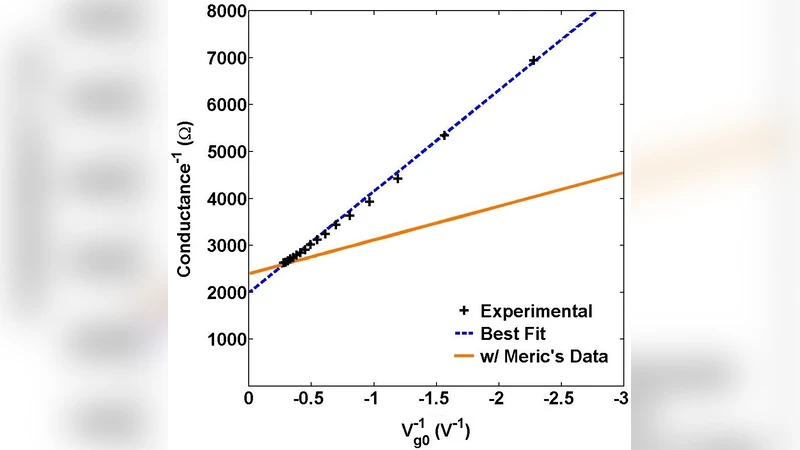
We obtain the output characteristics of graphene field-effect transistors by using the charge-control model for the current, based on the solution of the Boltzmann equation in the field-dependent relaxation time approximation. Closed expressions for the conductance, transconductance and saturation voltage are derived. We found good agreement with the experimental data of Meric et al. [1], without assuming a carrier density-dependent velocity saturation.
💡 Research Summary
This paper presents a compact, physics‑based model for the high‑field operation of graphene field‑effect transistors (GFETs). The authors start from the Boltzmann transport equation and adopt a field‑dependent relaxation‑time approximation, τ(E)=τ0/(1+β|E|), to capture the reduction of carrier scattering time as the electric field increases. By substituting this τ(E) into the expression for carrier mobility μ(E)=qτ(E)/m* and recognizing that graphene’s carriers behave as massless Dirac fermions (so that the effective mass is replaced by the Fermi velocity vF), the carrier velocity becomes v(E)=μ(E)E.
The charge‑control model is then employed: the channel charge per unit area is Q=Cg(VGS−Vth), where Cg is the gate capacitance per unit area and Vth the threshold voltage. The drain current is written as
I_D = (W/L) Q v(E) = (W/L) Cg(VGS−Vth) μ0 E/(1+β|E|),
with μ0 = qτ0/m* the low‑field mobility and E≈VDS/L the average longitudinal field. This formulation yields closed‑form expressions for the small‑signal conductance g_D = ∂I_D/∂VDS, the transconductance g_m = ∂I_D/∂VGS, and, most importantly, the saturation voltage VDS,sat at which the current ceases to increase linearly with VDS. Setting ∂I_D/∂VDS = 0 gives
VDS,sat = (L/μ0)(1/β)