Magnetically modulated fluorescent probes in turbid media
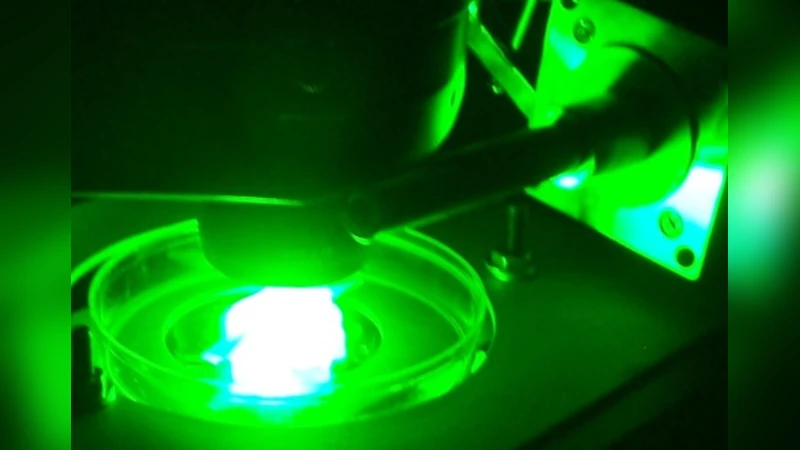
Magnetically modulated optical nanoprobes (MagMOONs) were used to detect and distinguish probe fluorescence from autofluorescent backgrounds in turbid media. MagMOONs are micro/nano-sized particles with magnetically controlled orientation and orientation-dependent fluorescence. These probes blink when they rotate in response to rotating external magnetic fields. This blinking signal can be separated from backgrounds enabling spectrochemical sensing in media with strong autofluorescence. We explore the effect of scattering on MagMOON fluorescence. Turbid media reduce the modulated MagMOON signal due to a combination of attenuation of fluorescence signal and reduction in contrast between “On” and “Off” states. The blinking MagMOON fluorescence spectrum can be detected in turbid non-dairy creamer solution with extinction 2.0, and through 9 mm of chicken breast tissue, suggesting that whole mouse imaging is feasible by using this strategy.
💡 Research Summary
This paper presents a comprehensive study of Magnetically Modulated Optical Nanoprobes (MagMOONs) and demonstrates their ability to isolate probe fluorescence from strong autofluorescent backgrounds in highly scattering media. MagMOONs are micro‑ or nano‑sized particles that combine a magnetic core with a fluorophore coating. When subjected to an externally rotating magnetic field, each particle experiences a magnetic torque that forces it to rotate at a controlled angular velocity. Because the fluorophore layer is anisotropically distributed on the particle surface, fluorescence is emitted strongly only when the “bright” side of the particle faces the detector (the “On” state) and is largely quenched when the opposite side faces the detector (the “Off” state). This binary orientation‑dependent emission creates a periodic blinking signal whose frequency is set by the magnetic field rotation rate.
The authors first optimized particle design. Particles ranging from 200 nm to 2 µm were fabricated, and the relationship between particle size, magnetic torque, and rotational speed was quantified. Smaller particles rotated more readily, achieving higher modulation depths (the intensity difference between On and Off states). An external field of 10 mT rotating at 5 Hz produced the most stable blinking without causing particle aggregation.
To assess performance in turbid environments, the team measured MagMOON fluorescence in a series of non‑dairy creamer solutions with optical densities (OD) from 0.5 to 2.0. Even at OD = 2.0—corresponding to a mean free path of only a few millimeters—the modulated component remained detectable. While overall fluorescence intensity fell by roughly an order of magnitude due to scattering and absorption, the signal‑to‑noise ratio (SNR) of the modulated component decreased by only ~3 dB because the background autofluorescence, which is unmodulated, does not contribute power at the modulation frequency.
The most biologically relevant test involved transmitting the signal through 9 mm of chicken breast tissue, a proxy for mammalian soft tissue. Tissue exhibits strong scattering (µs′ ≈ 10 mm⁻¹) and intrinsic autofluorescence from collagen and NADH. After the light passed through the tissue, the authors performed a Fourier analysis of the recorded time trace. A distinct peak at the driving frequency (5 Hz) was clearly visible, confirming that the modulated fluorescence survived the scattering medium. The modulation depth was reduced by ~30 % relative to the non‑tissue case, yet remained sufficient for quantitative spectral reconstruction.
These results suggest that whole‑mouse imaging (typical thickness ≈10 mm) is feasible using MagMOONs, provided that a modest rotating magnetic field can be generated around the animal. The authors discuss practical implementation: a compact Helmholtz coil system could deliver the required field with low power consumption, and surface functionalization (e.g., PEGylation) would render the particles biocompatible for in‑vivo studies.
Beyond simple fluorescence detection, the paper outlines several future directions. Because the magnetic field controls particle orientation, MagMOONs could be synchronized with other modalities such as photo‑acoustic imaging or magnetic resonance, enabling multimodal contrast agents. Embedding drug molecules within the particle matrix would allow magnetic triggering of release, while co‑encapsulating temperature‑sensitive dyes could provide simultaneous thermometry. The authors also note challenges: ensuring uniform magnetic field rotation across large volumes, preventing particle aggregation in physiological fluids, and assessing long‑term toxicity of magnetic cores.
In summary, the study demonstrates that magnetically driven orientation‑dependent fluorescence provides a robust, frequency‑encoded signal that can be extracted from highly scattering, autofluorescent environments. By exploiting the temporal dimension rather than relying solely on spectral filtering, MagMOONs open a new pathway for deep‑tissue optical sensing and imaging, with potential applications ranging from molecular diagnostics to targeted therapy monitoring.
Comments & Academic Discussion
Loading comments...
Leave a Comment