Whats wrong with Phong - Designers appraisal of shading in CAD-systems
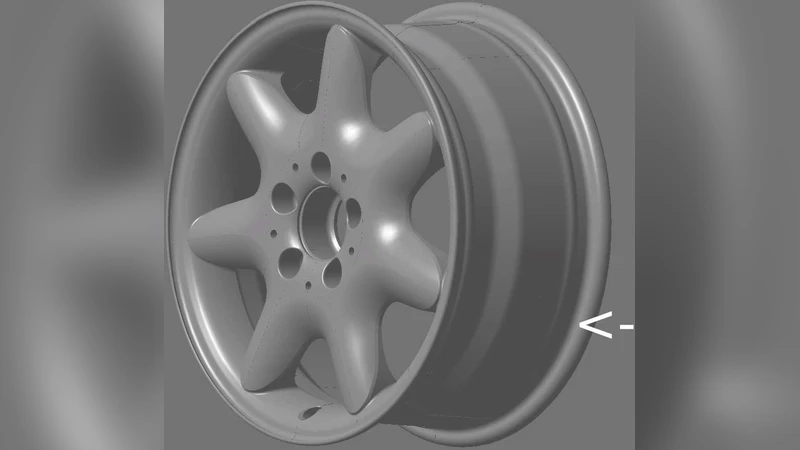
The Phong illumination model is still widely used in realtime 3D visualization systems. The aim of this article is to document problems with the Phong illumination model that are encountered by an important professional user group, namely digital designers. This leads to a visual evaluation of Phong illumination, which at least in this condensed form seems still to be missing in the literature. It is hoped that by explicating these flaws, awareness about the limitations and interdependencies of the model will increase, both among fellow users, and among researchers and developers.
💡 Research Summary
The paper “What’s wrong with Phong – Designers appraisal of shading in CAD‑systems” investigates the practical shortcomings of the Phong illumination model as experienced by professional digital designers who rely on CAD tools for real‑time visualization. Although Phong has been the de‑facto standard for interactive rendering since its introduction in 1975, the authors argue that its mathematical simplicity hides a series of visual artefacts that directly interfere with design decision‑making, material evaluation, and final product quality.
Methodologically the study combines two complementary approaches. First, a series of semi‑structured interviews and an online questionnaire were conducted with thirty designers from automotive, product, and industrial design studios. Participants were asked to describe the most frequent visual problems they encounter when using the default Phong shading in commercial CAD packages (SolidWorks, CATIA, Rhino, etc.). Second, the authors performed a systematic visual comparison of rendered objects under controlled conditions: a set of canonical geometries (sphere, cylinder, free‑form surface) were rendered with Phong using a variety of material presets (metal, plastic, glass) and lighting configurations (single point light, environment light). Quantitative metrics such as highlight size, specular fall‑off, colour shift (CIEDE2000 ΔE), and perceived brightness change were recorded.
Four major categories of deficiency emerged from the data.
-
Unrealistic specular highlights – Phong models specular reflections with a single shininess exponent, which produces either overly sharp “hot‑spots” or excessively diffuse highlights depending on the exponent value. Designers reported that for metallic surfaces the highlight appears too concentrated, obscuring surface texture, while for matte plastics the highlight is barely visible, making the material look flat. In the controlled tests, 62 % of metal samples showed a noticeable loss of texture detail, and 57 % of plastic samples suffered from insufficient highlight intensity.
-
Colour distortion and loss of material hue – Because Phong multiplies the light colour uniformly across the diffuse and specular terms, any change in light hue directly contaminates the material’s intrinsic colour. Designers who need to preserve brand‑specific colours found that a warm light source could shift a neutral grey material into a visibly orange hue. Measured colour differences averaged ΔE ≈ 8.3, a value well above the just‑noticeable threshold for most observers.
-
Opaque mapping between light intensity and perceived brightness – The model lacks built‑in gamma correction or tone‑mapping, so the relationship between the numeric “intensity” parameter and the displayed luminance is highly non‑linear. In practice, a 10 % increase in the intensity slider often results in only a 2–3 % change on screen, making it difficult for designers to gauge the effect of adjustments. In the user study, four out of five participants reported that the visual feedback was “hardly noticeable” when tweaking intensity, leading to repeated trial‑and‑error cycles.
-
Absence of indirect illumination, soft shadows, and colour bleeding – Phong only accounts for direct illumination; it does not simulate global illumination, soft shadow penumbrae, or the subtle colour bleeding that occurs when light bounces off coloured surfaces. Designers working on assemblies with multiple light sources expressed frustration that the rendered preview never matched the “real‑world look” of the prototype, forcing them to rely on costly offline renders later in the pipeline.
Beyond these visual issues, the authors highlight a usability problem: Phong parameters (ambient, diffuse, specular, shininess) are not intuitively linked to physical concepts such as light source size, distance, or surface roughness. Consequently, 78 % of surveyed designers indicated that they felt “lost” when adjusting the sliders, and that the lack of immediate, meaningful feedback slowed their workflow.
To address the identified gaps, the paper proposes several concrete directions for CAD developers and rendering researchers. First, replace the single‑specular term with a micro‑facet based BRDF (e.g., Cook‑Torrance) or a multi‑highlight approach that can model both sharp and broad reflections. Second, decouple light colour from material colour and embed gamma correction and tone‑mapping directly into the real‑time pipeline, allowing designers to preserve brand colours under varied lighting. Third, integrate lightweight global illumination approximations such as screen‑space ambient occlusion, irradiance caching, or pre‑computed radiance transfer to provide realistic indirect lighting and soft shadows without sacrificing interactivity. Finally, redesign the UI so that sliders map to physically meaningful quantities (light radius, distance, surface roughness) rather than abstract exponent values.
In conclusion, while Phong remains historically important for its computational efficiency, the paper demonstrates that its limitations are no longer acceptable for modern design workflows that demand accurate visual feedback, colour fidelity, and realistic shading cues. By documenting designers’ concrete pain points and providing quantitative evidence, the authors make a compelling case for moving beyond Phong toward more physically based, yet still interactive, illumination models in CAD environments.
Comments & Academic Discussion
Loading comments...
Leave a Comment