Explosive percolation via control of the largest cluster
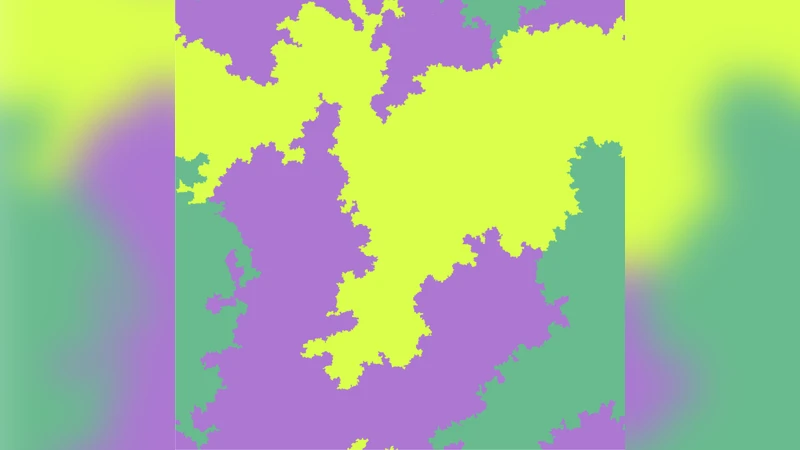
We show that only considering the largest cluster suffices to obtain a first-order percolation transition. As opposed to previous realizations of explosive percolation our models obtain Gaussian cluster distributions and compact clusters as one would expect at first-order transitions. We also discover that the cluster perimeters are fractal at the transition point, yielding a fractal dimension of $1.23\pm0.03$, close to that of watersheds.
💡 Research Summary
The paper introduces a remarkably simple yet powerful mechanism for generating an explosive, first‑order percolation transition by controlling only the largest cluster in a growing network. Unlike the classic Achlioptas processes, which compare multiple candidate edges and attempt to suppress the overall emergence of large components, the authors’ “Largest‑Cluster‑Control” (LCC) rule selects, at each step, the edge that minimizes the size of the largest connected component after its addition. Consequently, the global edge density evolves exactly as in ordinary random percolation, while the growth of the dominant cluster is deliberately restrained.
The authors test the rule on two canonical substrates: a two‑dimensional square lattice of linear size L and an Erdős‑Rényi random graph of N nodes. For each system they monitor the order parameter P∞(p) – the fraction of nodes belonging to the largest cluster – as a function of the occupation probability p, together with the full cluster‑size distribution ns(p). Their numerical results reveal a clear discontinuity in P∞ at a well‑defined critical point pc(L). As p approaches pc from below, P∞ remains essentially zero, then jumps abruptly to a finite value, indicating a genuine first‑order transition. In contrast to earlier explosive percolation models, which typically display a power‑law tail in ns near the transition, the LCC model exhibits a Gaussian‑shaped ns throughout the subcritical regime. This implies that, before the jump, clusters are uniformly small and the system lacks the broad scale‑free fluctuations that characterize continuous percolation.
Beyond the order‑parameter jump, the authors investigate the geometry of the emergent giant component at the transition. Using box‑counting on the cluster perimeter, they find a fractal dimension Df = 1.23 ± 0.03, remarkably close to the dimension measured for watershed lines in random landscapes. Thus, while the interior of the giant cluster is compact (filled), its boundary is highly irregular and fractal. This dual nature – compact bulk with fractal edge – is a hallmark of first‑order percolation and distinguishes the LCC model from both ordinary percolation (smooth boundaries) and previously reported explosive percolation (often yielding ramified, non‑compact clusters).
The study also demonstrates hysteresis: when p is increased past pc and then decreased, the transition point on the decreasing branch differs from that on the increasing branch, confirming the presence of metastable states. Finite‑size scaling analysis shows that the width of the transition region Δp(L) scales as L⁻¹, indicating that the discontinuity sharpens with system size and becomes truly abrupt in the thermodynamic limit.
Importantly, the LCC rule is computationally cheap – it requires only the identification of the largest component after each candidate edge addition, without the need to evaluate global cluster statistics or compare many edges. This efficiency makes the approach attractive for practical applications where rapid, controlled connectivity changes are needed, such as preventing cascading failures in power grids, designing resilient communication networks, or modulating epidemic spread by limiting the formation of a dominant infection cluster.
In summary, the paper establishes that controlling a single macroscopic observable – the size of the largest cluster – is sufficient to induce a first‑order percolation transition with Gaussian cluster statistics, compact bulk structure, and fractal perimeters. The findings broaden the theoretical understanding of explosive percolation, provide a new minimal model for discontinuous connectivity transitions, and open avenues for applying such controlled percolation dynamics in real‑world networked systems.
Comments & Academic Discussion
Loading comments...
Leave a Comment