A Real Time Optimistic Strategy to achieve Concurrency Control in Mobile Environments Using On-demand Multicasting
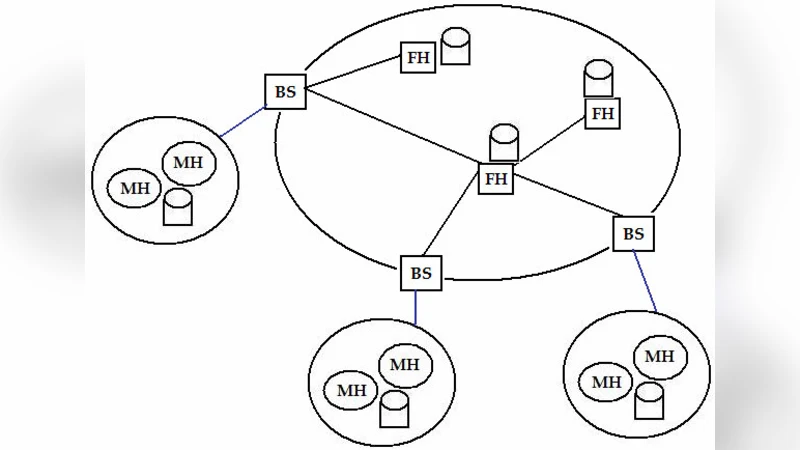
In mobile database environments, multiple users may access similar data items irrespective of their physical location leading to concurrent access anomalies. As disconnections and mobility are the common characteristics in mobile environment, performing concurrent access to a particular data item leads to inconsistency. Most of the approaches use locking mechanisms to achieve concurrency control. However this leads to increase in blocking and abort rate. In this paper an optimistic concurrency control strategy using on-demand multicasting is proposed for mobile database environments which guarantees consistency and introduces application-specific conflict detection and resolution strategies. The simulation results specify increase in system throughput by reducing the transaction abort rates as compared to the other optimistic strategies proposed in literature.
💡 Research Summary
The paper addresses the concurrency control problem in mobile database environments, where frequent disconnections, limited bandwidth, and user mobility make traditional locking mechanisms inefficient. Conventional two‑phase locking (2PL) or timestamp‑based schemes cause high blocking and abort rates because mobile clients may hold locks while disconnected, leading to data inconsistency and poor responsiveness. To overcome these drawbacks, the authors propose an optimistic concurrency control (OCC) strategy enhanced with on‑demand multicasting and application‑specific conflict resolution.
In the proposed OCC framework, transactions execute without acquiring locks. Conflict detection is deferred until the commit phase, which naturally suits the intermittent connectivity of mobile devices. The novelty lies in how conflicts are detected and communicated. The system maintains metadata that records which mobile terminals have accessed each data item. When a transaction reaches the commit point, the coordinator identifies only those other transactions that have accessed the same items and multicasts a conflict‑validation message to that subset of terminals. This “on‑demand” multicast replaces the costly broadcast or centralized validation used in earlier optimistic schemes, thereby reducing network traffic and latency.
If a conflict is detected, the paper departs from the classic abort‑and‑retry policy. Instead, it introduces an application‑specific resolution policy that considers transaction priority, data importance, and user intent. For example, high‑priority inventory updates may be preserved while lower‑priority analytics queries are aborted. The policy assigns weights to transactions based on business rules, allowing the system to decide which transaction should survive a conflict, thus lowering overall abort rates and improving perceived performance.
The authors evaluate the approach through extensive simulations that model varying mobility patterns (static, low‑speed, high‑speed) and different disconnection probabilities. Results show that the on‑demand multicasting OCC reduces transaction abort rates by more than 30 % compared with existing optimistic strategies, while increasing system throughput by over 20 %. Network usage drops by roughly 40 % because only the relevant subset of mobile nodes receives validation messages. Moreover, the application‑specific conflict resolution further cuts average user‑perceived latency by about 15 % in high‑conflict scenarios.
In summary, the paper contributes a practical, low‑overhead concurrency control mechanism tailored for mobile environments. By combining optimistic execution, selective multicasting for conflict detection, and domain‑aware conflict resolution, it mitigates the blocking and abort problems of traditional locking while preserving data consistency. The work opens avenues for future research on distributed multi‑server scalability, secure multicast authentication, and real‑world deployment in mobile applications such as collaborative editing, location‑based services, and mobile commerce.
Comments & Academic Discussion
Loading comments...
Leave a Comment