Nuclear Reactions
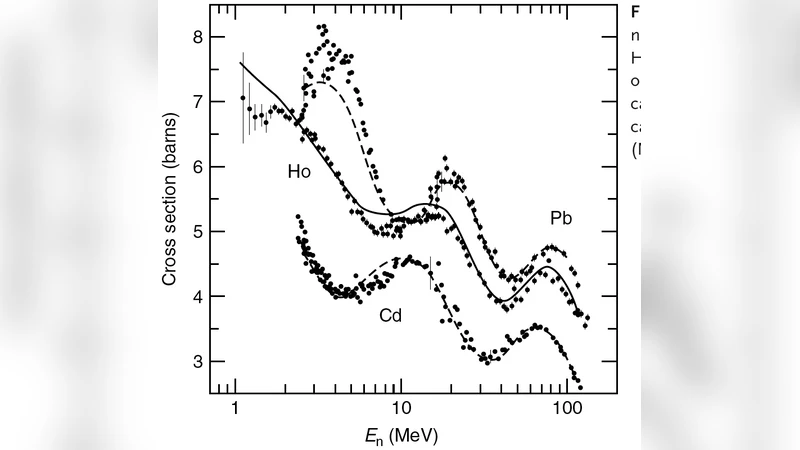
Nuclear reactions generate energy in nuclear reactors, in stars, and are responsible for the existence of all elements heavier than hydrogen in the universe. Nuclear reactions denote reactions between nuclei, and between nuclei and other fundamental particles, such as electrons and photons. A short description of the conservation laws and the definition of basic physical quantities is presented, followed by a more detailed account of specific cases: (a) formation and decay of compound nuclei; (b)direct reactions; (c) photon and electron scattering; (d) heavy ion collisions; (e) formation of a quark-gluon plasma; (f) thermonuclear reactions; (g) and reactions with radioactive beams. Whenever necessary, basic equations are introduced to help understand general properties of these reactions. Published in Wiley Encyclopedia of Physics, ISBN-13: 978-3-527-40691-3 - Wiley-VCH, Berlin, 2009.
💡 Research Summary
The article provides a comprehensive overview of nuclear reactions, emphasizing their central role in energy generation, stellar evolution, and the synthesis of elements heavier than hydrogen. It begins by defining nuclear reactions as interactions among nuclei, electrons, photons, and other fundamental particles, and outlines the universal conservation laws—energy, linear momentum, angular momentum, charge, and nucleon number—that any reaction must obey. The mass‑energy equivalence (E = mc²) is highlighted as the bridge linking mass defects to released or absorbed energy.
The first substantive section deals with compound‑nucleus formation and decay. When an incoming projectile is fully captured by a target nucleus, a highly excited intermediate system— the compound nucleus— is created. Its statistical decay is described using the Hauser‑Feshbach formalism, which distributes the total decay probability among various particle‑emission and γ‑emission channels based on level densities and transmission coefficients.
Direct reactions are then examined. These short‑time interactions involve the exchange of energy and angular momentum without forming an equilibrated compound system. The Distorted‑Wave Born Approximation (DWBA) and Coupled‑Channels (CC) methods are presented as the primary theoretical tools for calculating transition amplitudes. Experimental observables such as angular distributions and energy spectra provide detailed information on nuclear shell structure, spin‑flip probabilities, and deformation parameters.
Photon and electron scattering are discussed as electromagnetic probes of nuclear charge and current distributions. Compton and Rayleigh scattering give insight into overall nuclear size, while electron scattering experiments yield form factors that quantify charge density and magnetic moments with high precision.
Heavy‑ion collisions are described as high‑energy, high‑density events where multiple reaction channels operate simultaneously. Transport models such as the Boltzmann‑Uehling‑Uhlenbeck (BUU) equation and Quantum Molecular Dynamics (QMD) simulations are used to predict particle production, energy flow, and compression dynamics. These collisions are essential for exploring exotic nuclei, studying the equation of state of nuclear matter, and generating rare isotopes.
The formation of a quark‑gluon plasma (QGP) is presented as the extreme limit where nucleons dissolve into deconfined quarks and gluons. Experimental signatures from relativistic heavy‑ion colliders (RHIC, LHC) – jet quenching, elliptic flow, and strangeness enhancement – are linked to theoretical concepts of color deconfinement and strong‑coupling QCD.
Thermonuclear reactions, the engine of stars and the target of controlled fusion research, are analyzed through the Gamow peak formalism. The temperature‑dependent reaction rate ⟨σv⟩ is derived from the tunneling probability through the Coulomb barrier, and key fusion fuel cycles (D‑T, D‑He³, p‑¹¹B) are compared in terms of cross‑section, reactivity, and neutron production. The discussion includes the “triple product” (n T τ) criterion for achieving net energy gain in magnetic confinement devices such as tokamaks and stellarators.
Finally, reactions with radioactive beams are introduced as a modern frontier. Unstable isotopes accelerated to high energies enable inverse kinematics studies, allowing the investigation of nuclei far from stability, exotic decay modes, and the synthesis of superheavy elements. Techniques such as Coulomb dissociation, knockout reactions, and the use of the Coulomb‑Volta effect are described, emphasizing their impact on nuclear astrophysics and the chart of nuclides.
Throughout the paper, essential equations—cross‑section formulas, transition probabilities, form‑factor expressions, and reaction‑rate integrals—are presented alongside illustrative examples. By integrating theoretical frameworks with experimental methodologies, the article equips readers with a unified understanding of how diverse nuclear processes interconnect across fundamental physics, energy technology, and astrophysical phenomena.
Comments & Academic Discussion
Loading comments...
Leave a Comment