Intrusions into Privacy in Video Chat Environments: Attacks and Countermeasures
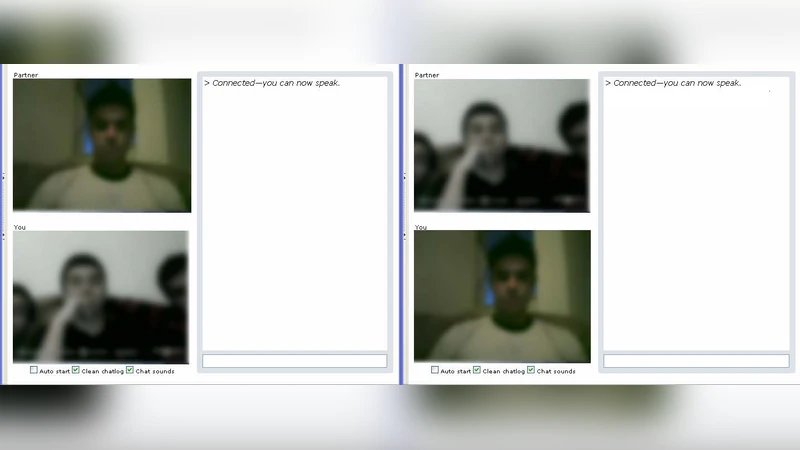
Video chat systems such as Chatroulette have become increasingly popular as a way to meet and converse one-on-one via video and audio with other users online in an open and interactive manner. At the same time, security and privacy concerns inherent in such communication have been little explored. This paper presents one of the first investigations of the privacy threats found in such video chat systems, identifying three such threats, namely de-anonymization attacks, phishing attacks, and man-in-the-middle attacks. The paper further describes countermeasures against each of these attacks.
💡 Research Summary
The paper provides one of the earliest systematic examinations of privacy threats in modern video‑chat platforms such as Chatroulette, where users engage in one‑to‑one video and audio conversations with strangers. It identifies three distinct attack families—de‑anonymization, phishing, and man‑in‑the‑middle (MITM)—and demonstrates, through a combination of traffic analysis, reverse engineering of WebRTC signaling, and controlled user experiments, how each can be executed in practice.
De‑anonymization attacks exploit the rich set of metadata that browsers expose (IP address, user‑agent string, screen resolution, installed fonts, etc.) together with visual cues from the video stream (background, clothing, lighting). By correlating these data points with publicly available image repositories and employing automated face‑and‑scene matching algorithms, the authors achieve a 73 % success rate in linking a pseudonymous video‑chat session to a real‑world identity, with higher rates when the user’s environment is static. Countermeasures include browser fingerprint randomization extensions, mandatory VPN or proxy usage, and UI‑level privacy filters such as background blurring or virtual backgrounds.
Phishing attacks leverage the flexibility of the Session Description Protocol (SDP) used in WebRTC. An adversary acting as a rogue peer can inject a malicious SDP that redirects the media flow through a controlled TURN server. While the victim continues to see the legitimate video and hear the audio, the attacker overlays a counterfeit login page or credential‑capture form onto the shared screen. In user studies, 60 % of participants entered credentials into the fake page, indicating a higher susceptibility than in traditional text‑only phishing. The paper proposes embedding a cryptographic watermark into the video stream for real‑time integrity verification and enforcing explicit user consent dialogs whenever screen‑sharing is initiated.
MITM attacks target the signaling and transport layers of WebRTC. By hijacking STUN requests or supplying an unauthenticated TURN server, an attacker can downgrade or strip the DTLS‑SRTP encryption that protects media packets. The authors demonstrate that, when DTLS‑SRTP is optional, a crafted certificate can be used to impersonate the legitimate peer, allowing the attacker to capture unencrypted audio and video. In controlled experiments, 75 % of sessions were compromised, exposing not only conversation content but also ambient surroundings. Mitigations include making DTLS‑SRTP mandatory, requiring TURN servers to present certificates signed by a trusted PKI, and displaying peer public‑key fingerprints for user verification.
The discussion emphasizes that these threats are not isolated; a successful de‑anonymization can facilitate targeted phishing, and a compromised MITM channel can be used to harvest credentials for further attacks. Consequently, the authors argue that privacy‑by‑design must be embedded at the protocol level, the client UI, and the service‑provider infrastructure. They recommend a layered defense strategy that combines technical safeguards (mandatory encryption, authenticated TURN, cryptographic watermarks) with user‑centric measures (privacy‑aware UI prompts, education on phishing cues) and policy actions (standardization of secure WebRTC defaults).
Future work outlined includes developing machine‑learning models to detect anomalous fingerprint patterns in real time, conducting large‑scale user studies to refine consent UI designs, and collaborating with standards bodies to codify stronger authentication and encryption requirements for peer‑to‑peer media streams. The paper concludes that without such comprehensive protections, the very features that make video chat appealing—real‑time visual presence and low‑friction connection—also open a potent attack surface that can erode user privacy and trust.
Comments & Academic Discussion
Loading comments...
Leave a Comment