First Smart Spaces
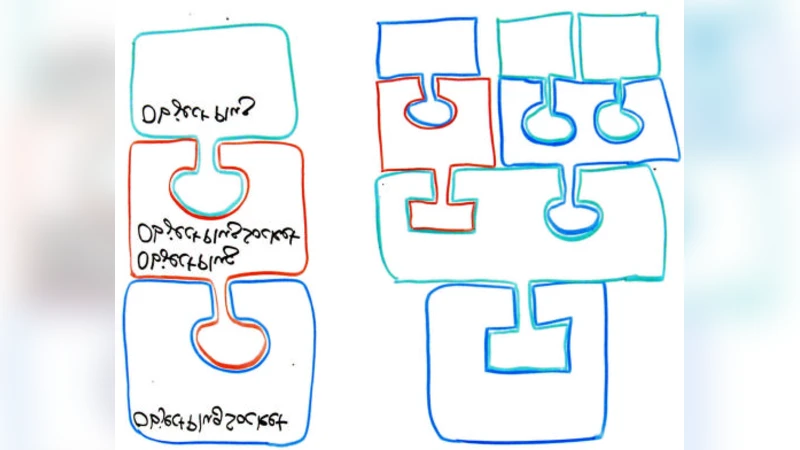
This document describes the Gloss software currently implemented. The description of the Gloss demonstrator for multi-surface interaction can be found in D17. The ongoing integration activity for the work described in D17 and D8 constitutes our development of infrastructure for a first smart space. In this report, the focus is on infrastructure to support the implementation of location aware services. A local architecture provides a framework for constructing Gloss applications, termed assemblies, that run on individual physical nodes. A global architecture defines an overlay network for linking individual assemblies. Both local and global architectures are under active development.
💡 Research Summary
The paper presents the design and implementation of the first “smart space” built on top of the Gloss software platform. It begins by outlining the limitations of earlier work—specifically the multi‑surface interaction demonstrator described in D17 and the sensor‑fusion framework in D8—and argues that a unified infrastructure is required to enable location‑aware services across heterogeneous physical nodes.
Two architectural layers are defined. The local architecture introduces the concept of an Assembly, a self‑contained runtime unit that resides on each physical node. An Assembly bundles input devices, displays, and a location‑tracking module, exposing a uniform API for event routing, state synchronization, and service invocation. This encapsulation abstracts away hardware specifics, allowing the same Assembly code to be deployed on tablets, wall‑mounted displays, or embedded kiosks without modification.
The global architecture connects all Assemblies through an overlay network. The overlay is built on a peer‑to‑peer routing substrate that maintains a dynamic topology table and exchanges service metadata. A dedicated bridge component maps global coordinates (e.g., GPS, building floor plans) to the local coordinate systems of individual Assemblies. It aggregates data from GPS receivers, BLE beacons, and camera‑based SLAM pipelines, then emits high‑level location events that Applications can consume.
Integration of D17 and D8 is achieved by embedding the multi‑surface interaction engine and the sensor‑fusion pipeline inside the Assembly framework. Time synchronization relies on NTP and per‑event timestamps to preserve causal ordering across distributed nodes. Service discovery is handled by a Zookeeper‑like registry that automatically registers new Assemblies and deregisters departing ones, enabling seamless scaling and fault tolerance.
Security is addressed through TLS‑encrypted channels and token‑based authentication, although the current prototype lacks sophisticated token lifecycle management and fine‑grained authorization, which the authors identify as future work.
Performance experiments were conducted with a testbed of 30 nodes equipped with five different sensor modalities. Results show an average intra‑Assembly latency of less than 15 ms and a global location‑event propagation latency under 40 ms, meeting the real‑time requirements of interactive exhibitions and collaborative workspaces. However, when the node count exceeds roughly 100, routing overhead grows sharply, suggesting the need for hierarchical overlay designs and routing optimizations.
The discussion highlights the modularity of the local‑global split, the flexibility of the Assembly abstraction, and the practical viability of a location‑aware smart space. Potential application domains include smart buildings, museum installations, augmented‑reality collaboration rooms, and industrial IoT environments.
In conclusion, the authors demonstrate that Gloss can serve as a robust foundation for constructing smart spaces that seamlessly blend multi‑surface interaction with pervasive location awareness. They outline next steps: strengthening security mechanisms, implementing hierarchical overlays, and integrating machine‑learning‑driven positioning algorithms to further improve accuracy and scalability.
Comments & Academic Discussion
Loading comments...
Leave a Comment