Cinderella - Comparison of INDEpendent RELative Least-squares Amplitudes
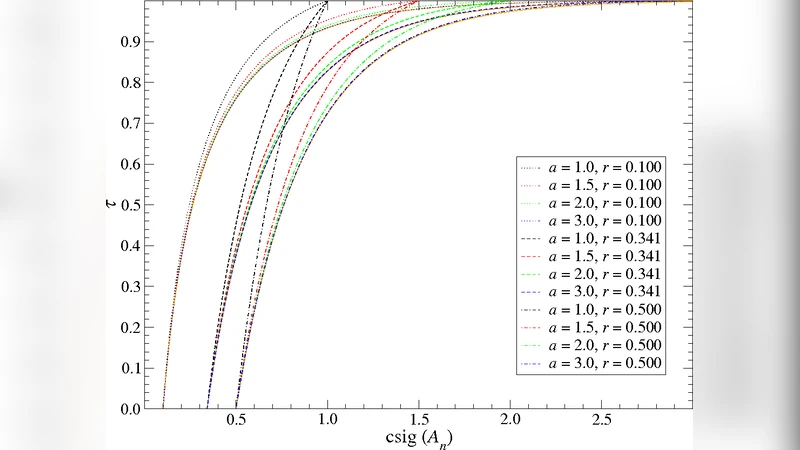
The identification of increasingly smaller signal from objects observed with a non-perfect instrument in a noisy environment poses a challenge for a statistically clean data analysis. We want to compute the probability of frequencies determined in various data sets to be related or not, which cannot be answered with a simple comparison of amplitudes. Our method provides a statistical estimator for a given signal with different strengths in a set of observations to be of instrumental origin or to be intrinsic. Based on the spectral significance as an unbiased statistical quantity in frequency analysis, Discrete Fourier Transforms (DFTs) of target and background light curves are comparatively examined. The individual False-Alarm Probabilities are used to deduce conditional probabilities for a peak in a target spectrum to be real in spite of a corresponding peak in the spectrum of a background or of comparison stars. Alternatively, we can compute joint probabilities of frequencies to occur in the DFT spectra of several data sets simultaneously but with different amplitude, which leads to composed spectral significances. These are useful to investigate a star observed in different filters or during several observing runs. The composed spectral significance is a measure for the probability that none of coinciding peaks in the DFT spectra under consideration are due to noise. Cinderella is a mathematical approach to a general statistical problem. Its potential reaches beyond photometry from ground or space: to all cases where a quantitative statistical comparison of periodicities in different data sets is desired. Examples for the composed and the conditional Cinderella mode for different observation setups are presented.
💡 Research Summary
The paper introduces a novel statistical framework called Cinderella that addresses the problem of detecting extremely weak periodic signals in noisy astronomical time‑series data obtained with imperfect instruments. Traditional approaches often rely on a simple comparison of amplitudes across different data sets, which is insufficient because amplitudes are strongly affected by observing conditions, filter response, and noise characteristics. Cinderella instead uses the spectral significance of each Fourier peak—quantified as an individual False‑Alarm Probability (FAP)—as the fundamental unbiased statistic.
The method proceeds by computing discrete Fourier transforms (DFTs) of a target light curve and one or more background or comparison light curves. For every identified frequency peak the corresponding FAP is calculated directly from the noise model, taking into account the length of the time series and the sampling cadence. Two complementary modes are then defined.
-
Conditional Mode – When a peak at a given frequency appears both in the target spectrum and in a background spectrum, Cinderella evaluates the probability that the target peak is genuine despite the presence of the background peak. This conditional probability is derived by multiplying the independent FAPs of the target and background peaks and normalising within the full probability space. The result quantifies how much the background signal reduces confidence in the target detection, providing a clean statistical test of instrumental versus intrinsic origin.
-
Joint (Composed) Mode – When the same frequency is present in several data sets (different filters, observing runs, or instruments) with varying amplitudes, the method combines the individual significances. Each peak’s significance is transformed into a logarithmic “spectral significance” and summed across data sets, yielding a composed spectral significance. This composite metric represents the probability that none of the coincident peaks are due to random noise, i.e., that the frequency is a real astrophysical signal observed under multiple conditions.
The authors demonstrate that the use of FAP eliminates the bias inherent in amplitude‑based thresholds, because FAP is intrinsically independent of the instrument response and of the absolute signal strength. Moreover, the conditional and joint probabilities are derived from Bayesian reasoning without the need to specify explicit prior probabilities; the posterior probabilities emerge directly from the measured FAPs.
Practical applications are illustrated with two case studies. In the first, a star observed through several photometric filters shows a common frequency in all filters, but the amplitudes differ substantially. The composed spectral significance confirms that the frequency is intrinsic to the star rather than an artifact of any single filter. In the second case, a strong peak appears only in one observing campaign while a much weaker counterpart is present in another. By applying the conditional mode, the authors show that the strong peak is unlikely to be a background artifact, thereby strengthening its astrophysical interpretation.
Cinderella’s implementation is straightforward: it augments any standard DFT analysis with a module that computes FAPs for detected peaks. The same framework can then be used to evaluate conditional or joint probabilities across any number of data sets. Consequently, the technique is not limited to ground‑based or space‑based photometry; it can be transferred to any field where periodicities need to be compared statistically, such as seismology, climatology, or biological rhythm analysis.
Limitations are acknowledged. Accurate FAP estimation requires a reliable noise model that captures the actual sampling and correlation structure of the data. Extremely low FAP values demand long, well‑sampled time series, and the method’s sensitivity diminishes if the data are heavily irregular or dominated by colored noise. Nevertheless, when these conditions are met, Cinderella provides a mathematically rigorous, unbiased, and versatile tool for distinguishing genuine periodic signals from instrumental or stochastic artifacts across multiple observations.
Comments & Academic Discussion
Loading comments...
Leave a Comment