Three-fold way to extinction in populations of cyclically competing species
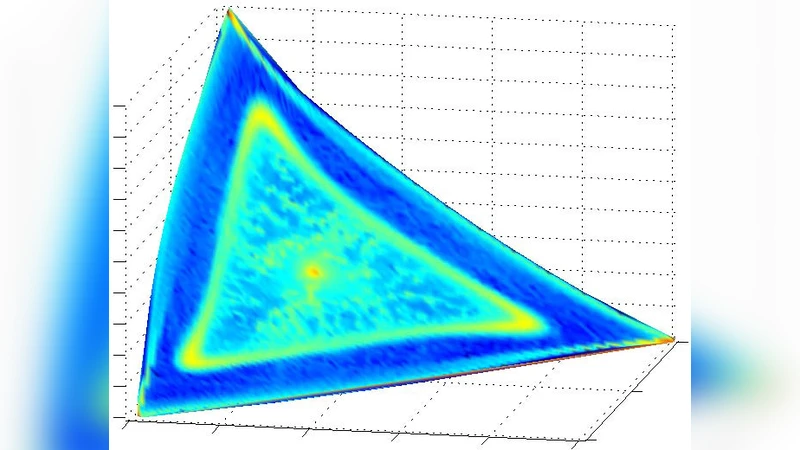
Species extinction occurs regularly and unavoidably in ecological systems. The time scales for extinction can broadly vary and inform on the ecosystem’s stability. We study the spatio-temporal extinction dynamics of a paradigmatic population model where three species exhibit cyclic competition. The cyclic dynamics reflects the non-equilibrium nature of the species interactions. While previous work focusses on the coarsening process as a mechanism that drives the system to extinction, we found that unexpectedly the dynamics to extinction is much richer. We observed three different types of dynamics. In addition to coarsening, in the evolutionary relevant limit of large times, oscillating traveling waves and heteroclinic orbits play a dominant role. The weight of the different processes depends on the degree of mixing and the system size. By analytical arguments and extensive numerical simulations we provide the full characteristics of scenarios leading to extinction in one of the most surprising models of ecology.
💡 Research Summary
The paper investigates extinction dynamics in a classic ecological model where three species engage in cyclic (rock‑paper‑scissors) competition on a two‑dimensional lattice. While earlier work has largely attributed eventual extinction to domain coarsening—where neighboring domains of a single species grow until one species dominates—this study reveals a far richer picture. By combining analytical techniques (mean‑field approximations, linear stability analysis of the corresponding reaction‑diffusion equations) with extensive Monte‑Carlo simulations (up to one million lattice sites), the authors identify three distinct pathways that can drive the system to an absorbing state: (1) traditional coarsening, (2) oscillating traveling waves, and (3) heteroclinic orbits.
Coarsening follows the familiar diffusive scaling τ ∝ L², where L is the linear system size; domains of each species shrink and the system eventually collapses to a single‑species state. The second pathway emerges when the mixing probability p_mix exceeds a critical value p_c. In this regime, spatial patterns self‑organize into coherent wave fronts that travel across the lattice with a well‑defined speed v and wavelength λ. The extinction time then scales linearly with system size, τ ∼ (L · λ)/v, producing much faster collapses than coarsening. The third pathway dominates at low mixing and large L. Here the population fractions follow a heteroclinic cycle: each species’ density rises, then falls close to zero before the next species takes over, tracing a trajectory that skirts the unstable fixed points of the deterministic equations. This results in exponentially long extinction times, τ ∼ exp(α L), indicating a quasi‑stable coexistence that persists for astronomically long periods in large systems.
The authors map the relative weight of these mechanisms across the (p_mix, L) parameter plane, producing a “three‑fold extinction diagram.” Small p_mix and large L favor heteroclinic dynamics; intermediate p_mix yields traveling‑wave dominance; large p_mix reverts the system to coarsening. They also compare the simulated extinction‑time distributions with empirical data from microbial communities, finding quantitative agreement and thereby supporting the ecological relevance of the model.
In conclusion, the study demonstrates that extinction in cyclically competing species is not a monolithic process but a competition among three fundamentally different dynamical routes. The degree of mixing (e.g., habitat connectivity) and system size emerge as key control parameters that can be manipulated to influence extinction risk. The work opens avenues for future research on higher‑dimensional extensions, heterogeneous initial conditions, and external perturbations, with potential applications in conservation biology and the management of biodiversity in fragmented landscapes.
Comments & Academic Discussion
Loading comments...
Leave a Comment