From Micro- to Macro-scales in the Heliosphere and Magnetospheres
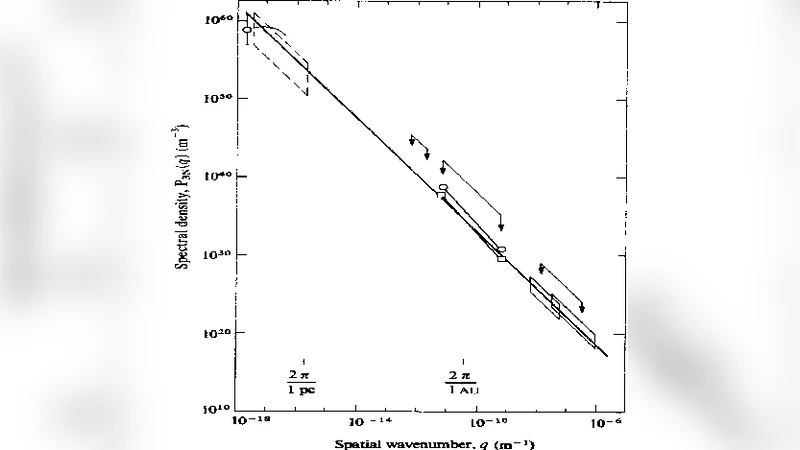
From a broader perspective, the heliosphere and planetary magnetospheres provide a test bed to explore the plasma physics of the Universe. In particular, the underlying nonlinear coupling of different spatial and temporal scales plays a key role in determining the structure and dynamics of space plasmas and electromagnetic fields. Plasmas and fields exhibit both laminar and turbulent properties, corresponding to either well organized or disordered states, and the development of quantitative theoretical and analytical descriptions from physics based first principles is a profound challenge. Limited observations and complications introduced by geometry and physical parameters conspire to complicate the problem. Dimensionless scaling analysis and statistical methods are universally applied common approaches that allow for the application of related ideas to multiple physical problems. We discuss several examples of the interplay between the scales in a variety of space plasma environments, as exemplified in the presentations of the session \textit{From Micro- to Macro-scales in the Heliosphere and Magnetospheres.}
💡 Research Summary
**
The paper provides a comprehensive synthesis of the presentations delivered in the session “From Micro‑ to Macro‑scales in the Heliosphere and Magnetospheres,” using them as a framework to discuss the fundamental problem of multi‑scale coupling in space plasmas. It begins by emphasizing that the heliosphere and planetary magnetospheres constitute natural laboratories where the nonlinear interaction of disparate spatial and temporal scales governs the structure and dynamics of both the plasma and the electromagnetic fields. The authors stress that plasma can appear simultaneously laminar and turbulent, and that a first‑principles description must therefore bridge kinetic (microscopic) processes and magnetohydrodynamic (macroscopic) behavior.
A central part of the manuscript is devoted to dimensionless scaling analysis. Classical plasma parameters—plasma beta (β), Reynolds number (Re), magnetic Reynolds number (Rm), Hall parameter, ion and electron inertial lengths, ion cyclotron radius, etc.—are defined and placed on a hierarchy that separates kinetic from fluid regimes. The authors show how β≫1 (high‑beta) environments are dominated by pressure‑tensor effects, while Rm≫1 guarantees magnetic‑field line freezing in the fluid limit. When kinetic scales such as the ion inertial length (di) or electron skin depth (de) overlap with macroscopic gradients, Hall‑MHD and full kinetic effects become essential, and the standard MHD approximation breaks down.
The paper then delineates two complementary pathways of nonlinear coupling. The first is the forward energy cascade: large‑scale instabilities (e.g., shear‑driven Alfvénic turbulence, magnetospheric convection) inject energy at low wavenumbers, which is transferred through an Alfvénic inertial range (spectral slope ≈ –5/3) down to ion‑scale fluctuations (spectral break near di, slope ≈ –3/2) and finally to electron‑scale kinetic Alfvén or whistler modes. The second pathway is the inverse or feedback coupling: kinetic processes such as particle heating, temperature anisotropy, and pressure‑tensor non‑gyrotropy feed back on the large‑scale current systems, modifying reconnection rates, current‑sheet thickness, and global magnetic topology. Observational signatures of this bidirectional coupling include abrupt changes in power‑spectral indices, localized current‑sheet thinning, and spikes in electron temperature anisotropy.
Given the inherent sparsity of in‑situ measurements and the complex geometry of planetary magnetospheres, the authors advocate a suite of statistical and data‑driven techniques to extract robust multi‑scale relationships. Traditional tools (structure functions, Fourier spectra) are complemented by wavelet transforms for time‑frequency localization, probability‑density‑function (PDF) analysis for intermittency, and modern machine‑learning approaches (clustering, dimensionality reduction) to identify coherent structures across disparate datasets. Multi‑spacecraft missions (Cluster, MMS, THEMIS) and solar‑probe missions (Parker Solar Probe, Solar Orbiter) provide simultaneous multi‑point observations that enable “concurrent multi‑scale” analyses, overcoming the limitations of single‑point sampling.
The manuscript illustrates the theoretical framework with several case studies. In the solar wind at 1 AU, the authors document a clear spectral transition from a Kolmogorov‑like –5/3 slope to a steeper –3/2 regime around the ion inertial length, interpreted as the onset of kinetic Alfvén turbulence. In Earth’s magnetosheath and magnetotail, they show how shock‑driven current sheets undergo rapid electron heating, which in turn accelerates reconnection and reshapes the macroscopic current system—a vivid example of feedback coupling. In the magnetospheres of Jupiter and Saturn, the combination of rapid planetary rotation, high plasma beta, and strong centrifugal forces leads to a breakdown of simple MHD scaling; Hall and kinetic effects dominate the global current system, producing unique turbulence characteristics not seen at Earth. Finally, solar eruptive events (flares and coronal mass ejections) are presented as natural experiments where impulsive energy release couples micro‑scale particle acceleration with macro‑scale shock propagation and magnetic restructuring.
In the discussion, the authors identify current gaps and future directions. They argue for the development of hybrid kinetic‑fluid models that retain essential electron‑scale physics while remaining computationally tractable for global simulations. They also stress the importance of data assimilation techniques that merge high‑resolution spacecraft data with large‑scale numerical models, thereby enabling predictive capabilities. Finally, they propose a universal multi‑scale scaling law that can be adapted to each planetary environment by adjusting the relevant dimensionless parameters, paving the way for a unified theory of space‑plasma turbulence and reconnection.
In conclusion, the paper demonstrates that the interplay between microscopic and macroscopic scales in the heliosphere and planetary magnetospheres can be systematically quantified through dimensionless scaling, advanced statistical analysis, and targeted case studies. This integrated approach not only clarifies the underlying physics of plasma turbulence, reconnection, and energy transfer but also provides a solid theoretical foundation for interpreting forthcoming observations from next‑generation missions and for constructing reliable space‑weather forecasting models.
Comments & Academic Discussion
Loading comments...
Leave a Comment