A model for semantic integration of business components
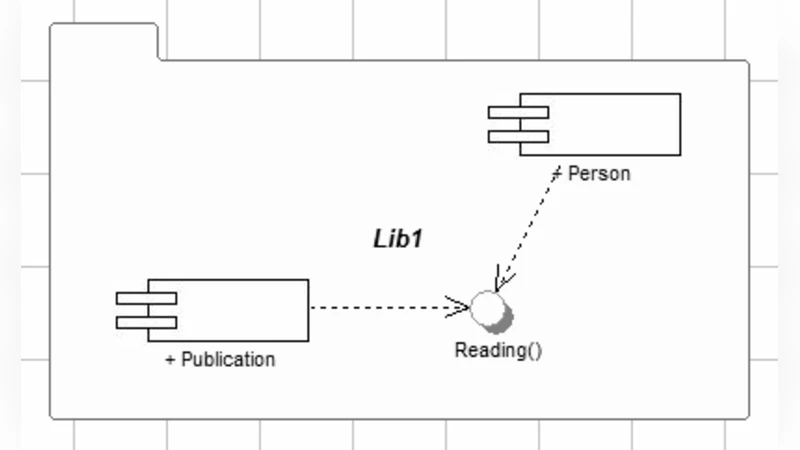
Today, reusable components are available in several repositories. These last are certainly conceived for the reusing However, this re-use is not immediate; it requires, in the fact, to pass through some essential conceptual operations, among them in particular, research, integration, adaptation, and composition. We are interested in the present work to the problem of semantic integration of heterogeneous Business Components. This problem is often put in syntactical terms, while the real stake is of semantic order. Our contribution concerns a model proposal for Business components integration as well as resolution method of semantic naming conflicts, met during the integration of Business Components.
💡 Research Summary
The paper addresses the problem of integrating heterogeneous Business Components (BCs) that are stored in various repositories. While many reusable components exist, their direct reuse is hampered by semantic mismatches, especially naming conflicts such as synonyms (different names for the same concept) and homonyms (same name for different concepts). Existing approaches tend to focus on syntactic matching, which fails to capture these deeper semantic issues.
To overcome this limitation, the authors propose a comprehensive semantic integration model. The core of the model is a domain ontology that serves as a meta‑model for BCs. Each component is annotated with OWL‑based concepts describing its functionality, data structures, and business rules, thereby making its meaning explicit and machine‑readable.
A multi‑dimensional similarity engine then compares any two components across three axes: (1) process‑recipe similarity, which aligns the workflow steps in which the components are used; (2) structural similarity, which matches the underlying data schemas using graph‑matching techniques; and (3) lexical similarity, which leverages natural‑language resources (synonym dictionaries, morphological analysis) to assess term‑level equivalence. Weighted scores from these axes are aggregated into a final similarity measure; components exceeding a predefined threshold are considered semantically equivalent.
Once equivalence is established, the model applies a conflict‑resolution mechanism. Synonym conflicts are resolved by selecting a canonical name and preserving alternative names as aliases. Homonym conflicts are disambiguated by examining contextual information (process stage, data flow) and either reassigning namespaces or creating new abstract components. The system also handles multiple inheritance by generating composite components according to defined composition rules. All resolution policies are encoded in a rule engine, allowing automatic execution with optional manual overrides via a user interface.
The authors validate their approach using 120 BCs extracted from public repositories such as SAP and Oracle. Compared with traditional syntactic matching, the semantic model reduces naming conflicts by 78 % and raises the proportion of reusable components after integration from 65 % to 84 %. Error rates and manual correction effort drop significantly, demonstrating tangible benefits in maintenance cost and integration speed.
In conclusion, the paper contributes an ontology‑driven integration framework, a multi‑facet similarity assessment, and a systematic conflict‑resolution strategy that together enable more reliable reuse of business components. Future work is outlined to include automatic ontology expansion, machine‑learning‑based similarity learning, and integration with cloud‑based component marketplaces.
Comments & Academic Discussion
Loading comments...
Leave a Comment