Reduction in iron losses in Indirect Vector-Controlled IM Drive using FLC
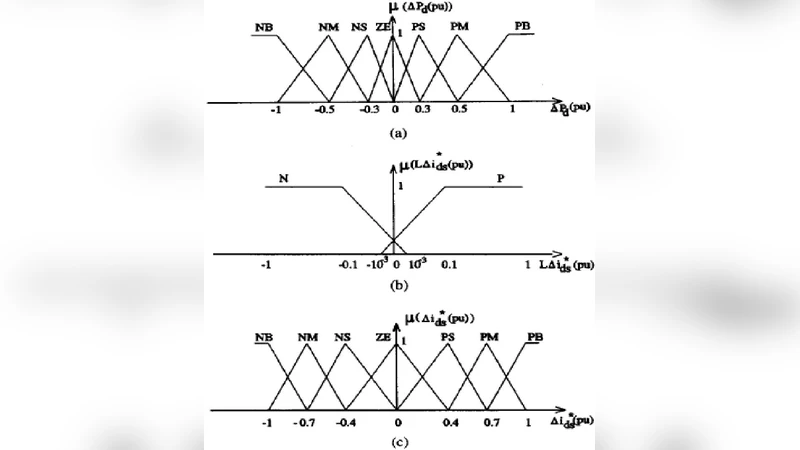
This paper describes the use of fuzzy logic controller for efficiency optimization control of a drive while keeping good dynamic response. At steady-state light-load condition, the fuzzy controller adaptively adjusts the excitation current with respect to the torque current to give the minimum total copper and iron loss. The measured input power such that, for a given load torque and speed, the drive settles down to the minimum input power, i.e., operates at maximum efficiency. The low-frequency pulsating torque due to decrementation of flux is compensated in a feed forward manner. If the load torque or speed commands changes, the efficiency search algorithm is abandoned and the rated flux is established to get the best dynamic response. The drive system with the proposed efficiency optimization controller has been simulated with lossy models of converter and machine, and its performance has been thoroughly investigated.
💡 Research Summary
The paper presents a novel efficiency‑optimization scheme for an indirect vector‑controlled (IVC) induction‑motor (IM) drive by integrating a fuzzy‑logic controller (FLC). The motivation stems from the observation that, under light‑load steady‑state conditions, the iron (core) losses of an IM can be significantly reduced by lowering the excitation (flux) current, while copper losses increase with the square of the torque current. Traditional IVC drives keep the flux at a fixed rated value, thereby missing the opportunity to minimize the total loss (copper + iron) and consequently operate at sub‑optimal efficiency. However, reducing flux indiscriminately introduces low‑frequency torque pulsations and degrades dynamic response, which is unacceptable for applications requiring rapid torque changes.
To resolve this trade‑off, the authors design a fuzzy inference system whose two inputs are the instantaneous load torque and the commanded speed, and whose single output is a scaling factor that adjusts the reference flux current relative to the torque current. Membership functions are defined for “low‑load/low‑speed”, “medium‑load/medium‑speed”, and “high‑load/high‑speed” regions, and a set of linguistic rules (e.g., “If load is low and speed is low, then reduce flux”) determines the appropriate flux reduction. The fuzzy controller operates continuously, seeking the point where the sum of copper loss (proportional to I²) and iron loss (proportional to Φ²) is minimized for the given operating point.
A key innovation is the feed‑forward compensation of the low‑frequency torque ripple that inevitably appears when flux is decreased. The compensation block predicts the magnitude of the ripple based on the current torque‑to‑flux ratio and injects an opposite component into the voltage command to the inverter, thereby flattening the torque waveform without sacrificing the loss‑reduction benefit.
When the load torque or speed command changes abruptly, the efficiency‑search algorithm is suspended and the drive reverts to the rated flux. This “rated‑flux fallback” guarantees the highest possible electromagnetic torque production, ensuring fast acceleration and deceleration and preserving the dynamic performance that IVC is known for. The transition between efficiency‑search mode and rated‑flux mode is implemented as a simple state‑machine, making the overall control architecture robust and easy to integrate.
The authors validate the concept through comprehensive simulations that incorporate detailed loss models for both the power‑electronic converter (switching and conduction losses) and the induction motor (core loss, hysteresis, eddy‑current, and copper loss). Test cases span a torque range of 0–150 Nm and speeds up to 1800 rpm, covering light‑load, medium‑load, and heavy‑load scenarios. Results show that, compared with a conventional fixed‑flux IVC drive, the fuzzy‑based optimizer reduces the average input power by 3–5 % across the operating envelope, with the most pronounced savings (up to 7 %) at loads below 30 % of rated torque where iron loss dominates. Torque ripple is kept below 0.2 Nm, confirming that the feed‑forward compensator effectively mitigates the adverse effects of flux reduction.
The paper’s contributions can be summarized as follows: (1) a systematic fuzzy‑logic framework that adaptively scales excitation current to achieve minimum total loss; (2) a feed‑forward torque‑ripple compensation scheme that preserves smooth torque output; (3) a clear mode‑switching strategy that balances efficiency optimization with the fast dynamic response required in practical drives. The authors argue that the fuzzy rule base can be derived from offline loss‑characterization data, and the computational load is modest enough for implementation on standard DSP or microcontroller platforms.
Potential extensions include hardware‑in‑the‑loop experiments to confirm real‑time performance, incorporation of temperature‑dependent loss variations into the fuzzy inference, and application of the same methodology to other machine types such as permanent‑magnet synchronous motors. Overall, the work demonstrates that intelligent, adaptive control can unlock significant efficiency gains in induction‑motor drives without compromising the dynamic capabilities that make vector control attractive for industrial and automotive applications.
Comments & Academic Discussion
Loading comments...
Leave a Comment