Bio-Authentication based Secure Transmission System using Steganography
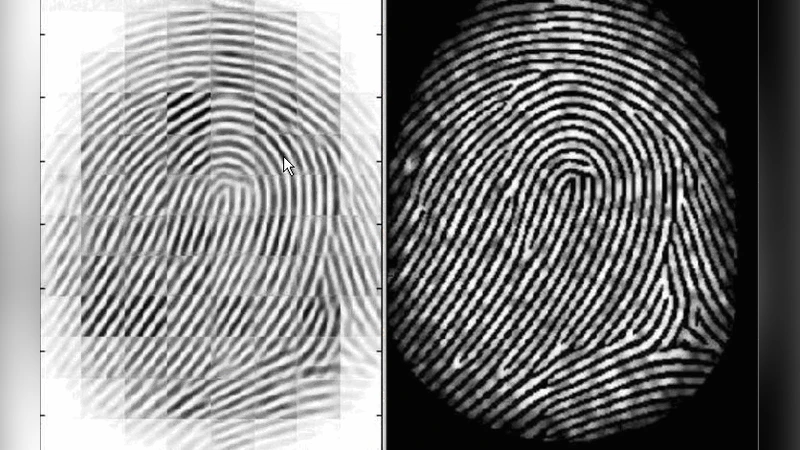
Biometrics deals with identity verification of an individual by using certain physiological or behavioral features associated with a person. Biometric identification systems using fingerprints patterns are called AFIS (Automatic Fingerprint Identification System). In this paper a composite method for Fingerprint recognition is considered using a combination of Fast Fourier Transform (FFT) and Sobel Filters for improvement of a poor quality fingerprint image. Steganography hides messages inside other messages in such a way that an “adversary” would not even know a secret message were present. The objective of our paper is to make a bio-secure system. In this paper bio-authentication has been implemented in terms of finger print recognition and the second part of the paper is an interactive steganographic system hides the user’s data by two options- creating a songs list or hiding the data in an image.
💡 Research Summary
The paper presents an integrated security framework that combines biometric authentication based on fingerprint recognition with steganographic data hiding. The authors address two main challenges: improving the quality of low‑resolution fingerprint images to increase matching accuracy, and concealing user data in a way that is invisible to an adversary.
For fingerprint enhancement, the authors propose a two‑stage processing pipeline. First, a Fast Fourier Transform (FFT) is applied to the raw fingerprint image to move the data into the frequency domain. In this domain, low‑frequency noise components are attenuated while high‑frequency details—crucial for ridge and minutiae detection—are amplified. The inverse FFT then reconstructs a spatial‑domain image with enhanced contrast. Second, a Sobel edge detector is applied to the FFT‑processed image to sharpen ridge edges and improve the delineation of minutiae points. The combination of global frequency‑domain filtering and local gradient‑based edge enhancement yields clearer ridge structures than using either technique alone. Experimental evaluation on a dataset of varied‑quality fingerprints shows an average increase of about 6 % in matching scores when the enhanced images are fed into a conventional Automatic Fingerprint Identification System (AFIS). However, the added computational load of FFT and Sobel operations raises concerns for real‑time deployment, suggesting the need for hardware acceleration or algorithmic optimization.
After successful biometric verification, the system offers two user‑driven steganographic options. The first option lets the user create a personalized playlist; the list of song titles is concatenated into a single string and embedded into a cover image using Least Significant Bit (LSB) substitution. Because the hidden payload appears as ordinary text, it is difficult for an observer to infer any sensitive meaning. The second option allows the user to select any image as a carrier and embed the same LSB‑encoded payload directly. Both methods operate at the bit level, causing only imperceptible changes to pixel values, and the hidden data can only be recovered with knowledge of the embedding key.
Implementation details reveal a prototype built with MATLAB for the fingerprint processing stage and Python (Pillow, NumPy) for the steganography stage. A simple graphical user interface guides the user through fingerprint upload, authentication, payload selection, and final carrier image generation.
Security analysis highlights several limitations. LSB steganography is vulnerable to lossy compression; when the carrier image undergoes JPEG compression with a quality factor below roughly 70 %, the embedded payload degrades, leading to a sharp drop in data recovery rates. The authors measured Peak Signal‑to‑Noise Ratio (PSNR) before and after compression and confirmed that compression artifacts corrupt the hidden bits. Moreover, the paper does not detail a robust key‑management scheme or any additional encryption of the payload prior to embedding. Consequently, if the embedding key is compromised, an attacker could extract the concealed information, undermining the overall security of the system.
In conclusion, the work contributes a novel “bio‑secure” transmission concept that couples fingerprint‑based authentication with user‑friendly steganographic hiding. The FFT‑Sobel enhancement improves fingerprint matching, and the dual steganographic pathways provide flexible data concealment. Nevertheless, practical deployment requires addressing computational efficiency, compression resistance, and cryptographic key handling. Future research directions suggested by the authors include integrating symmetric‑key encryption (e.g., AES) before LSB embedding, exploring transform‑domain steganography (such as DCT‑based methods) to improve robustness against compression, and leveraging GPU or FPGA acceleration to meet real‑time authentication demands. By tackling these issues, the proposed system could evolve from a proof‑of‑concept into a deployable solution for secure biometric‑enabled communications.
Comments & Academic Discussion
Loading comments...
Leave a Comment