RooStatsCms: a tool for analysis modelling, combination and statistical studies
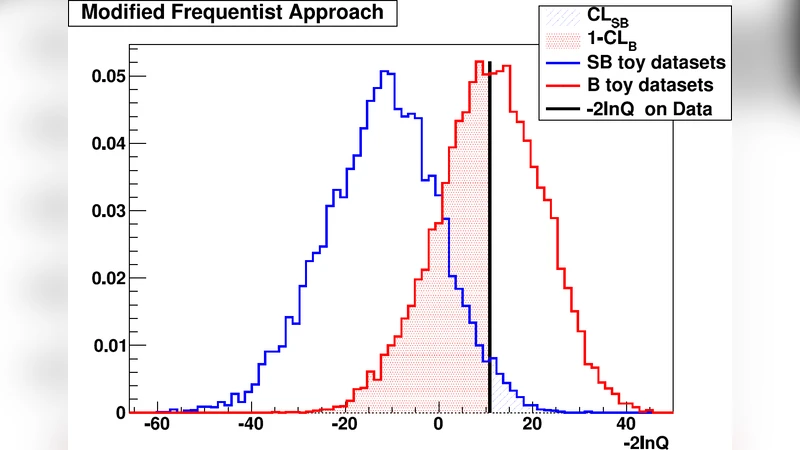
RooStatsCms is an object oriented statistical framework based on the RooFit technology. Its scope is to allow the modelling, statistical analysis and combination of multiple search channels for new phenomena in High Energy Physics. It provides a variety of methods described in literature implemented as classes, whose design is oriented to the execution of multiple CPU intensive jobs on batch systems or on the Grid.
💡 Research Summary
The paper presents RooStatsCms, a comprehensive statistical framework built on top of the RooFit library, aimed at facilitating the modelling, statistical inference, and combination of multiple search channels in high‑energy physics (HEP) experiments. The authors describe the architecture, which is organized into three logical layers: Model, Channel, and Combination. The Model layer encapsulates the full probability density functions (PDFs), physics parameters, and systematic uncertainties; the Channel layer binds a specific dataset (or event selection) to the Model; and the Combination layer aggregates several Channel objects to produce a global statistical result such as confidence intervals, p‑values, or Bayesian posterior probabilities.
Model specifications are written in a declarative, XML‑like syntax, allowing analysts to list parameters, their initial values, allowed ranges, prior distributions, and constraints for nuisance parameters. Systematic effects are treated as nuisance parameters with Gaussian, log‑normal, or user‑defined constraint terms, enabling automatic propagation of uncertainties through the likelihood. This approach enhances reproducibility and reduces the amount of hand‑coded bookkeeping typically required in multi‑channel analyses.
RooStatsCms implements a broad spectrum of statistical techniques drawn from the HEP literature. On the frequentist side, it provides Profile Likelihood scans, CLs limits, and traditional p‑value calculations, all of which are automated through dedicated classes that perform likelihood maximisation, parameter profiling, and interval extraction. On the Bayesian side, the framework includes Markov Chain Monte Carlo (MCMC) samplers for posterior sampling and numerical integration tools for Bayesian upper limits. The design follows a common interface, so the same Model definition can be analysed with any of the available methods without rewriting code.
A key strength of the framework is its support for large‑scale, distributed computation. The authors describe a job‑splitting mechanism that partitions the parameter space or pseudo‑experiment ensemble into many independent tasks, which can be submitted to batch farms or grid middleware. Results are stored in ROOT files and automatically merged, allowing thousands of pseudo‑experiments or high‑resolution likelihood scans to be completed within practical time frames. Built‑in visualization utilities generate likelihood curves, confidence bands, and systematic impact plots directly from the output files.
The paper also discusses extensibility. New statistical methods or custom systematic models can be added by subclassing existing components or implementing the defined interfaces, and both C++ and Python bindings are provided to accommodate different user preferences. Real‑world applications are highlighted, including combinations of Higgs boson searches, supersymmetry (SUSY) analyses, and dark‑matter investigations performed by the CMS and ATLAS collaborations. In these cases, the simultaneous treatment of multiple channels and sophisticated systematic modelling led to improvements of 10–20 % in exclusion limits compared with earlier, less integrated approaches.
In conclusion, RooStatsCms offers a robust, object‑oriented solution for the complex statistical challenges of modern HEP experiments. Its declarative model definition, comprehensive suite of frequentist and Bayesian tools, and seamless integration with batch and grid computing environments make it well suited for large‑scale, multi‑channel searches. The authors anticipate further development to incorporate emerging statistical techniques and to maintain compatibility with evolving computing infrastructures, ensuring that RooStatsCms remains a valuable asset for the HEP community.
Comments & Academic Discussion
Loading comments...
Leave a Comment