AG Codes from Polyhedral Divisors
A description of complete normal varieties with lower dimensional torus action has been given by Altmann, Hausen, and Suess, generalizing the theory of toric varieties. Considering the case where the acting torus T has codimension one, we describe T-…
Authors: Nathan Ilten, Hendrik S"u{ss}
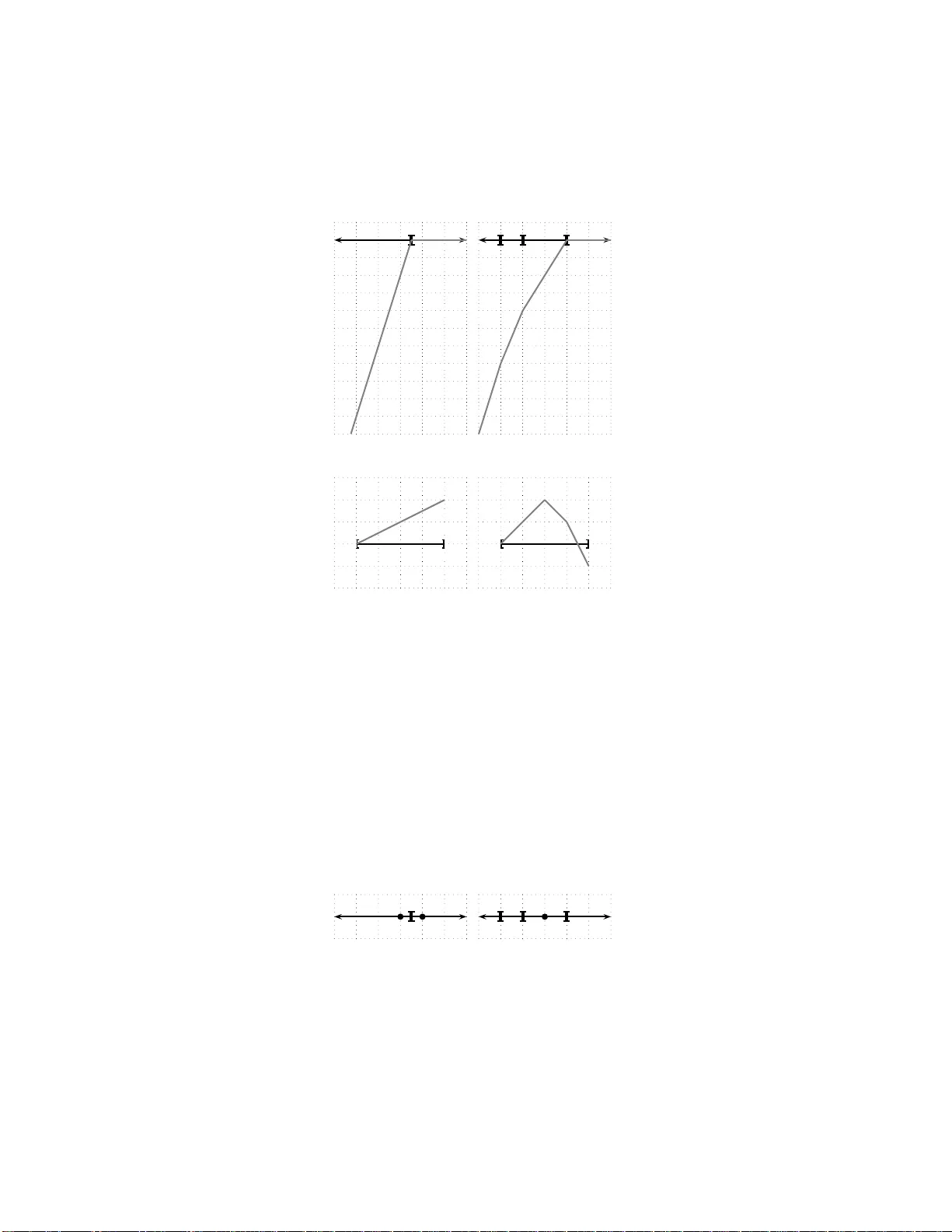
A G Co des from P olyhedra l Divisors Nathan Ow en Ilten and Hendrik S¨ uß Octob er 29, 2018 Abstract A description of co mplete normal v arieties with lo w er d imensional torus action has b een giv en in [AHS08], generalizing the theory of toric v arieti es. Considering the case where the act in g torus T has co dimension one, we describe T -in v arian t W eil and Cartier divisors and pr o vide formulae for ca lculating global sections, in tersection n u m b ers, and Euler c haracteristics. As a n application, w e use divisors o n these so- called T -v arieties to define new ev aluati on co des called T -codes. W e find estimate s on their minim um distance using intersectio n theory . This generalizes the theory of toric co des and combines it with A G co des on curv es. As the s implest application of our general tec hniques we look at co des on ruled sur faces co m ing from decomp osable v ector bundles. Already t his construction giv es co des that are b etter than the related pro du ct co de. F ur ther examples sho w that w e can imp r o ve these co des b y constructing more sophisticated T -v arieties. T h ese results su ggest to lo ok fu rther for go o d co d es on T -v ariet ies. 1 In tro duc t ion An imp ortant class of linear co des is the class of Algebraic Geometry Co des, in tro duced b y Goppa in 1981. These codes arise b y ev aluating glo ba l sections o f a line bundle on a curv e ov er F q at a num b er of F q -rational p oints; go o d estimates on the dimension and minim um distance of suc h co des can b e obtained b y using the theorem of Riemann-Ro c h. Suc h co des hav e since b een generalized to higher-dimensional v arieties. It is ho w ev er often difficult to obtain non-trivial estimates on the parameters of su c h co des. One class of v a rieties where non-trivial es timates ha ve b een made is that of toric v arieties, whic h one can des crib e com binatorially . T oric v arieties ha v e b een generalized in [AH06 ] and [AHS08] to so- called T -v arieties, whic h are normal v arieties admitting an effectiv e m -dimensional torus action. T -v arieties can then b e describ ed b y a v ariet y Y of dimension dim X − m along with com binato rial data called a divisorial fan. If the acting torus has co dimension one, Y is t hen a curve. The a im of this pap er is to analyze certain ev aluation co des on suc h v arieties; w e shall call these co des T -co des. In short, a T -co de ov er F q is constructed f rom: • a curve Y o ve r F q ; 1 • a so-called divisorial p olytop e (cf. definition 3.8), essen tially a concav e function h ∗ : h → Div Q Y where h is a p olytop e with v ertices in some lattice M ∼ = Z m and h ∗ satisfies some additional conditions; • and a set P = { P 1 , . . . , P l } of F q -rational p oin ts on Y . Assuming t ha t the supp ort of h ∗ ( u ) is disjoin t from P for eac h u ∈ h ∩ M , w e can define the T -co de C ( Y , h ∗ , P ) as the sum of a n umber o f pro duct co des: C ( Y , h ∗ , P ) := X u ∈ h ∩ M C u ⊗ C ( Y , h ∗ ( u ) , P ) where C u is the [( q − 1) m , 1 , ( q − 1) m ] co de generated b y ( t u ) t ∈ ( F ∗ q ) m and C ( Y , h ∗ ( u ) , P ) is the A G co de corresp onding to the curv e Y , divisor h ∗ ( u ), and p o int set P . By in terpreting C ( Y , h ∗ , P ) as the image unde r a linear map of the Riemman-Ro ch space of a divisor on a T - v ariet y , we are able to giv e non-trivial estimates for the dimension k and minimum distance d o f this co de. W e b egin in section 2 b y recalling the ba sic theory of T - v arieties. W e then pro ceed to describe divisors and in tersection theory on T -v arieties in section 3. In particular, w e describe all T - in v ariant Cartier and W eil divisors combinatorially , calculate the global sections of a T -in v arian t Cartier divisor, and dete rmine exactly when a T -Cartier divisor is (semi-)ample. F urthermore, w e pro vide formulae for calculating in tersection nu m b ers and for the Euler c haracteristic of a line bundle. The t heory of this section is analogue t o that of divisors on toric v arieties and is essen tial for estimating the pa r a meters of t he ev aluation co des w e construct. In section 4, w e define T -co des and show ho w to estimate dimension and minimum distance, pro viding upp er and lo wer b ounds for b oth parameters. W e g iv e sp ecial atten tion to the case of tw o-dimensional T -v arieties, where we provide a b etter low er b ound for the minim um distance. Finally , w e provide a n um b er of examples in section 5. W e first consider T -co des coming from those ruled surfaces corresp onding to a rank t wo decomp osable v ector bundle. In particular, we show that some of these co des hav e b etter parameters tha n those estimated for the pro duct of a Reed-Solo mon and a one-p oin t Goppa co de. In a second example, w e sho w how one can use the Hasse-W eil b ound to impro ve the low er b ound on the minim um distance. This example also sho ws that there are b etter T -co des than those coming from ruled surfaces. In a final example, w e describ e a T - co de ov er F 7 whose parameters ar e as go o d as an y kno wn linear co de. 2 The The o ry of T -V arieties First w e recall some facts and notatio ns from con v ex geometry . Here, N alw ays is a lattice and M := Hom( N , Z ) its dual. The asso ciated Q -vector spaces N ⊗ Q and M ⊗ Q a r e denoted b y N Q and M Q resp ectiv ely . Let σ ⊂ N Q b e a p oin ted con v ex p o lyhedral cone. A p olyhedron ∆ whic h can b e written as a Mink o wski sum ∆ = π + σ of σ and a compact p olyhedron π is said to ha ve σ as its tail cone. 2 With resp ect to Mink o wski a ddition the p olyhedra with tail cone σ form a semigroup whic h we denote by P ol + σ ( N ). Note that σ ∈ Pol + σ ( N ) is t he neutral elemen t of this semigroup and that ∅ is by definition also an elemen t of Pol + σ ( N ). A p olyhedral divisor with tail cone σ on a normal v ariet y Y is a formal finite sum D = X D ∆ D ⊗ D , where D runs o ver all prime divisors on Y and ∆ D ∈ P ol + σ . Here, finite means that only finitely man y co efficien ts differ fro m the tail cone. W e ma y ev aluate a p olyhedral divisor for ev ery elemen t u ∈ σ ∨ ∩ M via D ( u ) := X D min v ∈ ∆ D h u, v i D in order to obtain an ordinary div isor on Lo c D . Here, Lo c D := Y \ S ∆ D = ∅ D denotes the lo cus of D . Definition 2.1. A p olyhedral divisor D is called Cartier if ev ery ev aluation D ( u ), u ∈ σ ∨ ∩ M , is Cartier. T o a Cartier p olyhedral divisor we asso ciate a M -gra ded k -algebra sheaf and consequen tly an affine sc heme o ver Lo c D admitting a T M -action: ˜ X := ˜ X( D ) := Spec Loc D M u ∈ σ ∨ ∩ M O ( D ( u )) . F rom [AH06] we know that this construction giv es a normal v ariet y of dimension dim N + dim Y admitting a to rus action of T N with L o c D as its go o d quotient. Moreo ve r, fo r every affine normal v ariety X there exists a p olyhedral divisor D such that X = Sp ec Γ( ˜ X( D ) , O ˜ X( D ) ). X and ˜ X coincide if X admits a torus action with a go o d quotien t. Definition 2.2. Let D = P D ∆ D ⊗ D , D ′ = P D ∆ ′ D ⊗ D b e tw o p o lyhedral divisors on Y . 1. W e write D ′ ⊂ D if ∆ ′ D ⊂ ∆ D holds for ev ery prime divisor D . 2. W e define the in tersection of p olyhedral divisors D ∩ D ′ := X D (∆ ′ D ∩ ∆ D ) ⊗ D . 3. W e define the degree of a p olyhedral divisor deg D := X D ∆ D . 4. F or a (not necess arily closed) p oin t y ∈ Y w e define the fibre p olyhedron ∆ y := D y := P y ∈ D ∆ D . 3 5. W e call D ′ a fac e of D and write D ′ ≺ D if D ′ y is a face of D y for ev ery y ∈ Y . Assume D ′ ⊂ D . This implies M u ∈ σ ∨ ∩ M O ( D ′ ( u )) ← ֓ M u ∈ σ ∨ ∩ M O ( D ( u ))) and w e get a dominan t mo r phism ˜ X( D ′ ) → ˜ X( D ). Prop osition 2.3 ( [AHS08 ], Prop. 3.4, Rem. 3 .5 ) . This morph i s m defines a n op en emb e dding if and only if D ′ ≺ D holds . Definition 2.4. Consider a smo oth pro jectiv e curve Y . A fansy d i v i sor is a formal finite sum Ξ = X P ∈ Y Ξ P ⊗ Z suc h that: 1. Ξ P are p olyhedral sub divisions cov ering N Q and sharing a common ta il fa n; 2. Finite means here that for all but finitely man y p oin ts, Ξ P equals the tail fan. Consider a finite set of p o lyhedral divisors S , suc h that D ≻ D ′ ∩ D ≺ D ′ for ev ery pair D , D ′ ∈ S . Assume furthermore that their p olyhedral co efficien ts D P form the sub divisions Ξ P of a fansy divisor. F rom suc h a set w e ma y construct a sche me ˜ X(Ξ) by gluing X( D )s via ˜ X( D ) ← ˜ X( D ∩ D ′ ) → ˜ X( D ′ ) . Note that w e had to c hec k the co cycle condition, this is done in [AHS08, Thm. 5.3]. F rom theorem 7 .5 ibid. w e kno w t ha t we get a complete v ariet y this w ay . This v ariet y is uniquely determined b y the underlying fansy divisor. Differen t sets S corresp ond to differen t op en co ve rings. Therefore, w e ma y denote t he resulting v ariet y b y ˜ X(Ξ). Theorem 5.6 in [AHS08 ] tell us that for ev ery normal T -v ariet y X with dim X = dim T + 1 w e may find a fansy divisor Ξ and a prop er birat io nal map ˜ X(Ξ) → X . If X admits a go o d quotien t under the torus action this morphism t urns o ut to b e the iden tity . Remark 2.5. F or a fansy divisor Ξ a nd an op en cov ering { U i } i ∈ I of Y w e can find a set S as ab ov e, suc h that for ev ery D ∈ S there is a i ∈ I suc h that Lo c D = U i . Example 2.6. Let Y b e a smo oth pro jectiv e curv e and Q 1 , Q 2 ∈ Y tw o p o in ts. W e consider the fansy divisor Ξ given b y the co efficien ts in figure 1. ˜ X(Ξ) is a complete surface with one dimensional torus action. Example 2.7. W e consider the fansy divisor on P 1 giv en by the co efficien ts in figure 2. ˜ X(Ξ) is a complete (singular) t hr eefold with t w o -dimensional torus action. 4 -3 -2 -1 0 1 2 3 -1 0 1 (a) Ξ Q 1 -3 -2 -1 0 1 2 3 -1 0 1 (b) Ξ Q 2 Figure 1: The fansy divisor of a surface -3 -2 -1 0 1 2 3 -3 -2 -1 0 1 2 3 (a) Ξ 0 -3 -2 -1 0 1 2 3 -3 -2 -1 0 1 2 3 (b) Ξ ∞ -3 -2 -1 0 1 2 3 -3 -2 -1 0 1 2 3 (c) Ξ 1 Figure 2: The fa nsy divisor of a threefold 3 Divisors and In te r s ection Theory on T -V arieties F rom no w on w e shall only consider torus actions of co dimension one; w e will study them via fansy divisors. 3.1 Cartier divisors Let Σ ⊂ N Q b e a complete p o lyhedral sub division of N consisting of ta iled p olyhedra. W e consider contin uous functions h : | Σ | → Q whic h are affine on eve ry p olyhedron in Σ. Let ∆ ∈ Σ b e a p olyhedron with tail cone δ . Then h induces a linear function h ∆ 0 on δ = tail ∆ b y defining h ∆ 0 ( v ) := h ( P + v ) − h ( P ) f o r some P ∈ ∆. W e call h ∆ 0 the linear part o f h | ∆ . Definition 3.1. An (in tegral) supp ort function on a po lyhedral sub division Σ is a piecewis e affine func tion a s ab ov e with in teger slope and integer translation. T o b e pr ecise: for v ∈ | Σ | and k ∈ N suc h that k v is a lattice point w e ha v e k h ( v ) ∈ Z . The group of supp ort functions on Σ is denoted by SF Σ . Let Ξ b e a divisorial fa n on a curv e Y . F or ev ery P ∈ Y w e get a p olyhedral sub division Ξ P consisting of p olyhedral co efficien ts. W e consider SF(Ξ), the group of forma l sums P P ∈ Y h P P with 1. h P ∈ SF Ξ P a supp o r t function o f the P -slice of Ξ. 2. all h P ha ve the same linear part h 0 . 3. h P differs from h 0 for only finitely man y p oin ts P ∈ Y . We r efer to this fact by c al ling this sum finite and w e omit those summands which e qual h 0 . Definition 3.2. A supp ort function h ∈ SF ( Ξ ) is called principal if h ( v ) = h u, v i + D , with u ∈ M and D is a principal divisor on Y . By h ( v ) = h u, v i + D w e mean that h P ( v ) = h u, v i + a P , where D = P P a P P . 5 If h = P h P P ∈ SF(Ξ) w e c o nsider a co vering { Y i } of Y suc h t ha t P is a principal divisor on the Y i for ev ery P ∈ Y with h P 6 = h 0 , and suc h that ev ery Y i con tains at most one of these p oints . W e ma y find a set S as ab o ve whic h is compatible with this cov ering and induces Ξ. No w w e c ho ose a D ∈ S with Lo c D = Y i and h P 6 = h 0 . h P is an a ffine function o n ev ery p olyhedron in Ξ P so we get − h P | D P ( v ) = h v , u i + a for some u ∈ M and a ∈ Z . A ssume that div( f ) = aP on Y i ; then f · χ u ∈ K ( ˜ X( D )) T defines a T -inv ariant principal divisor H D on ˜ X( D ). These principal divisors fit together to a Cartier divisor D h on ˜ X(Ξ). Here K ( ˜ X( D )) T := L u ∈ M K ( Y ) · χ u ⊃ Γ( ˜ X( D )) denotes the ring of in v arian t rationa l functions on ˜ X( D ). In this wa y the group of in tegra l supp ort functions on Ξ corr esp o nds to that of in v arian t Cartier divisors on ˜ X(Ξ). 3.2 W eil divisors In general there a r e tw o t yp es of T - in v ariant prime divisors, namely those whic h consist 1. of o rbit closures of dimension dim T ; 2. and of orbit closures of dimension dim T − 1. Prop osition 3.3. If D is a p olyhe dr al d i v isor on a curve with tailc one σ , t h er e a r e one-to-one c orr esp ondenc es 1. b etwe en prime divisors of typ e 1 and p airs ( P , v ) with P a p oint on Y and v a v ertex of ∆ P ; 2. b etwe en prime divisors of typ e 2 and r ays ρ of σ with deg D ∩ ρ = ∅ . Pr o of. Consider the quotien t map π : ˜ X → Loc D . In [AH06] the orbit structure of t he fibres of π is describ ed. Thus , w e kno w that faces F ≺ D y corresp ond to T -inv ar ian t sub v arieties of co dimension dim( F ) in π y := π − 1 ( y ). The corresp ondences f ollo w by using this for closed p oints and the generic p oin t , respectiv ely . Remark 3.4. W e ma y also describ e the ideals of prime divisors in terms o f p olyhedral divisors: 1. F or prime divisors of type 1 corresp onding to a v ertex ( P , v ), the ideal is giv en by I P ,v = M u ∈ σ ∨ Γ( Y , O ( D ( u ))) ∩ { f | ord P ( f ) > h v , u i} . 2. F or prime divisors of t yp e 2, the corresp onding ideal is generated b y all m ultidegrees whic h are not orthogo nal to ρ : I ρ = M u ∈ σ ∨ \ ρ ⊥ Γ( Y , O ( D ( u ))) . 6 Prop osition 3.5. L et h = P P h P c orr esp ond to the Cartier div i sor D h on ˜ X ( D ) . The c orr esp onding Weil divisor is given by − X ρ h 0 ( n ρ ) ρ − X ( P, v ) µ ( v ) h P ( v )( P , v ) , wher e µ ( v ) is the smal lest inte ger k ≥ 1 s uch that k · v is a lattic e p oint. This lattic e p oint is a multiple of the primitive lattic e ve ctor n v : µ ( v ) v = ε ( v ) n v . Pr o of. This is a lo cal statemen t, so w e will pass to a sufficien tly small inv aria n t op en a ffine set whic h meets a particular prime divisor. If w e translate this to our com binato rial lang uage and w e consider a prime divisor corresp o nding to ( P , v ) or ρ then w e hav e to c ho ose a p olyhedral divisor D ′ ≺ D ∈ S suc h that v is also a vertex o f D ′ P or ρ is a ra y in tail D ′ , resp ectiv ely . So w e restrict to following tw o (a ffine) cases: 1. D is a p o lyhedral divisor with tail cone σ = 0 and a single p oint ∆ P = { v } ⊂ N as the only non trivial co efficien t. Moreo ver, Y is affine and factorial. In particular, P is a prime divisor with (lo cal) parameter t P . 2. D is the trivial polyhedral divisor with one dimens io nal tail cone ρ ov er an affine lo cus Y . In the first case w e ma y c ho ose Z -Basis e 1 , . . . , e m of N with e 1 = n v . Consider the dua l basis e ∗ 1 , . . . , e ∗ m . By definition ε ( v ) and µ ( v ) are coprime so w e will find a, b ∈ Z suc h that aµ ( v ) + bε ( v ) = 1. In this situation y := t a P χ be ∗ 1 is ir r educible in Γ( O X ) = Γ( O Y )[ y , t ± ε ( v ) P χ ∓ µ ( v ) e ∗ 1 , χ ± e ∗ 2 , . . . , χ ± e ∗ m ] and defines t he prime divisor ( P , v ). W e consider an elemen t t α P χ u with u = P i λ i e ∗ i . The y -order of t α P χ u is ε ( v ) λ 1 + µ ( v ) α = µ ( v )( h u, v i + α ) , b ecause t α P χ u = y ε ( v ) λ 1 + µ ( v ) α ( t − ε ( v ) P χ µ ( v ) e ∗ 1 ) λ 1 a + bα , and ( t − ε ( v ) P χ µ ( v ) e ∗ 1 ) is a unit. In the second case w e choose a Z -basis e 1 , . . . , e m of N with e 1 = n ρ . W e once aga in consider the dual basis e ∗ 1 , . . . , e ∗ m . In this situation Γ( O X ) = Γ( O Y )[ χ e ∗ 1 , χ ± e ∗ 2 , . . . , χ ± e ∗ m ] . No w ( χ e ∗ 1 ) defines the prime divisor ρ on X . F o r a principal divisor f · χ u , the χ e ∗ 1 -order equals the e ∗ 1 -comp onen t of u , i.e. h u, n ρ i . Example 3.6. F or our threefold example we consider D h where h 0 , h ∞ , h 1 are given b y the tropical p olynomials h 0 = 0 ⊙ x ( − 1 , 0) ⊕ 0 ⊙ x ( − 1 , 1) ⊕ 0 ⊙ x (0 , 1) ⊕ 0 ⊙ x (1 , 0) ⊕ 1 ⊙ x (1 , − 1) ⊕ 1 ⊙ x (0 , − 1) h ∞ = ( − 2) ⊙ x ( − 1 , 0) ⊕ ( − 2) ⊙ x ( − 1 , 1) ⊕ ( − 1) ⊙ x (0 , 1) ⊕ ( − 1) ⊙ x (1 , 0) ⊕ ⊕ ( − 2) ⊙ x (1 , − 1) ⊕ ( − 2) ⊙ x (0 , − 1) h 1 = 1 ⊙ x ( − 1 , 0) ⊕ 1 ⊙ x ( − 1 , 1) ⊕ 0 ⊙ x (0 , 1) ⊕ 0 ⊙ x (1 , 0) ⊕ 0 ⊙ x (1 , − 1) ⊕ 0 ⊙ x (0 , − 1) 7 where w e are using the tropical semi-ring with o p erations ⊕ = min , ⊙ = +. These suppor t functions are pictured in figure 3 . The W eil divisor corresp o nding to D h is P ρ D ρ + 2 D ( ∞ , 0) + 2 D ( ∞ , ( − 1 , − 1)) . This is the an ti- canonical divisor of X := ˜ X(Ξ) [PS08 ]. (a) h 0 (b) h ∞ (c) h 1 Figure 3: Supp or t functions f o r a T - t hr eefold 3.3 Global sections F or a supp ort function h on X w e ma y consider the M - graded vec tor s pa ce of global sections of D h L ( D h ) = M u ∈ M L ( D h ) u := Γ( X , O ( D h )) . The weight set o f L ( D h ) is defined as the set { u ∈ M | L ( D ) u 6 = 0 } . F or a Cartier divisor giv en b y h ∈ T-CaDiv (Ξ) w e will b ound its w eight set by a p olyhedron as w ell as describ e the graded mo dule structure of L ( D ). Consider a supp or t function h = P P h P P with linear part h 0 . W e define its asso ciated p olytop e h := h 0 := { u ∈ M Q | h u, v i ≥ h 0 ( v ) ∀ v ∈ N } and asso ciate a dual function h ∗ : h → Div Q Y via h ∗ ( u ) := X P h ∗ P ( u ) P := X P min v ert ( u − h P ) P , where min v ert ( u − h P ) denotes the minimal v alue of u − h P on the ve r t ices of Ξ P . Remark 3.7. Let h b e a conca v e supp o r t function. Ev ery affine piece of h P corresp onds to a pair ( u, − a u ) ⊂ M × Z . h ∗ P is defined to b e the coarsest concav e piecewise a ffine f unction with h ∗ P ( u ) = a u . W e can reform ulate this in terms o f the tro pical semi-ring with op eratio n ⊕ = min , ⊙ = +. W e might think of the h P as g iv en b y tropical p olynomials L w ∈ I ( − a w ) ⊙ x w , then h = con v ( I ) and h ∗ P ( w ) = a w , i.e. Γ h ∗ P is the reflected low er newton b oundary of the tropical p olynomial for h P . Definition 3.8. A divisorial p olytop e h ∗ is a pair consisting of an ordinar y p olytop e h ⊂ M Q and a concav e piecewise affine function h ∗ : h → Div Q Y suc h that 8 1. deg h ∗ ( u ) ≥ 0 for all v ertices u of h , 2. some multiple of h ∗ ( u ) is principal in case of deg h ∗ ( u ) = 0 for a v ertex u . 3. h is a lattice p olytop e as is con v (Γ h ∗ P ) fo r eac h P ∈ Y . Let g , h ∈ M Q b e p olytop es. F or a ny conca ve piecewise affine functions g ∗ : g → Div Q Y and h ∗ : h → Div Q Y w e define their s um g ∗ + h ∗ to be the piecew ise affine conca v e function on g + h giv en by ( g ∗ P + h ∗ P )( u ) = max { h ∗ P ( w ) + g ∗ P ( w ′ ) | u = w + w ′ } . Remark 3.9. F or g , h ∈ S F (Ξ), one easily c heck s that g + h ⊂ g + h and that g ∗ P ( u ) + h ∗ P ( u ) ≤ ( g + h ) ∗ P ( u ) for all P ∈ Y and all u ∈ g + h . F urthermore, if h P and g P are con vex , they corresp ond to tropical polynomials f , f ′ . It follo ws then t hat ( g + h ) P corresp onds to f ⊙ f ′ . Its reflected lo we r newton b oundary is exactly the graph of ( g + h ) ∗ P , thus the equalit y ( g + h ) ∗ P = g ∗ P + h ∗ P holds. T o a divisorial p olytop e h ∗ w e migh t a sso ciate a fansy divisor Ξ and supp ort f unction h on Ξ suc h that h ∗ corresp onds to h in the wa y giv en ab ov e. Indeed, to ev ery h ∗ P w e can asso ciate a tropical p o lynomial f := L ( u,a u ) ( − a u ) ⊙ x u , where ( u , a u ) runs o v er the vertice s of Γ ( h ∗ P ) . This polynomial induces via ev aluation a piecew ise affine function and a p olyhedral sub division Ξ P of N . Remark 3.10. If w e remo ve condition 3 from the definition of a divisorial po lytop e (defini- tion 3.8), the asso ciation in the a b ov e paragraph giv es us a Q -Cartier divisor. F or ev ery fansy divisor there exists a smo oth refinemen t, i.e. a fansy divisor Ξ ′ suc h that ev ery Ξ ′ P is a refinemen t of Ξ P and ˜ X(Ξ ′ ) is smo oth [S ¨ uß08]. Eve r y supp o r t function h on Ξ is ob viously a lso a supp ort function on Ξ ′ . Th us, f or a g iven divisorial p olytop e h ∗ w e migh t a lw ay consider a smo oth fansy divisor Ξ and a supp ort function h on it suc h that the asso ciated dual function equals h ∗ . Example 3.11. W e no w revisit our threefold example. Figure 4 show s a sk etch of h ∗ . W e sho w a refinemen t of the fansy divisor in figure 5 whic h giv es a smo oth threefold. Prop osition 3.12. L et h ∈ S F (Ξ) b e a Cartier divisor with line ar p art h 0 . Then 1. The we i g ht s e t of L ( D h ) is a subset of h . 2. for u ∈ h we have L ( D h ) u = Γ( Y , O ( h ∗ ( u ))) . 9 (a) h ∗ 0 (b) h ∗ ∞ (c) h ∗ 1 Figure 4: h ∗ for a T -threefold -3 -2 -1 0 1 2 3 -3 -2 -1 0 1 2 3 (a) Ξ ′ 0 -3 -2 -1 0 1 2 3 -3 -2 -1 0 1 2 3 (b) Ξ ′ ∞ -3 -2 -1 0 1 2 3 -3 -2 -1 0 1 2 3 (c) Ξ ′ 1 Figure 5: A refined p olyhedral divisor Pr o of. By definition of O ( D h ) we hav e Γ( X , O ( D h )) T = { χ u f | div ( χ u f ) − X ρ h 0 ( n ρ ) ρ − X ( P, v ) µ ( v ) h P ( v )( P , v ) ≥ 0 } . But div ( χ u f ) = P ρ h u, n ρ i ρ + P ( P, v ) µ ( v )( h u, v i + ord P ( f ))( P , v ), so for χ u f ∈ L ( h ) w e get the follo wing b ounds: 1. h u, n ρ i ≥ h 0 ( n ρ ) ∀ ρ 2. ord P ( f ) + h u, v i ≥ h P ( v ) ∀ ( P, v ) The first implies that u ∈ h ∩ M , the second that ord P ( f ) + ( u − h P )( v ) ≥ 0 ∀ ( P , v ). Definition 3.13. F or a cone σ ∈ Ξ ( n ) 0 of maximal dimension in the tail fan and a P ∈ Y we get exactly one p olyhedron ∆ σ P ∈ Ξ P ha ving tail σ . F or a g iv en concav e supp ort function h = P h P P W e hav e h P | ∆ σ P = h· , u h ( σ ) i + a h P ( σ ) . The constan t part give s rise to a divisor o n Y : h | σ (0) := X P a h P ( σ ) P . Prop osition 3.14. A T -Cartier divisor h = P h P ∈ T-CaD iv(Ξ) is ( s emi-)ample if a n d only if al l h P ar e strictly c onc ave (c onc ave) and − h | σ (0) is (semi-)a mple f o r al l tail c ones σ , i.e. deg − h | σ (0) = − P P a h P ( σ ) > 0 (or a multiple of − h | σ (0) is princip al). 10 Pr o of. W e first prov e that semi-ampleness follows fro m the ab ov e criteria. Because h is (strictly) concav e the same is true for h 0 . This implies that t he u h ( σ ) are exactly the v ertices o f h and h ∗ ( u h ( σ )) = h | σ (0). The semi-ampleness for h ∗ ( u ) , u ∈ h ∩ M f ollo ws from the semi-ampleness at the v ertices. Indeed if D , D ′ are semi-ample divisors on Y this is also tr ue fo r D + λ ( D ′ − D ) with 0 ≤ λ ≤ 1. Ev ery v ertex ( u, a u ) of Γ h ∗ P corresp onds to an affine piece o f h P of the fo r m h u, · i − a u . If w e let f b e suc h that div ( f ) = a u P o n L o c D f or some D ∈ S we then hav e D h | ˜ X( D ) = div( f − 1 χ − u ) (see 3.1 o n page 6) . A p oint ( u, a u ) ∈ M × Z is a v ertex of h ∗ exactly if ( k u, k a u ) is a v ertex of ( k · h ) ∗ . Hence, after passing to a suitable multiple of h w e ma y a ssume, that h ∗ ( u ) is base-p oin t f r ee with f b eing a g lobal section whic h generates O ( h ∗ ( u )) on Lo c D . Th us f χ u is a global section of O ( D h ) whic h generates O ( D h ) | ˜ X( D ) . T o sho w t he other direction, i.e. that semi-ampleness implies the ab o ve criteria, assume that h P is not conca v e. Then this is true also for ev ery m ultiple of ℓ · h P and hence there is an affine piece h u, · i − a u of ℓ h P suc h that a u > ( ℓh P ) ∗ ( u ). This means there is no global section f χ u suc h that div( f ) = a u P . But this con tradicts the base-p oin t freeness of D ℓh and hence the semi-ampleness o f D h . T o get the statement for ampleness note tha t a supp ort function h on a p olyhedral sub division is strictly conca ve if and only if for ev ery supp ort function h ′ there is a k ≫ 0 suc h that h ′ + k h is concav e. Corollary 3.15. ˜ X(Ξ) is pr oje ctive if a n d only if al l Ξ P ar e r e gular sub divisions, i.e. admit a strictly c onvex supp ort function. Remark 3.16. W e see from prop osition 3.14 t ha t fo r h ∈ S F (Ξ), if the T - in v arian t divisor D h is semi-ample, t he corresp onding dual function h ∗ is in fact a divisorial p olytop e. Con- v ersely , if h ∗ is a divisorial p olytop e, the asso ciated divisor o n the asso ciated T -v ariet y is semi-ample. 3.4 In tersection num b ers Definition 3.17. F or a divisorial p olytop e h ∗ w e define its volume to b e v ol h ∗ := X P Z h h ∗ P v ol M R F or divisorial p o lytop es h ∗ 1 , . . . , h ∗ k w e define their mi x e d volume b y V ( h ∗ 1 , . . . , h ∗ k ) := k X i =1 ( − 1) i − 1 X 1 ≤ j 1 ≤ ...j i ≤ k v ol ( h ∗ j 1 + · · · + h ∗ j i ) Prop osition 3.18. Assume that o n X Ko dair a’s V anishing The or em holds. 1. If D h is semi- ample, for the self-interse ction numb er we get ( D h ) ( m +1) = ( m + 1)! v ol h ∗ . 11 2. L et h 1 , . . . , h m +1 define s e mi-ample div i s ors D i on X (Ξ) . Then ( D 1 · · · D m +1 ) = ( m + 1)! V ( h ∗ 1 , . . . , h ∗ m +1 ) . Pr o of. If w e apply (1) to ev ery sum of divisors f rom D 1 , . . . , D m +1 w e get (2) b y the multi- linearit y and symmetry of in t ersection n umbers. T o pro ve (1) w e first recall that ( D h ) m +1 = lim ν →∞ ( m + 1)! ν m +1 χ ( X , O ( ν D h )) , but for pro jectiv e X := X(Ξ) a nd nef divisors the ranks o f higher cohomology gr o ups are asymptotically irrelev an t [D em01 , Thm. 6.7.] so we get ( D h ) m +1 = lim ν →∞ ( m + 1)! ν m +1 h 0 ( X , O ( ν D h )) . Note that ( ν h ) ∗ ( u ) = ν · h ∗ ( 1 ν u ). Now w e can b ound h 0 b y X u ∈ ν h ∩ M deg ⌊ ν h ∗ 1 ν u ⌋ − g ( Y ) + 1 ≤ h 0 ( O ( ν D h )) ≤ X u ∈ ν h ∩ M deg ⌊ ν h ∗ 1 ν u ⌋ + 1 . (1) On the one hand w e ha v e lim ν →∞ ( m + 1)! ν m +1 X u ∈ ν h ∩ M deg ⌊ ν h ∗ 1 ν u ⌋ = lim ν →∞ ( m + 1)! ν m X u ∈ h ∩ 1 ν M 1 ν deg ⌊ ν h ∗ ( u ) ⌋ = ( m + 1 ) ! Z h h ∗ v ol M R . On the other hand, fo r any constant c w e hav e lim ν →∞ 1 ν m +1 X u ∈ ν h ∩ M c = c · lim ν →∞ #( ν · h ∩ M ) ν m +1 = 0 . Th us, if we pass to the limit in (1), t he term in the middle has to con verge to vol h ∗ . Remark 3.19. The theorem allow s us to compute in tersection n um b ers in c haracteristic 0 as we ll as on T -surfaces in p ositiv e c haracteristic b ecause Ko daira’s v anishing the orem holds in thes e cases. W e believ e that the theorem ho lds as w ell for positive c haracteristic in higher dimensions; w ork is b eing do ne to show that the v anishing theorem holds t here. Corollary 3.20. L et h ∈ S F (Ξ) and let C b e any o n e-cycle r ational l y e quivalen t to the interse ction of Cartier divisors, e ach of which c an b e expr esse d as an inte ger line ar c ombi- nation of semi-amp le Cartier divisors. Then D h · C is e qual to D h + P − Q · C for al l p oints P , Q ∈ Y . 12 Pr o of. W e ha ve D h + P − Q · C = ( D h − D − P + D − Q ) · C = D h · C − D − P · C + D − Q · C so it is sufficien t to show that D − P · C = D − Q · C . No w, D − P and D − Q are semi-ample, so w e can apply prop osition 3.18. Using the fact that v ol (( − P ) ∗ + e h ∗ ) = v ol(( − Q ) ∗ + e h ∗ ) for all e h ∈ S F (Ξ) giv es the desired equality . Example 3.21. W e kno w by prop osition 3.14 that D h in o ur threefold is ample. W e ha v e v ol h ∗ = 21. Hence, X is F a no o f degree 21 . 3.5 Gen us of Curv es on S urfaces Let X = ˜ X (Ξ) b e a tw o-dimensional T -v ariet y and let h ∈ S F (Ξ) b e a supp or t function on Ξ. F or a n y curv e C ∈ | D h | , we show ho w to calculate the arithmetic g enus g ( C ). As a corollary , w e can calculate the Euler c har a cteristic χ ( X , O ( D h )) if X is smo oth. Definition 3.22. F or an y h ∈ S F (Ξ) , let in t h ∗ P := X u ∈ ◦ h ∩ M # { a ∈ Z ≥ 0 | a < | h ∗ P ( u ) |} · h ∗ P ( u ) | h ∗ P ( u ) | for eac h p oin t P ∈ Y , where ◦ h is t he interior of h . F urthermore, let in t h ∗ := X P ∈ Y in t h ∗ P . Definition 3.23. F or an y h ∈ S F (Ξ) , let # h ∗ P := X u ∈ h ∩ M ⌊ h ∗ P ( u ) ⌋ for an y p oint P ∈ Y and let # h ∗ := X u ∈ h ∩ M deg ⌊ h ∗ ( u ) ⌋ = X Y ∈ P # h ∗ P . Remark 3.24. Note that int h ∗ P is the num b er of “in terio r ” lattice p oin ts b etw een the gr a ph of h ∗ P and 0 counte d with their signs, where lattice p oin ts in heigh t 0 are counted as long as they aren’t on t he b oundary of h . Similarly , if # h ∗ P ( h ) ≥ 0 for all u ∈ h , # h ∗ P is the sum of the n umber of lattice p oints b et we en the graph of # h ∗ P and 0, where w e coun t no la ttice p oints in heigh t 0 but all lattice p o in ts lying on the graph of h ∗ P . W e will use the f o llo wing lemma: Lemma 3.25. With notation as ab ove, 2 · vol h ∗ P = in t h ∗ P + # h ∗ P for al l P ∈ Y . It fol lows in p articular that 2 · v ol h ∗ = in t h ∗ + # h ∗ . 13 Pr o of. Fix some P ∈ Y . Supp ose now that h ∗ P ( u ) ≥ 0 for all u ∈ h and set ∆ = conv {{ ( u, h ∗ P ( u )) } ∪ { ( u, 0 ) }} , where u ∈ h . This is a conv ex p olytop e in M ′ Q , where M ′ = M × Z . Pick ’s theorem tells us that 2 · v ol ∆ + 2 = #(∆ ∩ M ′ ) + #(∆ ◦ ∩ M ′ ). Now v o l ∆ = vol h ∗ P , #(∆ ∩ M ) = # h ∗ P + #( h ∩ M ), and #(∆ ◦ ∩ M ) = in t h ∗ P − # ( h ∩ M ) + 2, so the desired equality follo ws. F o r general h ∗ P , c ho ose j suc h that e h ∗ P ( u ) := h ∗ P ( u ) + j ≥ 0 for all u ∈ h . The n 2 · v ol e h ∗ P = in t e h ∗ P + # e h ∗ P and for j ∗ P ( u ) := j we hav e 2 · vol j ∗ P = in t j ∗ P + # j ∗ P . Since v ol , in t , and # are additive at least for integer-v alue d functions, the desired equality f ollo ws for h ∗ P = e h ∗ P − j ∗ P . W e are no w able to prov e t he follo wing prop osition: Prop osition 3.26. L et h ∈ S F (Ξ) b e any supp ort function such that D h is semi-a m ple. Then fo r C ∈ | D h | , the arithmetic genus of C is given by g ( C ) = in t h ∗ + 1 + v ol h · ( g ( Y ) − 1) , wher e g ( Y ) is the genus of Y . Pr o of. Without loss o f generality , w e can t a k e the curv e C to equal D h . Indeed, arithmetic gen us is inv ariant under ra tional equiv alence and since | D h | isn’t empt y , it m ust con tain some T -inv ariant effectiv e divisor. W e compare the gen us o f C with that of a comparable curv e C 0 on X 0 := Y × P 1 and then compute the genus o f C 0 directly . T o b egin with, note that we can find monoidal tr ansformations π i : X i → X i − 1 1 ≤ i ≤ k suc h that; 1. X i is a T - v ariet y ; 2. π i is T -equiv arian t; 3. There is a biratio na l T - equiv arian t morphism ϕ : X k → X . This is done as fo llo ws: Let Σ b e the fan { Q ≥ 0 , Q ≤ 0 , { 0 }} . . . and let Ξ 0 P := Σ for all p oints P ∈ Y . Then X 0 = ˜ X (Ξ 0 ). Eac h morphism π i corresp onds to an additional sub division in the fan Ξ i − 1 at exactly one p oin t. Th us, w e k eep on refining un til w e get a Ξ k whic h is a smo o t h common refinemen t of Ξ and Ξ 0 ; this gives us our morphism ϕ . Finally , w e let π : X k → X 0 b e the comp osition of the π i ’s. W e now pull back C to C k := ϕ ∗ ( C ). Th us w e no w hav e C k = D h , where h is now considered as a supp or t function o n Ξ k . F urthermore, this do esn’t c hange the arithmetic gen us, that is, g ( C ) = g ( C k ). Define now inductiv ely C i − 1 = π i ∗ ( C i ) for 1 ≤ i ≤ k . One easily c hec ks that C 0 = D e h , where e h ∈ S F (Ξ 0 ) is the supp ort function given b y the divisorial p olytop e e h ∗ P := max u ∈ h h ∗ P ( h ) with e h := h . Note that since C is semi-ample, each C i is semi-ample as w ell. W e will no w calculate the difference b et we en g ( C k ) and g ( C 0 ). W e first consider a sp ecial case, namely , supp ose that h ∗ P is trivial ev erywhere except for at t wo p oints Q 1 6 = Q 2 . If Y = P 1 , all the v arieties X i and X are toric. In this case, t he divisor D h can b e understo o d in toric terms as the p olytop e ∆ h := con v Γ h ∗ Q 1 ∪ Γ − h ∗ Q 2 14 and D e h corresp onds to ∆ e h , whic h is defined in a similar manner. Then g ( C k ) − g ( C 0 ) = I (∆ h ) − I (∆ e h ) , where I ( ∆) is the n um b er of inte rior lat t ice p oin ts of ∆, see for example [LS06], prop. 5.1. But w e hav e I (∆ h ) = int h ∗ Q 1 + in t h ∗ Q 2 − #( ◦ h ∩ M ) and a similar equation for e h , whic h leads to g ( C k ) − g ( C 0 ) = in t h ∗ − int e h ∗ . (2) No w, equation (2) actually holds in general, not just in the toric case. T o see this, note that fo r eac h 1 ≤ i ≤ k , C i = π ∗ i ( C i − 1 ) + r i · E i , where E i is the exceptional divisor of π i . Then similar to [Har 7 7], V.3 .7 w e ha ve g ( C i ) = g ( C i − 1 ) − 1 2 r i ( r i + 1). Thus, g ( C k ) − g ( C 0 ) = k X i =1 − 1 2 r i ( r i + 1) . Ho we ver, for eac h 1 ≤ i ≤ k , the in teger r i can b e de termined com binatorially by comparing the p olyhedral sub divisions Ξ i P and Ξ i − 1 P for the single p oint P ∈ Y where these f ansy divisors differ. Th us, t he in t egers r i can b e calculated exactly as if we w ere in the toric case, so we get k X i =1 − 1 2 r i ( r i + 1) = in t h ∗ − int e h ∗ . Equation (2) follow s. W e no w calculate g ( C 0 ). F rom the adjunction form ula, w e hav e g ( C 0 ) = D 2 e h + D e h · K 0 2 + 1 for K 0 a canonical divisor on X 0 , see [Ha r 77], V.1.5. The t heorem of Riemann-Ro c h for surfaces ([Har77], V.1.6) giv es us χ ( X 0 , O ( D e h )) = D 2 e h − D e h · K 0 2 + χ ( X 0 , O X 0 ) . Th us, g ( C 0 ) = D 2 e h + 1 + χ ( X 0 , O X 0 ) − χ ( X 0 , O ( D e h )) . No w, χ ( X 0 , O X 0 ) = 1 − g ( Y ) (see [Har77 ], V.2.5) . Lik ewise, if p : X 0 → Y is the pro jection, w e hav e χ X 0 , O ( D e h ) = χ Y , p ∗ O ( D e h ) = X u ∈ h ∩ M χ ( Y , O ( e h ∗ ( u ))) = # e h + (1 − g ) · (v ol h + 1) , 15 where the last equation f ollo ws f rom Riemann-Ro c h for curv es. W e also hav e that D 2 e h = 2 · vol e h . Making these substitutions results in g ( C 0 ) = 2 · v ol e h + 1 + v ol h · ( g ( Y ) − 1) − # e h = int e h + 1 + v ol h · ( g ( Y ) − 1) , the second equalit y coming from lemma 3.25. Com bining this with equation (2) completes the pro of. Corollary 3.27. F or any semi-a m ple T -invariant C a rtier divisor D h on a smo oth T -variety X , we ha ve χ ( X , O ( D h )) = # h ∗ − ( g ( Y ) − 1) · #( h ∩ M ) = X u ∈ h ∩ M χ ( Y , O ( h ∗ ( u ))) . Pr o of. Using the adj unction formula and the Riemann-Ro c h theorem for surfaces as in the ab ov e theorem g iv es us the formula χ ( X , O ( D h )) = D 2 h + 1 + χ ( X , O X ) − g ( C ) for some C ∈ | D h | . W e can use the ab ov e prop osition to calculate g ( C ) . Com bining this with the facts that D 2 h = 2 · v ol h and χ ( X , O X ) = 1 − g ( Y ) along with lemma 3.25 completes the pro of o f the first equalit y . The second equalit y follows dir ectly from the theorem of Riemann-Ro ch for curv es. A t the and of this section w e revisit our surface example and study all introduced concepts at it. Example 3.28. W e lo ok at the Cartier divisor D h on our surface example where h Q 1 and h Q 2 are giv en b y the tropical p olynomials 0 ⊕ ( − 2) ⊙ x 4 and 0 ⊕ ( − 2) ⊙ x 2 ⊕ ( − 1) ⊙ x 3 ⊕ 1 ⊙ x 4 , resp ectiv ely . One easily sees that h = [0 , 4], and tha t h ∗ Q 1 and h ∗ Q 1 resp ectiv ely corresp o nd to the t ropical p olynomials x 1 / 2 and x ⊕ 4 ⊙ x − 1 ⊕ 7 ⊙ x − 2 . In o ther w ords, h ∗ Q 1 ( u ) = u / 2 and h ∗ Q 2 ( u ) = u if u ≤ 2 4 − u if 2 ≤ u ≤ 3 7 − 2 u if u ≥ 3 . In figure 6 we sk etch h and the corresp onding divisorial p olytop e h ∗ . W e can use prop osition 3.5 to compute the corr esp o nding W eil divisor: 4 D Q ≤ 0 + 4 D ( Q 2 , 2) + 7 D ( Q 2 , 1) . D h is semi-ample, so b y pro p osition 3 .18 w e get ( D h ) 2 = 15. Finally , from prop o- sition 3.26 w e know that a section of D h has gen us 5 + 4 · g ( Y ). W e ma y a lso start with h ∗ and tak e the dual h to construct a fansy divisor as describ ed ab ov e. W e reco v er Ξ this wa y . X := ˜ X(Ξ) is not sm o oth, but a refinemen t of the polyhedral sub divisions (see figur e 7) giv es a smo ot h surface X ′ (this is will not b e prov ed here; c.f. [S ¨ uß08]). Using corollary 3.27, w e can calculate that χ ( X ′ , O ( D h )) = 12 − 5 · g ( Y ) . 16 -3 -2 -1 0 1 2 3 -11 -10 -9 -8 -7 -6 -5 -4 -3 -2 -1 0 1 (a) h Q 1 -3 -2 -1 0 1 2 3 -11 -10 -9 -8 -7 -6 -5 -4 -3 -2 -1 0 1 (b) h Q 2 -1 0 1 2 3 4 5 -2 -1 0 1 2 3 (c) h ∗ Q 1 -1 0 1 2 3 4 5 -2 -1 0 1 2 3 (d) h ∗ Q 2 Figure 6: h and h ∗ for a T - surface -3 -2 -1 0 1 2 3 -1 0 1 (a) Ξ ′ Q 1 -3 -2 -1 0 1 2 3 -1 0 1 (b) Ξ ′ Q 2 Figure 7: A refined fansy divisor 17 4 T -C o des and their P arameters 4.1 Construction Let Y b e a curve ov er F q and let h ∗ b e a divisorial p olytop e. Let P = { P 1 , . . . , P l } b e some subset o f the F q -rational p oin ts of Y such that for i = 1 , . . . , l , h ∗ P i is affine and h ∗ P i ( u ) ∈ Z for u ∈ h ∩ M . Let Ξ b e the fansy divisor asso ciated to h ∗ and let Ξ ′ b e some minimal refinemen t suc h that X := ˜ X (Ξ ′ ) is smo oth. Note that for eac h p oin t P i ∈ P , Ξ ′ P i = v ( P i ) + Σ, for a unique la t t ice p oint v ( P i ) and tail fan Σ. Set m = dim M . F or eac h p oint P i let P 1 i , . . . , P ( q − 1) m i b e the ( q − 1 ) m F q -rational p oints o n X of the op en T - orbit con tracting to P i . The supp ort function h asso ciated to h ∗ corresp onds to a semi-ample T -inv ariant F q - rational Cartier divisor D h on X . W e denote the corresp onding line bundle b y O ( D h ) and let L ( D h ) = Γ( X, O ( D h )). F or eac h p o int P j i fix some isomorphism O ( D h ) P j i ∼ = F q . Consider the F q -linear map ev : L ( D h ) → F l ( q − 1) m q f 7→ f P 1 1 , f P 2 1 , . . . , f P ( q − 1) m l where f P j i is the image of f in F q follo wing the iden tification with O ( D h ) P j i . In other w ords, the ab ov e map ev aluates the rational function f at the l ( q − 1) m p oints P j i 1 ≤ i ≤ l , 1 ≤ j ≤ ( q − 1) m . The image of ev is a linear subspace of F l ( q − 1) m q and thus a linear co de of length n = l ( q − 1) m ; w e denote it b y C ( Y , h ∗ , P ). If P is maximal, w e simply denote it by C ( Y , h ∗ ). Note that although C ( Y , h ∗ , P ) indeed dep ends on the w ay w e identify O ( D h ) P j i with F q , its length n , dimension k , and it s minim um distance d do not. Th us, w e will alw a ys assume that some suc h isomor phisms are giv en, but will not concern o urselv es further with them. Remark 4.1. If h ∗ P i = 0 for i = 1 , . . . , l , then C ( Y , h ∗ , P ) is equiv a lent as co de to the image of t he map ev : M u ∈ h ∩ M Γ ( O ( h ∗ ( u ))) χ u → F l ( q − 1) m q g χ u 7→ g ( P 1 ) χ u ( Q 1 ) , g ( P 1 ) χ u ( Q 2 ) , . . . , g ( P l ) χ u ( Q ( q − 1) m ) where Q 1 , . . . , Q ( q − 1) m are the F q -rational p oints of the m - dimensional torus. Thus , in this case the isomor phisms O ( D h ) P j i ∼ = F q are not only irrelev an t but also unnecessary . Now let C u b e the [( q − 1) m , 1 , ( q − 1) m ] co de generated by ( t u ) t ∈ ( F ∗ q ) m and let C ( Y , h ∗ ( u ) , P ) b e the A G co de corresp onding to the curv e Y , divisor h ∗ ( u ), a nd p oin t set P . Then as mentioned in the in tro duction, w e can also define C ( Y , h ∗ , P ) simply as C ( Y , h ∗ , P ) = X u ∈ h ∩ M C u ⊗ C ( Y , h ∗ ( u ) , P ) . 18 4.2 Estimate on Dimension Assume that the map ev is injectiv e. This is alw ays the case if the b ound g iv en b elow f or the minim um distance is larger tha n zero. W e then ha ve that k = dim F q L ( D h ) . Using pr o p osition 3.12, w e th us get that k = X u ∈ h ∩ M dim Γ( Y , O ( h ∗ ( u ))) . W e can appro ximate k using only the com binatorics of h ∗ . Let γ ( u ) = deg ⌊ h ∗ ( u ) ⌋ + 1 − g ( Y ) if deg ⌊ h ∗ ( u ) ⌋ + 1 − g ( Y ) > 0 1 if deg ⌊ h ∗ ( u ) ⌋ + 1 − g ( Y ) ≤ 0 and h ∗ ( u ) ≥ 0 0 if otherwis e. Prop osition 4.2. If the e v a luation map ev is inje ctive, then # h ∗ + #( h ∩ M )(1 − g ) ≤ X u ∈ h ∩ M γ ( u ) ≤ k ≤ # h ∗ + #( h ∩ M ) . (3) F urthermor e, k = # h ∗ + #( h ∩ M )(1 − g )) (4) if deg h ∗ ( u ) > 2 g ( Y ) − 2 for al l u ∈ h ∩ M . Pr o of. The leftmost inequality in (3) follows from the definition of γ ( u ). W e no w con- sider the second inequalit y in (3). Fix some degree u ∈ h ∩ M . Then w e alwa ys hav e dim Γ( Y , O ( h ∗ ( u ))) ≥ 0, a nd if h ∗ ( u ) is effectiv e, then dim Γ( Y , O ( h ∗ ( u ))) ≥ 1. Using t he theorem of Riemann-Ro c h (see for example [Har77]) w e also hav e dim Γ( Y , O ( h ∗ ( u ))) ≥ deg h ∗ ( u ) + 1 − g and the inequalit y follo ws. If deg h ∗ ( u ) > 2 g ( Y ) − 2 then equalit y holds, so (4) follo ws. Finally , the righ t inequalit y in (3) follows from dim Γ( Y , O ( h ∗ ( u ))) ≤ deg h ∗ ( u ) + 1. 4.3 General Lo w er Bound on Minim um Distance One strategy to get an estimate for d is using techniq ues of interse ction theory , as first presen ted in [Han01]. These tec hniques ha ve b een applied to toric v arieties, see for example [Han02] and [Rua07]. W e first consider the general case and then sp ecialize to surfaces. Let e ∗ 1 , . . . , e ∗ m b e a basis f o r M . F or P ∈ P and η 1 , . . . , η m − 1 ∈ F ∗ q define l ( q − 1) m − 1 curv es C P ,η 1 ,...,η m − 1 := ( P , v ( P )) ∩ V { χ e ∗ i − η i } m − 1 i =1 . Eac h p oin t P j i lies on exactly one of t hese curv es. F urthermore, each curv e C P ,η 1 ,...,η m − 1 is rationally equiv alen t to C P := ( P , v ( P )) ∩ V { χ e ∗ i } m − 1 i =1 = D 0 − P · ( D − e ∗ 1 ) ≥ 0 · . . . · ( D − e ∗ m − 1 ) ≥ 0 19 where the second equalit y follo ws fr om prop osition 3.5, e ∗ i is considered as an elemen t of S F (Ξ), and ( D − e ∗ i ) ≥ 0 is t he effectiv e part of D − e ∗ i . Fix some section s ∈ L ( D h ); this corresp onds to an effectiv e divisor ( s ) 0 = D h + ( s ) . By Z ( s ) w e denote the n umber of p oin ts P j i suc h that s P j i = 0. Equiv alen tly , Z ( s ) is the n um b er of p oin t s P j i con tained in the supp ort of ( s ) 0 . Thus , one has the fo llo wing low er b ound for the minim um distance: d ≥ l ( q − 1) m − max s ∈ L ( D h ) Z ( s ) . Let ( s ) 0 v anish on exactly λ of the curv es { C P ,η 1 ,...,η m − 1 } . F ollowin g [Han01] and setting C = C P for some P ∈ P w e then ha v e that Z ( s ) ≤ λ ( q − 1) + ( l − λ ) D h · C (5) since ( s ) 0 ∼ D h and it follows from corollary 3.20 that D h · C = D h · C P i = D h · C P i ,η 1 ,...,η m − 1 for all 1 ≤ i ≤ l . Assuming that K o daira’s v anishing theorems holds o n X , w e can use prop osition 3.18 to calculate D h · C . W e now b o und λ in a metho d similar to [Rua0 7]. F or the divisorial p olytop e h ∗ : h → Div Q Y let pr ( h ) be the pro jection of h to M / Z e ∗ m and define pr( h ∗ ) : pr( h ) → Div Q ( Y ) b y pr( h ∗ ) P ( u ) = max ( u,u m ) ∈ h ∩ M h ∗ P (( u, u m )) . One easily c hec ks that pr( h ∗ ) is a divisorial p olytop e. Assume that h ⊂ e u + { u ∈ M | 0 ≤ u i ≤ q − 2 } for some e u = ( e u 1 , . . . , e u m ) ∈ M . This also then ho lds for pr( h ). W e can write s = χ e u m e ∗ m · s 0 + s 1 χ e ∗ m + s q − 2 χ ( q − 2) e ∗ m where s i ∈ K ( Y )( χ u 1 , . . . , χ u m − 1 ). In fa ct, one easily c hec ks that s i ∈ L ( D pr( h ) ), where D pr( h ) is the T -in v arian t Cartier divisor on the m -dimensional T -v ariet y X pr( h ∗ ) o ve r Y b o t h determined b y pr( h ∗ ). If we restrict s · χ − e u m e ∗ m to some curv e C P ,η 1 ,...,η m − 1 w e get a p olynomial s = s 0 + s 1 χ e ∗ m + s q − 2 χ ( q − 2) e ∗ m ∈ F q [ χ e m ] of degree less than or equal to q − 2. If C P ,η 1 ,...,η m − 1 is a curv e where s v anishes , then s has q − 1 zeros, so s ≡ 0 and s i = 0 for 0 ≤ i ≤ q − 2. Th us the section s i ∈ L ( D pr( h ) ) v anish es on the p oin t of X pr( h ∗ ) corresp onding to the tuple ( P , η 1 , . . . , η m − 1 ). It follows that λ ≤ max t ∈ L ( D pr( h ) ) Z ( t ) . Th us, w e can recursiv ely b o und λ until dim( X ) = 2. 4.4 Lo w er B ou n d on Minim um Distance for dim( X ) = 2 W e can provide a mu c h b etter b ound for Z ( s ) when X is a surface. Consider a global section s of O ( D h ) as b efore suc h that ( s ) 0 v anishes on exactly λ of the curv es { C P i } , say C Q 1 , . . . , C Q λ where the Q i are distinct p oints in P . Thus , s ∈ L ( D e h ), where e h = h + P λ i =1 Q i . Since e h and P λ i =1 ( − Q i ) are conca ve, it fo llo ws that h ∗ = e h ∗ + ( P λ i =1 ( − Q i )) ∗ . In particular, w e hav e that deg e h ∗ ( u ) = deg h ∗ ( u ) − λ. 20 Th us, s can only hav e supp ort in the w eigh ts u ∈ ( h,λ ) , where ( h,λ ) = { u ∈ h ∩ M | deg ⌊ h ∗ ( u ) ⌋ ≥ λ } . It follo ws immediately that λ ≤ max u ∈ h ∩ M deg ⌊ h ∗ ( u ) ⌋ := λ 0 . Ha ving found a go o d bound for λ , w e no w tr y to im pro ve on the upp er b o und for Z ( s ) in equation (5). By c ho osing a generator w e can iden tify the lat t ice N with Z . Then σ − := Q ≤ 0 and σ + := Q ≥ 0 are the t w o ray s in Σ. Eac h of these rays corresp onds to a T - in v ariant divisor. Let µ − and µ + resp ectiv ely b e the co efficien ts of the prime divisors σ − and σ + in ( s ) 0 . W e w ant to find a low er b ound for the sum µ − + µ + . This is easy if s has supp ort only in a single weigh t u , sa y s = f · χ u : In this case, ( s ) is T - in v ariant correspo nding to the supp o rt function − u − div ( f ) and th us µ − + µ + = − h 0 ( − 1) − h 0 (1) using prop osition 3.5. Let u min and u max b e resp ectiv ely the smallest and the largest weigh ts in whic h s has non-trivial supp ort and let ν = u max − u min . Note that w e can b ound ν by ν ≤ ν ( λ ) := max ( h,λ ) − min ( h,λ ) . Let S b e some set of p olyhedral divisors corr esp o nding t o some op en cov ering of X and consider some p olyhedral divisor D ∈ S . No w, the divisor σ − or σ + is contained in ˜ X ( D ) if and only if D has resp ectiv ely σ − or σ + as tail cone. If the tail c one of D is σ + , w e can write s = χ u min f − 1 · ( s 0 + s 1 χ + . . . + s ν χ ν ) with f , s 0 , . . . , s ν ∈ O (Lo c D ) and so ( s ) is the sum o f some effectiv e divisor and the T - in v arian t principal divisor ( f − 1 · χ u min ). Thus, us ing propo sition 3.5, we hav e µ + ≥ − h 0 (1) + u min . On the other hand, if the tail cone of D is σ − , we can write s = χ u max f − 1 · ( s 0 χ − ν + s 1 χ − ν +1 + . . . + s ν ) with f , s 0 , . . . , s ν ∈ O (Lo c D ). Thus , using prop o sition 3.5 again, w e ha v e µ − ≥ − h 0 ( − 1) − u max . Com bining these t wo inequalities gives us µ − + µ + ≥ v o l h − ν ≥ v ol h − ν ( λ ) , where w e use the easily c heck ed fact that − h 0 ( − 1) − h 0 (1) = v ol h . No w, each curv e C P in tersects with σ + in one p oin t ; similarly , C P and σ − in tersect in some other p oint. Neither of these p oints is one of the p oin t s P j i at whic h we are ev aluating our sec t io n s . This means that for eac h of the l − λ curv es where w e calculate the num b er of zeros of ( s ) 0 using in tersection num b ers, w e hav e coun ted at least µ − + µ + to o man y p oin ts. F urthermore, we can use prop osition 3.18 to calculate that D h · C = v ol h . Th us, w e can impro ve equation ( 5) to Z ( s ) ≤ λ ( q − 1) + ( l − λ ) ν ( λ ) . Summing up the results obtained here leads to the follo wing: 21 Prop osition 4.3. L et C ( Y , h ∗ , P ) b e a toric c o de on a two-dimensiona l T -variety. T hen the minimum distanc e of this c o de is b ounde d fr om b elow by d ≥ min 0 ≤ λ ≤ λ 0 [( l − λ )( q − 1 − ν ( λ ))] . Remark 4.4. In the literature c oncerning toric s urf a ce co des, the estimate for the minim um distance often contains a term in v o lving the self-inters ection n umber of one of the curv es C P . In our case, this term do es not help since C 2 P = 0, whic h can b e easily seen us ing propo sition 3.18. How ev er, the correction we mak e using µ + and µ − has a similar effect. 4.5 Upp er Bound on Minim um Distance A simple upp er b ound on the minim um distance of a toric co de is given in [Rua07]. W e adapt this to the case of T -v arieties. This then giv es us a w ay o f testing if the lo we r b ound on minimum distance attained a b ov e is sharp: Prop osition 4.5. L et f ∈ K ( Y ) b e such that f · χ u ∈ L ( D h ) f or al l u ∈ B ∩ M , wher e B is lattic e isomorphic to a lattic e hyp er-r e ctangle with si d e lengths r 1 , . . . , r m , r i ≤ q − 1 . F urthermor e, supp ose that f vanishes at r 0 of the p oints P i ∈ P . Then d ≤ ( l − r 0 ) · ( q − 1) m + m X j =1 ( − 1) j X i 1 <... 0, where the resulting surface is t he Hirzebruc h surface H e , a t o ric v ariet y . Co des obtained by ev aluation on the p oints of the torus w ere considered in [Han02], with parameters considerably b etter than t ho se of pr o duct co des. W e wish t o generalize this to bundles o ve r curv es of higher gen us. Consider the rank t wo lo cally free sheaf E = O Y ⊕ O X Q i ∈ F q ( Y ) α i Q i for α i ∈ Z and set X = Pro j ( E ). An y r uled surface coming from a decomp osable v ector bundle is isomorphic to suc h a X . F urthermore, X can easily b e described as a T -v ariet y . Let Σ ⊂ Q b e the fan consisting of the cones Q ≤ 0 , Q ≥ 0 , and { 0 } , and let Ξ b e t he fansy divisor with Ξ Q i = α i + Σ. Then o ne can easily confirm that X = ˜ X (Ξ). W e set α = P α i . Consider no w an y semi-ample T -inv ariant Cartier divisor D h on X . Then h 0 is of the form h 0 ( v ) = u max · v if v ≤ 0 u min · v if v ≥ 0 for some u min , u max ∈ Z with a := u max − u min ≥ 0. It follow s that h = [ u min , u max ]. F urthermore, for eac h Q i ∈ F q ( Y ), h Q i is of the form h Q i ( v ) = h 0 ( v − α i ) − b i for some b i ∈ Z . Th us h ∗ Q i ( u ) = α i · u + b i . It follows that deg h ∗ ( u ) = α · u + b . 23 -3 -2 -1 0 1 2 3 -11 -10 -9 -8 -7 -6 -5 -4 -3 -2 -1 0 1 (a) h Q 0 -1 0 1 2 3 4 -1 0 1 2 3 4 5 6 (b) h ∗ Q 0 Figure 8: h and h ∗ for a simple ruled surface As an example, by setting u min = 0, u max = 3, α 0 = 1, b 0 = 2, and all ot her p ossible parameters to 0, we get the ruled surface with h and h ∗ as pictured in figure 8. W e no w consider the co de C ( Y , h ∗ , P ) for an y set P of F q -rational p oints on Y ; note that h ∗ P is a ffine and in teger- v alued on lattice p oin t s f o r any p oint P ∈ P as required. Set l = # P . F or the sak e of simplicit y w e shall assume that u min = 0, α > 0 a nd α i , b i ≥ 0. This ensures that h is in fact semi-ample, i.e. that h ∗ is a divisorial p o lytop e. One easily confirms that λ 0 = b + a · α and that ν ( λ ) = a if λ ≤ b ⌊ a − λ − b α ⌋ if λ ≥ b. Using pr o p osition 4.3 w e then hav e that d ≥ min { ( l − b − a · α )( q − 1)) , ( l − b )( q − 1 − a ) } . W e can then use corollary 4.6 to b ound d f r o m ab ov e. Indeed, fo r t ∈ Z , 0 ≤ t ≤ a w e ha ve that h ∗ Q j ( u ) ≥ b j + α j t for all t ≤ u ≤ a . Using t he particular cases t = 0 and t = a results in the b ound d ≤ min { ( l − b − a · α + g ( Y ))( q − 1)) , ( l − b + g ( Y ))( q − 1 − a ) } . Th us, w e hav e upp er and lo w er b ounds for d differing by at most g ( Y ) · ( q − 1). W e no w use prop osition 4.2 to find a lo w er b ound for k . W e alw ays hav e that k ≥ ( a + 1)( b + 1 + α · a/ 2 − g ( Y )) where equality holds if b > g ( Y ) − 2. Supp ose no w that b ≤ g ( Y ); set c = ⌈ ( g ( Y ) − b ) /α ⌉ . No w h ∗ ( u ) is effectiv e for every u ∈ h ∩ M , so w e can improv e the b ound on k to k ≥ ( a + 1 − c )( b + 1 + α 2 ( c + a ) − g ( Y )) + c. (7) Note that equality holds if g ( Y ) ≤ 1. 24 Remark 5.1. In the case Y = P 1 and α i , b i = 0 for all p oin ts Q i with the e xception of some p oint Q 0 , X is t he Hirzebruc h surface H α . If w e set P = F ∗ q , w e recov er the results o f [Han02]. Note that the curv es w e use to co ver the p oin ts of the torus are p erp endicular to those used b y Hans en. In our case, these curv es ha v e se lf -in tersection zero, but the adjustmen t w e mak e with µ − and µ + comp ensates for this. W e no w compare these co des to pro duct codes coming f rom a length q − 1 Reed-Solomon and a Goppa co de. A R eed-Solomon co de has parameters [ q − 1 , k 1 , d 1 ] with d 1 = q − k 1 and k 1 ≤ q − 1 . Assume τ ∈ N with τ > g ( Y ) − 1. Then the G oppa co de on Y gotten b y ev aluating a divisor D of degree τ at l r a tional p oints has parameters [ l, k 2 , d 2 ] with k 2 ≥ τ − g ( Y ) + 1 and d 2 ≥ l − τ , see for example ([PHB98], vol. I c h. 10). The resulting pro duct co de C pr od has parameters [ l ( q − 1 ) , k 1 k 2 , d 1 d 2 ]. F or the pro duct co de w e t hus ha ve the estimates k pr od ≥ k est := k 1 ( τ − g ( Y ) + 1) , d pr od ≥ d est := ( q − k 1 )( l − τ ) . W e can then show the following: Prop osition 5.2. F ix some curve Y and assume that l ≥ q + g ( Y ) − 1 . Using notation as ab ove, we c an find h ∗ and P as ab ove such that the estimate d p ar ameters for C ( Y , h ∗ , P ) ar e b etter than those fo r C pr od . Sp e cific al ly, we show that k est ≤ ( a + 1)( b + 1 + α · a/ 2 − g ( Y )) , (8) d est < min { ( l − b − a · α )( q − 1)) , ( l − b )( q − 1 − a ) } . (9) Pr o of. First, supp ose that τ ≥ ( k 1 − 1). W e then set a = k 1 − 1 and c ho ose some α ∈ N suc h that α ( k 1 − 1) ≤ 2 τ and α ( k 1 − 1) is divisible by t wo. Choo se b i ≥ 0 suc h that b = τ − α ( k 1 − 1) / 2. Cho ose a n y set P consisting of l p oin ts. Equalit y in (8) follows immediately and a quick calculatio n sho ws that ( 9) holds as w ell. Supp ose instead that τ < ( k 1 − 1). Set e k 1 = τ − ( g ( Y ) − 1) and e τ = k 1 + ( g ( Y ) − 1). Consid er then the pro duct co de e C pr od obtained as pro duct of the e k 1 -dimensional Reed- Solomon co de and the Goppa co de corresp onding to the divisor e τ Q 0 . Then one easily confirms that t he estimated minim um distance and dimension for e C pr od are greater than or equal to those of C pr od and that e τ ≥ ( e k 1 − 1). Th us, w e reduce to the first case ab o v e. 5.2 A Co de on an Elliptic Curv e The follow ing example illustrates tec hniques tha t can b e used t o refine our estimate for minim um distance. It also demonstrates that there ar e T -co des with better parameters than the those estimated in the previous example. Before w e b egin, we first no t e the fo llowing lemma: Lemma 5.3. L et D h b e a T -invarian t d ivisor on ˜ X (Ξ) , and let s b e a se ction such that ( s ) 0 is not irr e ducible. Then we c an find functions h 1 , h 2 ∈ S F (Ξ) and s 1 ∈ L ( D h 1 ) , s 1 ∈ L ( D h 1 ) such that: 25 1. D h = D h 1 + D h 2 ; 2. ( s ) = ( s 1 ) + ( s 2 ) ; 3. D h i is not r ational ly e quivalent to 0 for i = 1 , 2 . Pr o of. Since ( s ) 0 is not irreducible, we can write it as the sum of tw o nontrivial effectiv e divisors ( s ) 0 = C 1 + C 2 . Since the Picard gr o up is generated b y T -in v ariant divis ors, we can find h ′ 1 , h ′ 2 ∈ S F (Ξ) suc h that C i = D h ′ i + ( s ′ i ) fo r some s ′ i ∈ L ( D h ′ i ), i = 1 , 2 . W e th us hav e D h + ( s ) = D h ′ 1 + ( s ′ 1 ) + D h ′ 2 + ( s ′ 2 ) . No w set s 1 := s ′ 1 , h 1 := h ′ 1 , and s 2 := s/ s 1 , and le t h 2 b e the s upp ort function corresponding to the T -inv ariant divisor D h ′ 2 + ( s ′ 2 ) − ( s 2 ). These supp ort functions and sections clearly fulfill the desired conditions. W e now return to the divisor on the T -surface considered in example 3.28. F or Y ei- ther P 1 or elliptic, w e hav e already noted that D h is semi-ample; this is the same as sa ying that h ∗ is a divisorial p olytop e. Now if Y = P 1 and Q 1 = 0, Q 2 = ∞ , the T - v ariet y asso ciated to h ∗ is in fact toric and h ∗ corresp onds to the p olytop e in Z 2 giv en b y con v { (0 , 0) , (2 , − 2) , ( 3 , − 1) , (4 , 1) , (4 , 2) } . Let P = Y \ { Q 1 , Q 2 } ; the example of C ( P 1 , h ∗ , P ) is considered in [SS08 ], where it is show n using the Hasse-W eil b ound that d ≥ ( q − 1) 2 − 3( q − 1) − 2 √ 2 + 1 for all q ≥ 19. W e now calculate the para meters d and k fo r C ( Y , h ∗ , P ) in the case that Y is an elliptic curv e. In calculating k , note that deg h ∗ ( u ) > 0 fo r u > 0. Th us, in these degrees w e ha v e that dim L ( D h ) u = deg h ∗ ( u ). On the other hand h ∗ (0) = 0 whic h is effectiv e, so dim L ( D h ) 0 = 1. Adding ev erything up we get that k = 8. Prop osition 4.5 giv es us an easy upp er b ound for d . If w e set f := 1, w e hav e that f · χ u ∈ L ( D h ) for u ∈ 0 , 1 , 2 , 3. Indeed, h ∗ ( u ) is effectiv e in these degrees. Th us, it follo ws that d ≤ l ( q − 1) − 3 l . W e now b ound d from b elow. One easily che cks tha t λ 0 = 3. Lik ewise, o ne can easily calculate that ν (0) = 4, ν (1) = 3 , ν (2) = 1, and ν (3) = 0. Now consider some section s suc h that λ = 1. W e claim that we actually mus t hav e tha t ν ≤ 2. The section s cannot ha ve supp ort in weigh t 0 since deg h ∗ (0) − 1 = − 1. F urthermore, s cannot hav e supp ort in w eigh t 1. Indeed, Γ( Y , O ( Q 2 − P )) = 0 f or a n y p o int P 6 = Q 2 , since Y 6 = P 1 . It fo llo ws that for any section s with λ 6 = 0 or with λ = 0 and ν < 4 w e ha v e Z ( s ) ≤ λ ( q − 1) + l ( 3 − λ ); if w e assume that l ≥ q − 1, it fo llo ws that Z ( s ) ≤ 3 l No w consider some section s suc h that λ = 0 and ν = 4; w e will sho w that under certain assumptions w e also hav e Z ( s ) ≤ 3 l . First, supp ose that ( s ) 0 is ir r educible. Then using the Hasse-W eil b ound for singular curv es as stated in [AP96], w e ha v e that t he n umber #( s ) 0 ( F q ) of F q -rational p oints on ( s ) 0 is b ounded ab o ve b y #( s ) 0 ( F q ) ≤ q + 1 + 2 g √ q where g := g (( s ) 0 ) is the a rithmetic genus of ( s ) 0 . Note that this only dep ends on the divisor D h and not o n s . Now , if we require that q ≥ g + p g 2 + 8 2 ! 2 26 it follow s that Z ( s ) ≤ q + 1 + 2 g √ q ≤ ( q − 1)3 . In our case, it follo ws from prop o sition 3.26 tha t g = 9 so the required b ound on q is q ≥ 89. Supp ose on the other hand that ( s ) 0 is not irreducible. Let h 1 , h 2 ∈ S F (Ξ) b e supp ort functions and s i ∈ L ( D i ) i = 1 , 2 sections as in lemma 5.3, ordered suc h t hat v ol h 1 ≤ v ol h 2 . It easily follows that ν ( s ) = ν ( s 1 ) + ν ( s 2 ) and b y remark 3.9 we ha ve h ∗ ≥ h ∗ 1 + h ∗ 2 . No w if s 1 only has supp ort in a single degree, ( s 1 ) 0 is T -inv aria nt. Thus w e hav e Z ( s 1 ) = 0 and Z ( s ) = Z ( s 2 ). Indeed, since λ = 0, ( s 1 ) 0 cannot con tain o ne of the curv es C P co v ering the p oin t s of ev aluation, and all other T -inv ariant prime divisors don’t contain any p oin t s of ev aluation. No w note that h ∗ 2 ≤ h ∗ + ( f ) for some f ∈ K ( Y ) . Th us, g (( s 2 ) 0 ) ≤ g (( s ) 0 ) and if ( s 2 ) 0 is ir r educible, the ab ov e argumen t with the Hasse-W eil b o und giv es the desired b ound. If not, we replace h and s by h 2 and s 2 and rep eat the pro cess until we ha ve an irreducible section and th us the desired b ound, or ha v e sections s ′ 1 and s ′ 2 b oth with support in m ultiple weigh ts. W e ha ve no w reduced to the situatio n wh ere h ′ ∈ S F (Ξ) with s ′ ∈ L ( D h ′ ), h ′ ∗ ≤ h ∗ + ( f ), for this s ′ w e ha v e ν = 4, and h ′ and s ′ admit a decomp osition into h ′ 1 , h ′ 2 and s ′ 1 , s ′ 2 suc h as in lem ma 5.3 suc h that b oth sections hav e s upp ort in m ultiple w eigh ts. W e sho w that this is imp ossible. W e first note that since ν = 4, s ′ i m ust hav e supp ort in the largest and smallest w eigh t s of h ′ i , whic h w e call u max i and u min i , resp ectiv ely . F urthermore, b y adjusting with T -in v arian t principal divisors we can assume that ( f ) = 0, u min i = 0, and h ′ i ∗ (0) = 0 . W e then hav e ( h ′ i ) ∗ Q 1 ( u max i ) < 2 for i = 1 , 2. Indeed, w e must hav e ( h ′ 1 ) ∗ Q 1 ( u 1 ) + ( h ′ 2 ) ∗ Q 1 ( u 2 ) < 2 for u 1 ∈ h ′ 1 and u 2 ∈ h ′ 2 \ { u max 2 } . The claim follows for i = 1 b y setting u 2 = 0; for i = 2 w e jus t switc h the indices. Now , for at least one i ∈ 1 , 2 w e m ust also ha v e ( h ′ i ) ∗ Q 2 ( u max i ) < 0. Indeed, this f ollo ws from ( h ′ 1 ) ∗ Q 2 ( u max 1 ) + ( h ′ 2 ) ∗ Q 2 ( u max 2 ) ≤ − 1 . F or this i , L ( D h ′ i ) u max i = Γ Y , O ( h ′ i ∗ ( u max i )) ⊂ Γ ( Y , O ( Q 1 − Q 2 ))) = 0 . This is how ev er imp ossible since we ha d already concluded that s ′ i has supp ort in weigh t u max i . W e hav e thus sho wn that a section s ∈ L ( D h ) with λ = 0 is either irreducible, in whic h case w e can b ound the n umber of ra t ional p oin ts on it using the Hasse-W eil b ound, or it can b e decompo sed in to T -in v arian t comp onen ts and some remaining section, whic h either is irreducible or which has supp ort in w eigh ts differing by at most 3. Th us, if w e require that q ≥ 89 a nd l ≥ q − 1, we ha ve that for any section s ∈ L ( D h ), Z ( s ) ≤ 3 l . Since our upp er b ound already states that d ≤ l ( q − 1) − 3 l , w e get that in fa ct d = l ( q − 1) − 3 l . This marks an improv emen t o v er the estimates for an y of the T -co des considered in the previous example. Indeed, to get the desired estimated minimum distance w e would ha ve to require b = 0 a nd a ≤ 3. Using equation (7 ), one easily che cks that the dimension of the resulting co de is smaller than 8. 27 5.3 A Computational Example W e are a ble to pro vide a T -co de ov er F 7 with parameters [66 , 1 9 , 30 ], whic h is as go o d a s the b est kno wn co de (c.f. [G ra07]). W e set Y = V ( z y 2 + 6 x 3 + 4 z 3 ) ⊂ P 2 F 7 and consider the divisorial p o lytop e giv en in figure 9. Fixing t w o F q -ration p oin t s Q 1 and Q 2 w e can compu te a generator matrix of C ( Y , h ∗ ) using Macaulay 2 [GS08] and the toric codes pac k age [Ilt08]. W e can then compute the minimal distance using Magma [BCP97]. -1 0 1 2 3 4 5 6 -5 -4 -3 -2 -1 0 1 2 3 4 5 6 (a) h ∗ Q 1 -1 0 1 2 3 4 5 6 -5 -4 -3 -2 -1 0 1 2 3 4 5 6 (b) h ∗ Q 2 Figure 9: A divisorial p o lytop e defining a [66 , 19 , 3 0 ] 7 co de It is easy to see that the length and dimension of C ( Y , h ∗ ) are alw a ys resp ectiv ely 66 and 19. How ev er, the minim um distance can b e either 29 or 30, dep ending on the c hoice of Q 1 and Q 2 . F or example, setting Q 1 = (1 : 2 : 1), Q 2 = (1 : 5 : 1) results in a minim um distance of 30, whereas Q 1 = (1 : 2 : 1), Q 2 = (0 : 1 : 1) r esults in a minimum distance of 2 9. In fact, the a utomorphism group of Y divides the set o f all pair s of rational p o in ts on Y into tw o equally large subsets; using pa ir s in one subset results in a minimum distance of 30, whereas pairs from the ot her subset result in a minimu m distance of 29. F or t his example, w e a r e also able to use prop osition 4.5 t o easily sho w that d ≤ 30. Indeed, it is not difficult to find a section f ∈ Γ( Y , O (3 Q 1 + 3 Q 2 )) v anishing at 6 distinct p oints of Y ( F q ) \ { Q 1 , Q 2 } . Thus , f ∈ L ( D h ) 3 and w e g et d ≤ 66 − 6 · 6 = 30. References [AH06] Klaus Altmann a nd J ¨ urgen Hausen. P olyhedral divisors and a lgebraic to rus actions. Math. Ann. , 33 4 (3):557–6 0 7, 2006. [AHS08] Klaus Altmann, J ¨ urgen Ha usen, and Hendrik S ¨ uß. G luing affine torus a ctions via divisorial fans. T r ansformation Gr oups , 13 ( 2):215–24 2 , 2008. [AP96] Yv es Aubry and Marc P erret. A Weil theorem f or singular curv es. In Arithmetic, ge ometry and c o ding the ory (Luminy, 19 9 3) , pa g es 1 – 7. de Gr uyter, Berlin, 199 6. [BCP97] Wieb Bosma, John C annon, and Catherine Pla yous t . The Magma algebra system. I. T he user language. J. S ymb olic Comput. , 24(3-4):235 –265, 1997. Computational algebra and n um b er theory (London, 1 993). 28 [Dem01] Jean-Pierre Demailly . Multiplier ideal shea ve s and a nalytic metho ds in algebraic geometry . In Scho ol on V anis hing The or ems and Effe ctive R esults in Algebr aic Ge ometry (T ries te, 2000) , v olume 6 of ICTP L e ct. Notes , pag es 1–1 48. Ab dus Salam In t. Cen t. Theoret. Ph ys., T rieste, 2001. [Gra07] Markus Gr a ssl. Bounds on the minim um distance of linear co des. Av ailable at http://www. codetables.de , 2007 . Accessed on 2008-09- 12. [GS08] Daniel R. Grayson and Mic hael E. Stillman. Macaula y 2, a soft- w are system for researc h in algebraic geometry . Av ailable at http://www. math.uiuc.edu/Macaulay2/ , 2 0 08. [Han01] Søren Ha ve Hansen. Error-correcting co des from higher-dimensional v arieties. Fi- nite Fields Appl. , 7(4):53 1–552, 2 001. [Han02] Johan P . Hansen. T oric v arieties Hirzebruc h surfaces and error- correcting co des. Appl. A lgebr a Engr g. Comm. Comput. , 1 3 (4):289–3 0 0, 2002. [Har77] Robin Hartshorne. A lgebr aic ge ometry . Springer-V erla g , New Y or k, 1977. G raduate T exts in Mathematics, No. 52. [Ilt08] Nathan Ilten. toriccodes , a Macaulay 2 pack age for t oric- and T-co des. Av ailable at http://people.cs.uch icag o.edu/ ~ nilten/m2.h tml , 2008. [Lom03] Chris Lomon t. Err or C o rr e cting Co des on Algebr aic Surfac es . PhD thesis, Purdue Univ ersit y , 2003. arXiv:math/0309123 v1. [LS06] John L ittle and Hal Sc henc k. T oric surface co des and Minko wski sums. SIAM J. Discr ete Math. , 20(4 ) :999–1014 (electronic), 2006. [PHB98] V. S. Pless, W. C. Huffman, and R. A. Brualdi, editors. Handb o ok of c o ding t he ory. Vol. I, II . North-Holland, Amsterdam, 1998. [PS08] Lars Pe t ersen and Hendrik S ¨ uß. T o r us in v arian t divisors. arXiv:math/0811.05 1 7v1, 2008. [Rua07] D iego R uano. On the parameters of r - dimensional toric co des. Finite Fields Appl. , 13(4):962– 976, 2007. [SS08] Iv an Sopruno v and Jen y a Soprunov a. T oric surface co des and Mink o wski length of p olygons. arXiv:0802.2088v1, 2008. [S ¨ uß08] Hendrik S ¨ uß. Canonical divisors o n T-v arieties. arXiv:math/0811.062 6v1, 2008. Na than Il ten Ma thema tisches Institut Freie Un iversit ¨ at Berlin Arnimallee 3 14195 Berlin, Germany E-mail addr e ss : nilten@cs.uc h icago.edu 29 Hendrik S ¨ uß Institut f ¨ ur Ma thema tik LS Algeb ra und Geometrie Brandenbu rgi s che Tech nische Univer- sit ¨ at Cottb us PF 10 13 44 03013 Cottbus, Germany E-mail addr e ss : suess@math.tu-cottbus.de 30
Original Paper
Loading high-quality paper...
Comments & Academic Discussion
Loading comments...
Leave a Comment