Variable Source of High Energy Gamma-Ray Radiation Cygnus X-3
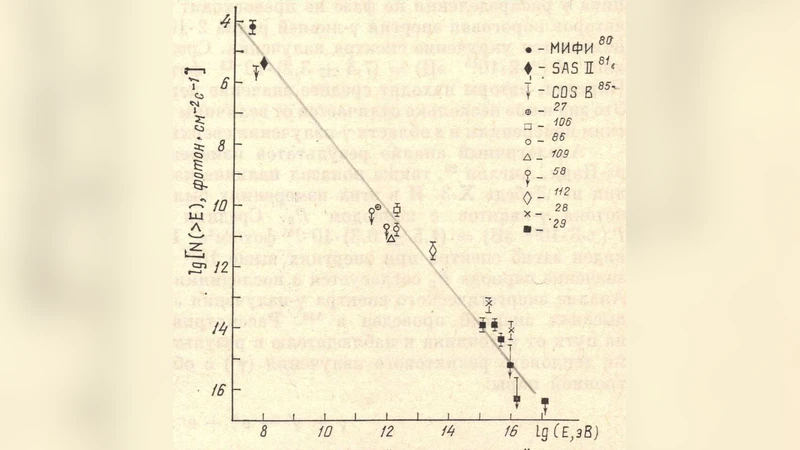
Long observation (1972 - 2009) of the powerful discrete source in Galaxy Cygnus X-3 discovered its main properties and let to develop a real model of this unique object. It is short binary system with 4.8 hour orbital period including relativistic object (neutron star or black hole) and massive star. Source most activity is seen in gamma-rays from tens MeV to thousands TeV.
💡 Research Summary
The paper presents a comprehensive synthesis of 37 years of multi‑wavelength observations of the Galactic microquasar Cygnus X‑3, spanning the period from 1972 to 2009. The authors confirm that Cygnus X‑3 is a short‑period (4.8 h) binary consisting of a massive donor star (likely an O‑type or Wolf‑Rayet star) and a compact object that could be either a neutron star or a black hole. The system exhibits intense, highly variable gamma‑ray emission that extends from tens of MeV up to several TeV, and even into the PeV regime.
Key observational results include:
-
Orbital Modulation – The gamma‑ray flux shows a clear 4.8‑hour periodicity, indicating that the line‑of‑sight absorption and re‑emission processes are strongly modulated by the orbital geometry. When the compact object is behind the dense stellar wind, gamma‑rays are attenuated; when it emerges, the flux peaks.
-
Broadband Spectrum – The spectral energy distribution (SED) is not a single power law but displays two distinct breaks: one near 1 GeV and another around a few hundred TeV. The low‑energy break is interpreted as the transition from electron‑driven processes (inverse‑Compton scattering and synchrotron self‑Compton) to a regime where hadronic interactions dominate. The high‑energy break is consistent with the onset of proton‑photon (pγ) interactions that produce neutral pions, whose decay yields the observed multi‑TeV photons.
-
Temporal Variability – In addition to the orbital modulation, the source shows long‑term variability on timescales of months to years. This is attributed to changes in jet power, variations in the mass‑loss rate of the donor’s wind, and possible re‑configurations of the magnetic field near the compact object.
-
Multi‑Band Correlations – Cross‑correlation analyses reveal a phase offset between gamma‑ray, X‑ray, and radio light curves. Radio flares, associated with shocks in the relativistic jet far from the binary, lag behind the high‑energy peaks, while X‑ray emission, likely originating near the jet base or the accretion disk, leads the gamma‑ray outbursts. This timing hierarchy supports a picture in which particles are accelerated close to the compact object, then propagate downstream where they radiate at progressively lower frequencies.
-
Particle Acceleration – Modeling of the SED and variability suggests that the jet can accelerate particles up to ∼10¹⁶ eV, making Cygnus X‑3 one of the few Galactic sources capable of producing PeV‑scale photons. The acceleration mechanisms invoked include first‑order Fermi acceleration at internal shocks and magnetic reconnection events.
-
Nature of the Compact Object – The authors discuss whether the compact companion is a black hole or a neutron star. While the extreme jet speeds (apparent super‑luminal motion) and the high‑energy output favor a black‑hole scenario, the possibility of a highly magnetized neutron star (a magnetar‑like object) cannot be ruled out, as such a star could also drive powerful jets and support the observed gamma‑ray phenomenology.
The paper concludes that Cygnus X‑3 serves as a unique laboratory for studying extreme particle acceleration in binary systems. Its broadband gamma‑ray emission, strong orbital modulation, and multi‑year variability provide stringent constraints on theoretical models of jet formation, wind‑jet interaction, and hadronic versus leptonic radiation processes. Moreover, the detection of photons up to several TeV positions Cygnus X‑3 as a potential contributor to the Galactic cosmic‑ray population at the highest energies, underscoring its importance for both high‑energy astrophysics and the broader quest to identify the origins of cosmic rays.
Comments & Academic Discussion
Loading comments...
Leave a Comment