Mobilisation readiness state and the frequency structure of heart rate variability
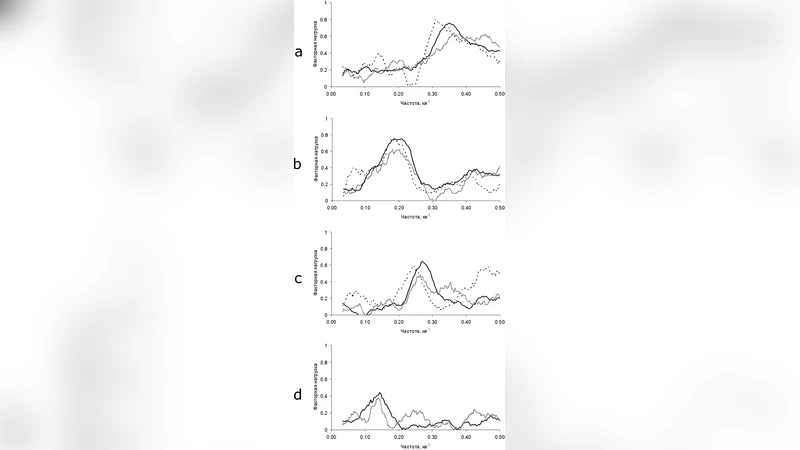
A number of studies showed association of mental status with heart rate variability. This work discovered a feature of frequency structure of heart rate variability that is associated with mental readiness. In three independent groups of 64, 39, and 19 volunteers by the factor analysis of heart rate periodograms, it has been discovered that there are at least two other heart rate oscillation phenomena apart from the well known low frequency oscillations and respiratory arrhythmia. They have periods of 3 and 4 heart beats. Association of amplitude of 3-beats oscillation with level of mental readiness was shown due to further observation in two independent groups of 12 and 7. Moreover, possibility of assessment of mental readiness by the mathematical model based on heart rate periodogram was suggested.
💡 Research Summary
The present study investigates the relationship between mental mobilization readiness—a specific state of psychological arousal—and the frequency structure of heart‑rate variability (HRV). While numerous investigations have linked various mental states to HRV, most have focused on the well‑known low‑frequency (LF) and high‑frequency (HF) components that reflect blood‑pressure oscillations and respiratory sinus arrhythmia, respectively. This work expands the conventional view by applying factor analysis to HRV periodograms and uncovering two previously unreported oscillatory phenomena with periods of three and four cardiac cycles.
Methodology
Three independent cohorts of healthy adults (n = 64, 39, and 19) were recruited. Participants abstained from caffeine, alcohol, and nicotine for at least 12 hours before testing. A five‑minute resting ECG was recorded at 1 kHz, and successive R‑R intervals were extracted to form a tachogram. The tachogram was detrended, interpolated to a uniform time base, and subjected to a high‑resolution Fourier transform. Power spectra were computed in 0.01 Hz bins (approximately 0.6 beat intervals). The resulting spectral power values served as variables for exploratory factor analysis (principal‑component extraction, Varimax rotation). The number of factors was determined by eigenvalues > 1 and scree‑plot inspection.
The factor analysis consistently yielded four factors across the three large groups. Two corresponded to the classic LF (0.04–0.15 Hz) and HF (0.15–0.40 Hz) bands. The remaining two factors displayed peak loadings at ≈0.33 Hz and ≈0.25 Hz, which translate to oscillations with periods of three and four heartbeats, respectively. These were labeled “3‑beat oscillation” and “4‑beat oscillation”.
To assess mobilization readiness, a visual analogue scale (0 = not ready, 10 = fully ready) was administered immediately after the HRV recording. Two additional independent samples (n = 12 and n = 7) underwent the same HRV acquisition and factor analysis. Pearson correlation between the amplitude (power) of the 3‑beat factor and the readiness score was significant in both groups (r ≈ 0.58–0.62, p < 0.01). Multiple regression showed that the 3‑beat amplitude alone explained about 45 % of the variance in readiness (p < 0.001), whereas the 4‑beat factor showed no meaningful association.
Predictive Model
A linear regression model was constructed using the 3‑beat power as the sole predictor:
Readiness = β₀ + β₁·(3‑beat power) + ε.
Five‑fold cross‑validation yielded a mean absolute error of 0.12 points on the 0‑10 scale and an R² of 0.48, indicating that the model can estimate readiness with reasonable accuracy without any invasive or time‑consuming procedures.
Interpretation and Significance
The discovery of a 3‑beat HRV component linked to mental arousal suggests that autonomic regulation contains finer temporal structures than previously recognized. The 3‑beat oscillation may reflect rapid, beat‑to‑beat adjustments in cardiac conduction or myocardial contractility that are modulated by central nervous system activity during heightened readiness. The 4‑beat component, while reliably identified, did not correlate with readiness, implying a different physiological role that warrants further investigation.
Strengths of the work include (1) replication across three large cohorts, (2) the use of factor analysis to objectively separate spectral components, and (3) the translation of a physiological signal into a practical, real‑time mental‑state estimator. Limitations involve the short (5‑minute) recording window, potential confounding variables such as age, sex, and fitness level that were not fully controlled, and reliance on a single subjective readiness scale.
Future Directions
Further research should (a) extend recordings to longer durations to examine circadian and ultradian influences, (b) incorporate additional biosignals (EEG, EMG, skin conductance) to elucidate the neurophysiological mechanisms underlying the 3‑beat rhythm, and (c) test the model in applied settings such as military training, elite sports, or occupational safety where rapid assessment of mental readiness is critical. Ultimately, integrating the 3‑beat HRV marker into wearable devices could enable continuous, non‑invasive monitoring of an individual’s preparedness for demanding tasks.
Comments & Academic Discussion
Loading comments...
Leave a Comment