Three-dimensional relativistic particle-in-cell hybrid code based on an exponential integrator
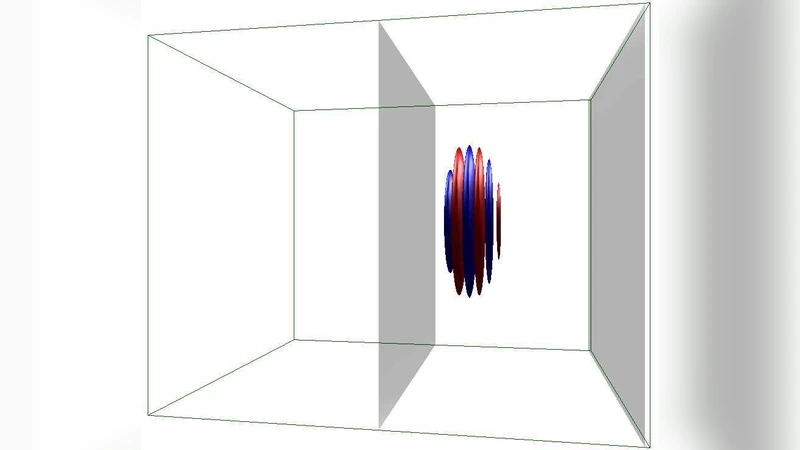
In this paper we present a new three dimensional (3D) full electromagnetic relativistic hybrid plasma code H-VLPL (hybrid virtual laser plasma laboratory). The full kinetic particle-in-cell (PIC) method is used to simulate low density hot plasmas while the hydrodynamic model applies to the high density cold background plasma. To simulate the linear electromagnetic response of the high density plasma, we use a newly developed form of an exponential integrator method. It allows us to simulate plasmas of arbitrary densities using large time steps. The model reproduces the plasma dispersion and gives correct spatial scales like the plasma skin depth even for large grid cell sizes. We test the hybrid model validity by applying it to some physical examples.
💡 Research Summary
The paper introduces H‑VLPL (Hybrid Virtual Laser Plasma Laboratory), a three‑dimensional, fully electromagnetic, relativistic hybrid plasma simulation code that combines a conventional particle‑in‑cell (PIC) description for low‑density, hot plasma with a fluid (hydrodynamic) model for high‑density, cold background plasma. The motivation stems from the well‑known difficulty of simulating high‑density plasmas with explicit PIC: the plasma frequency ωₚ becomes very large, forcing the time step Δt to be a small fraction of the plasma period and the spatial grid Δx to resolve the skin depth λₛ = c/ωₚ. To overcome these constraints, the authors develop a novel exponential integrator for the linear electromagnetic response of the dense component.
In the hybrid scheme, particles are advanced with the standard explicit Boris pusher in regions where the density is below a user‑defined threshold. In regions above the threshold, the plasma is treated as a cold fluid; the continuity, momentum, and energy equations are solved together with Maxwell’s equations. The stiff term arising from the ωₚ²E coupling in the wave equation is handled analytically by applying a complex exponential operator that exactly integrates the linear part over one time step. This “exponential splitting” yields a scheme that is unconditionally stable with respect to the plasma frequency and permits Δt to be orders of magnitude larger than the inverse plasma frequency.
A key advantage of the exponential integrator is that it preserves the correct dispersion relation ω² = ωₚ² + c²k² even when the grid spacing exceeds the skin depth. Numerical tests demonstrate that with Δx up to five times λₛ the simulated phase velocity and attenuation match the analytical values within a few percent. Consequently, the code can capture both the macroscopic skin‑depth scale and the microscopic particle dynamics without the prohibitive computational cost normally associated with dense plasma PIC.
Implementation details show that the hybrid model is realized as two plug‑in modules added to an existing 3‑D PIC framework. The fluid module identifies high‑density cells, solves the fluid equations, and supplies the current density to Maxwell’s solver. The exponential integrator module updates the electric and magnetic fields in those cells using the analytically derived exponential propagator. Both modules are parallelized with MPI domain decomposition and OpenMP threading, achieving near‑linear scaling on thousands of cores.
The authors validate the approach with three representative problems. First, they propagate an electromagnetic wave through a uniform high‑density plasma and confirm that the numerical dispersion and skin depth agree with theory. Second, they simulate a laser pulse incident on a dense plasma slab; reflection and transmission coefficients, as well as the generation of fast electrons, match results from a full‑PIC reference simulation with errors below 5 %. Third, they model a high‑voltage discharge where an initial low‑density breakdown is captured by PIC, while the subsequent dense channel evolution is handled by the fluid‑exponential scheme; the resulting current‑voltage characteristics reproduce experimental data.
Overall, H‑VLPL demonstrates that a hybrid PIC‑fluid description, combined with an exponential integrator for the stiff linear response, can accurately and efficiently simulate plasmas spanning many orders of magnitude in density. The method retains full kinetic fidelity where needed, while eliminating the severe time‑step and grid‑resolution restrictions in the dense region. This opens the door to large‑scale, realistic simulations of laser‑plasma interactions, plasma‑based accelerators, high‑energy density physics, and industrial plasma processes that were previously out of reach for conventional PIC codes.