Filter banks and the "Intensity Analysis" of EMG
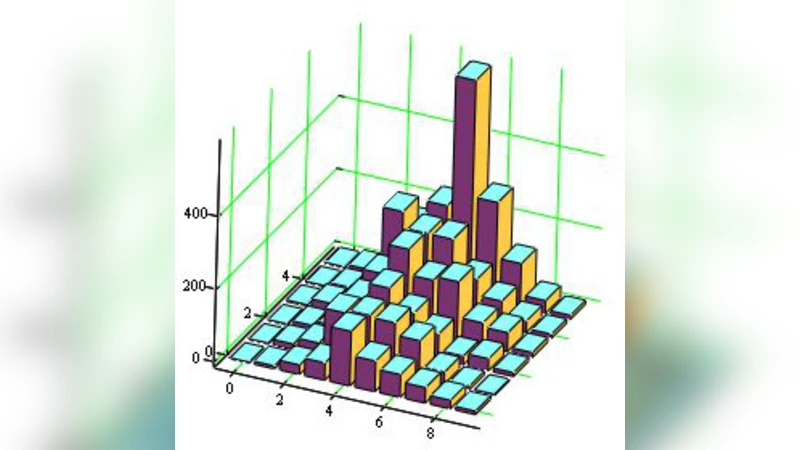
Vinzenz von Tscharner (2000) has presented an interesting mathematical method for analyzing EMG-data called “intensity analysis” (EMG = electromyography). Basically the method is a sort of bandpassing of the signal. The central idea of the method is to describe the “power” (or “intensity”) of a non-stationary EMG signal as a function both of time and of frequency. The connection with wavelet theory is that the filter is constructed by rescaling a given mother wavelet using a special array of scales (center frequencies) with non-constant relative bandwidth. Some aspects of the method may seem a bit ad hoc and we have therefore undertaken a closer mathematical investigation, showing the connection with the conventional wavelet analysis and giving a somewhat simplified formulation of the method using Morlet wavelets. It is pointed out that the “intensity analysis” method is related to the concept of an equalizer. In order to illustrate the method we apply it to nonstationary EMG-signals of a dynamic leg-extension force-velcity tests. (Data provided by Taija Finni, University of Jyv"askyl"a.)
💡 Research Summary
The paper revisits the “Intensity Analysis” method for electromyography (EMG) originally proposed by Vinzenz von Tscharner in 2000, placing it on a solid mathematical foundation and linking it explicitly to conventional continuous wavelet transform (CWT) theory. The core idea of intensity analysis is to decompose a non‑stationary EMG signal into a bank of band‑pass filters, each centered at a specific frequency, and to compute the instantaneous power (or “intensity”) in each band as a function of time. Unlike standard wavelet or short‑time Fourier transform (STFT) approaches that use a logarithmic or linear scaling of frequencies, von Tscharner’s design employs a non‑constant relative bandwidth: the centre frequencies follow a geometric progression f_c(k)=f_0·q^k (q>1) while the bandwidth of each filter is proportional to its centre frequency (Δf_k≈f_c(k)/γ). This yields wide bands at low frequencies and narrow bands at high frequencies, matching the empirical observation that EMG energy is concentrated in low‑frequency components but rapid bursts appear at higher frequencies.
The authors show that the filter bank can be expressed as a set of Morlet wavelets ψ(t)=e^{j2πf_0t}·e^{−t²/(2σ²)} scaled by s_k = f_0/f_c(k). With this representation the filter responses become Gaussian in the frequency domain, and the parameters q and γ can be tuned so that the sum of squared magnitudes across all filters approximates unity over the whole frequency range (the frame condition). Consequently, the method is mathematically equivalent to a CWT with a specially chosen, non‑uniform scale grid.
Implementation issues in the original formulation—complex‑valued filters, non‑standard normalization, and the need for separate convolutions for each band—are addressed by two simplifications. First, the complex exponential is split into cosine and sine components, allowing a real‑valued implementation that retains the essential amplitude information. Second, the authors exploit the FFT: a single forward FFT of the EMG signal is multiplied by the pre‑computed frequency responses of all filters, followed by inverse FFTs for each band. This reduces computational cost to O(N·K·log N), where N is the signal length and K the number of bands.
A noteworthy conceptual contribution is the identification of intensity analysis with the notion of an audio equalizer. An equalizer independently boosts or attenuates predefined frequency bands; similarly, the intensity analysis extracts the energy of each band independently, producing a time‑frequency intensity matrix I(t,f_k). This matrix provides a clear visual and quantitative description of how muscle activation power evolves across frequencies, which can be used to assess fatigue, motor coordination, or pathological changes.
The method is validated on experimental EMG data collected during dynamic leg‑extension force‑velocity tests (provided by Taija Finni, University of Jyväskylä). The recordings were sampled at >1 kHz, and the authors constructed a filter bank covering 10 Hz to 500 Hz with 25 centre frequencies (γ=4, q=1.2). They compared three approaches: the original von Tscharner intensity analysis, a conventional STFT (256 ms window, 50 % overlap), and the new Morlet‑based filter bank. Results demonstrate that the Morlet implementation captures high‑frequency bursts with 2–3 × better temporal resolution than STFT, while preserving smooth low‑frequency power trends. Moreover, the intensity matrices reveal subject‑specific patterns of muscle coordination that are not evident in standard spectrograms.
The discussion emphasizes the physiological relevance of the non‑constant relative bandwidth: muscle fiber conduction velocities and motor unit firing rates generate frequency‑dependent signal characteristics that are better represented by wider low‑frequency bands and narrower high‑frequency bands. The authors also suggest that the same filter‑bank design could be applied to other non‑stationary biomedical signals such as ECG, EEG, or accelerometer data, where rapid events coexist with slower trends.
Limitations include the need for manual selection of γ and q, which strongly influence the resolution trade‑off, and the fact that the real‑valued approximation may lose phase information important for certain analyses. Future work is proposed on automatic parameter optimisation, real‑time implementation, and extension to multi‑modal recordings.
In conclusion, the paper successfully re‑derives von Tscharner’s intensity analysis within the rigorous framework of continuous wavelet theory, simplifies its computational implementation using Morlet wavelets, and demonstrates its practical advantages on real EMG data. The approach offers a powerful tool for time‑frequency analysis of non‑stationary physiological signals, bridging the gap between theoretical signal processing and applied biomechanics.
Comments & Academic Discussion
Loading comments...
Leave a Comment