Gamma-ray absorption and the origin of the gamma-ray flare in Cygnus X-1
The high-mass microquasar Cygnus X-1, the best-established candidate for a stellar-mass black hole in the Galaxy, has been detected in a flaring state at very high energies (VHE), E > 200 GeV, by the Atmospheric Cherenkov Telescope MAGIC. The flare occurred at orbital phase 0.91, where phase 1 is the configuration with the black hole behind the companion high-mass star, when the absorption of gamma-ray photons by photon-photon annihilation with the stellar field is expected to be highest. We aim to set up a model for the high-energy emission and absorption in Cyg X-1 that can explain the nature of the observed gamma-ray flare. We study the gamma-ray opacity due to pair creation along the whole orbit, and for different locations of the emitter. Then we consider a possible mechanism for the production of the VHE emission. We present detailed calculations of the gamma-ray opacity and infer from these calculations the distance from the black hole where the emitting region was located. We suggest that the flare was the result of a jet-clump interaction where the decay products of inelastic proton-proton collisions dominate the VHE outcome. We are able to reproduce the spectrum of Cyg X-1 during the observed flare under reasonable assumptions. The flare may be the first event of jet-cloud interaction ever detected at such high energies.
💡 Research Summary
Cygnus X‑1, the prototypical high‑mass microquasar hosting a stellar‑mass black hole, was observed by the MAGIC atmospheric Cherenkov telescope to produce a very‑high‑energy (VHE) flare (E > 200 GeV) at orbital phase 0.91. At this phase the compact object lies almost behind the massive O‑type companion, a geometry that maximizes photon‑photon (γγ) absorption of gamma rays on the stellar radiation field. The authors set out to reconcile the detection of VHE photons with the expectation of severe attenuation, and to identify a plausible production mechanism for the flare.
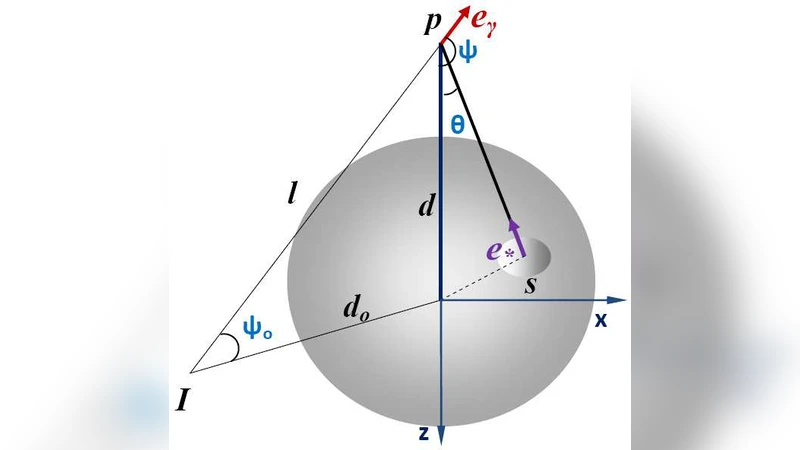
First, they compute the γγ opacity τ(E, φ, r) for the entire orbit, assuming the companion’s radiation as a black‑body (T ≈ 3 × 10⁴ K, R★ ≈ 1.5 × 10¹² cm) and a circular orbit with separation a ≈ 3 × 10¹² cm. By integrating the pair‑creation cross‑section over the anisotropic photon field they obtain τ as a function of gamma‑ray energy E, orbital phase φ, and distance r of the emitter from the black hole. The results show that for r ≲ 10¹² cm (i.e., close to the compact object) τ ≫ 1 at 200 GeV, implying almost total absorption. However, once the emission site is displaced to r ≈ 10¹³ cm or larger, τ drops below unity even at phase 0.9, allowing VHE photons to escape. This establishes a geometric constraint: the flare must have originated well outside the immediate vicinity of the black hole, likely in the jet at distances of several tens of astronomical units.
Second, the paper evaluates possible radiative processes. Pure leptonic scenarios (inverse‑Compton scattering or synchrotron radiation by relativistic electrons) are disfavoured because the intense stellar photon field and magnetic fields would cause rapid electron cooling, suppressing VHE output. The authors therefore propose a hadronic jet–clump interaction. In this picture, a dense gas clump (n ≈ 10⁹–10¹⁰ cm⁻³, size ≈ 10¹¹ cm) embedded in the stellar wind is intercepted by the relativistic jet. High‑energy protons carried by the jet undergo inelastic proton‑proton (pp) collisions within the clump, producing neutral pions (π⁰) that decay promptly into gamma‑ray pairs. Charged pions (π±) generate secondary leptons that can contribute additional emission, but the dominant VHE component stems from π⁰ decay. By adopting a jet proton power Lₚ ≈ 10³⁶ erg s⁻¹ and a power‑law proton spectrum with index ≈ 2.2, the authors calculate the gamma‑ray emissivity from pp interactions, fold it with the previously derived τ(E, φ, r), and obtain a predicted VHE spectrum. The model reproduces the observed MAGIC spectrum (photon index ≈ 2.5) and flux level for a flare duration of order one hour. Importantly, the required clump parameters are consistent with theoretical expectations for wind‑clumping in massive stars, and the short interaction time explains why no contemporaneous X‑ray or radio flaring was reported.
The study thus delivers two key insights. (1) Detailed γγ opacity calculations demonstrate that VHE photons can survive even at the most unfavorable orbital phase provided the emission region lies at least ∼10¹³ cm from the black hole. (2) A jet‑clump collision, with VHE photons generated via hadronic pp → π⁰ → γγ processes, offers a natural and efficient mechanism that matches the observed spectral shape and temporal characteristics. This scenario may represent the first direct detection of a microquasar jet–cloud interaction at TeV energies, opening a new window on particle acceleration and jet–environment coupling in X‑ray binaries. Future multi‑wavelength campaigns, especially those capable of simultaneous VHE, X‑ray, and radio monitoring, will be essential to test the prevalence of such events and to refine models of high‑energy emission in microquasars.