The Scattering of Electromagnetic Waves from Two-Dimensional Randomly Rough Perfectly Conducting Surfaces: The Full Angular Intensity Distribution
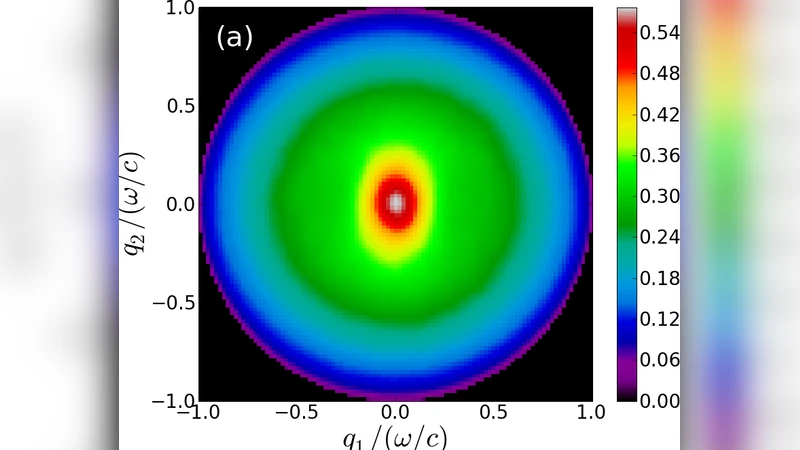
By a computer simulation approach we study the scattering of $p$- or $s$-polarized light from a two-dimensional, randomly rough, perfectly conducting surface. The pair of coupled inhomogeneous integral equations for two independent tangential components of the magnetic field on the surface are converted into matrix equations by the method of moments, which are then solved by the biconjugate gradient stabilized method. The solutions are used to calculate the mean differential reflection coefficient for given angles of incidence and specified polarizations of the incident and scattered fields. The full angular distribution of the intensity of the scattered light is obtained for strongly randomly rough surfaces by a rigorous computer simulation approach.
💡 Research Summary
The paper presents a rigorous computational study of electromagnetic wave scattering from a two‑dimensional, randomly rough, perfectly conducting surface. Starting from Maxwell’s equations, the authors formulate two coupled inhomogeneous integral equations for the tangential magnetic‑field components on the surface. These equations fully account for the stochastic nature of the surface height profile and for any incident polarization (p or s) and angle.
To solve the integral equations, the surface is discretized into a fine mesh and the method of moments (MoM) is employed. Piecewise‑constant (pulse) basis and testing functions are used, converting the continuous problem into a large, non‑symmetric linear system. Because the matrix dimension can easily exceed several thousand, direct inversion is impractical. The authors therefore adopt the biconjugate gradient stabilized (BICGSTAB) iterative solver, which converges rapidly for the type of matrices generated by MoM and requires modest memory. No preconditioner is needed, making the implementation straightforward and robust for a wide range of roughness parameters.
The numerical scheme is first validated against the small‑slope approximation (SSA) for weakly rough surfaces, where excellent agreement is observed. The study then proceeds to strongly rough regimes (root‑mean‑square height comparable to or larger than the wavelength). In this regime multiple scattering and non‑linear effects dominate, and the SSA fails. By solving the full integral equations, the authors obtain the mean differential reflection coefficient (MDRC) for all combinations of incident and scattered polarizations (p→p, p→s, s→p, s→s) over the entire solid angle (θ_s ∈
Comments & Academic Discussion
Loading comments...
Leave a Comment