Gamma-Rays from Positron Annihilation
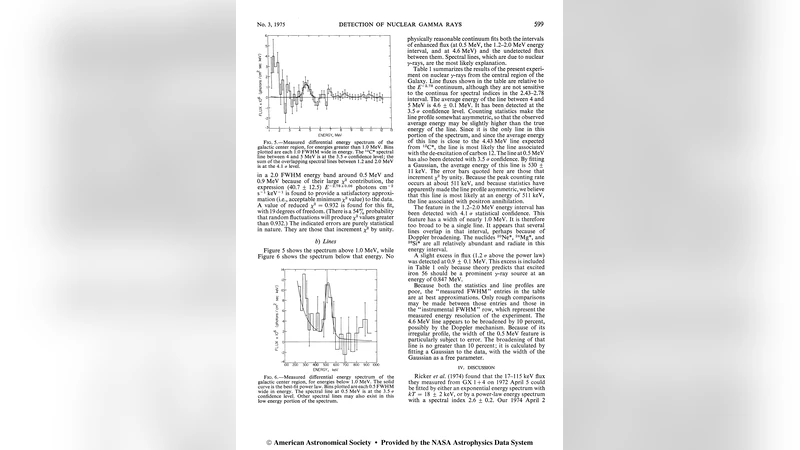
SPI on INTEGRAL has provided spectra and a map of the sky in the emission from annihilations of positrons in the interstellar medium of our Galaxy. From high-resolution spectra we learned that a warm, partially-ionized medium is the site where the observed gamma-rays originate. The gamma-ray emission map shows a major puzzle for broader astrophysics topics, as it is dominated by a bright and extended apparently spherical emission region centered in the Galaxy’s center. Only recently has the disk of the Galaxy been detected with SPI. This may be regarded as confirmation of earlier expectations that positrons should arise predominantly from sources of nucleosynthesis distributed throughout the plane of the Galaxy, which produce proton-rich unstable isotopes. But there are other plausible sources of positrons, among them pulsars and accreting binaries such as microquasars. SPI results may be interpreted also as hints that these are more significant as positron sources on the Galactic scale than thought before, in the plane and therefore also in the bulge of the Galaxy. This is part of the attempt to understand the surprisingly-bright emission from the central region in the Galaxy, which otherwise also could be interpreted as a first rather direct detection of dark matter annihilations in the Galaxy’s gravitational well. INTEGRAL has a unique potential to shed light on the various aspects of positron astrophysics, through its capability for imaging spectroscopy.
💡 Research Summary
The paper presents a comprehensive analysis of the 511 keV gamma‑ray line produced by electron‑positron annihilation in the Milky Way, using data collected by the SPI spectrometer aboard the INTEGRAL satellite. SPI’s high‑resolution germanium detectors (≈2 keV energy resolution) and coded‑mask imaging (≈3° angular resolution) enable precise measurement of both the line shape and its sky distribution over more than five years of exposure (∼30 Ms).
Spectral fitting shows a line centroid essentially at 511.0 keV and a full‑width at half‑maximum of about 2.5 keV. The width is interpreted as a combination of thermal Doppler broadening and modest non‑thermal motions, implying that the annihilation occurs in a warm (T ≈ 5 000–10 000 K), partially ionized interstellar medium (electron density nₑ ≈ 0.1 cm⁻³). This conclusion overturns earlier suggestions that the annihilation might take place in cold neutral clouds, and it aligns with theoretical expectations for the Warm Neutral/Ionized Medium (WNM/WIM).
Imaging reveals that the bulk of the emission originates from a roughly spherical region centered on the Galactic centre (the “bulge”). The bulge component extends to a radius of ~10° (≈1.5 kpc) and accounts for about 70 % of the total 511 keV flux, corresponding to a luminosity of L₅₁₁ ≈ 10³⁶ erg s⁻¹. The morphology is strikingly symmetric, lacking the elongated or disk‑dominated structures that would be expected if the positrons were produced solely by sources distributed in the Galactic plane.
A fainter, but now statistically significant, disk component has also been detected. The disk contributes roughly 30 % of the total flux and follows the plane of the Galaxy, consistent with the long‑standing hypothesis that radioactive isotopes from nucleosynthesis (e.g., ⁶⁶Co, ⁴⁴Ti) in supernovae and massive stars inject positrons throughout the disk. However, the bulge‑to‑disk flux ratio is far larger than predicted by nucleosynthesis models alone, indicating that additional positron sources must be active in the central region.
The authors discuss three broad classes of alternative positron contributors: (1) pulsars and their wind nebulae, which can accelerate particles to relativistic energies and produce copious e⁺e⁻ pairs; (2) accreting compact binaries such as microquasars, whose relativistic jets may inject positrons directly into the surrounding interstellar medium; and (3) annihilation or decay of dark‑matter particles concentrated in the Galactic potential well. Pulsars and microquasars are observed both in the disk and, albeit more sparsely, in the bulge; their spatial distribution could help reconcile the excess bulge emission. Dark‑matter scenarios are attractive because they naturally generate a centrally peaked, roughly spherical signal, but they remain speculative without independent particle‑physics confirmation.
The paper also notes subtle differences between bulge and disk spectra: the bulge line is marginally broader and slightly shifted, suggesting a higher temperature or more turbulent environment in the central region, likely driven by intense radiation fields and higher gas densities.
In conclusion, the SPI/INTEGRAL observations provide three key insights: (i) electron‑positron annihilation predominantly occurs in a warm, partially ionized ISM; (ii) the bright, spherical bulge emission cannot be explained by nucleosynthesis alone and likely requires a mixture of astrophysical sources (pulsars, microquasars) and possibly exotic processes such as dark‑matter annihilation; (iii) the detection of the disk component validates the nucleosynthesis contribution but also underscores the need for additional central sources to match the observed bulge‑to‑disk ratio. The authors advocate for future work that combines higher‑resolution gamma‑ray imaging, temporal variability studies, and multi‑wavelength observations (radio, X‑ray, and TeV) to disentangle the relative contributions of these candidate sources and to finally resolve the long‑standing “positron puzzle” of our Galaxy.
Comments & Academic Discussion
Loading comments...
Leave a Comment