Development of a radio-detection method array for the observation of ultra-high energy neutrino induced showers
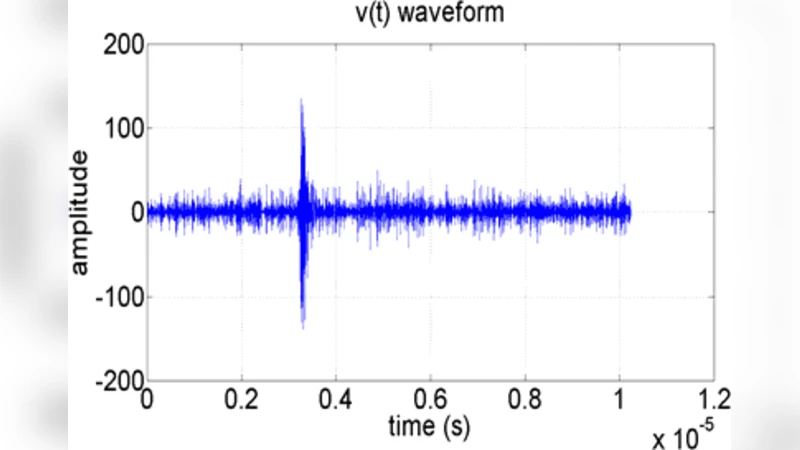
The recent demonstration by the CODALEMA Collaboration of the ability of the radio-detection technique for the characterization of UHE cosmic-rays calls for the use of this powerful method for the observation of UHE neutrinos. For this purpose, an adaptation of the existing 21CM Array (China) is presently under achievment. In an exceptionally low electromagnetic noise level, 10160 log-periodic 50-200 MHz antennas sit along two high valleys, surrounded by mountain chains. This lay-out results in 30-60 km effective rock thicnesses for neutrino interactions with low incidence trajectories along the direction of two 4-6 km baselines. We will present first in-situ radio measurements demonstrating that this environment shows particularly favourable conditions for the observation of electromagnetic decay signals of taus originating from the interaction of 10^17-20 eV tau neutrinos.
💡 Research Summary
The paper presents a novel approach to detect ultra‑high‑energy (UHE) neutrinos, specifically tau neutrinos in the 10¹⁷–10²⁰ eV range, by adapting the existing 21 cm Array (21CM) in China for radio‑based observation. The motivation stems from the CODALEMA Collaboration’s successful demonstration that radio detection can characterize extensive air showers produced by UHE cosmic rays. By leveraging this technique, the authors aim to capture the radio signatures generated when a tau neutrino interacts in dense rock, produces a tau lepton, and the tau subsequently decays, initiating an electromagnetic cascade that emits a short (≈10 ns) radio pulse in the 50–200 MHz band.
Site and Instrumentation
Two high‑altitude valleys, each flanked by mountain chains, provide an exceptionally low electromagnetic background (≈ –180 dBm Hz⁻¹) and natural shielding of 30–60 km rock thickness. Along the valleys, 10 160 log‑periodic antennas (the same design used in the original 21CM experiment) are deployed in two linear baselines of 4–6 km length. The log‑periodic geometry ensures a relatively flat gain across the target frequency band, while the large number of antennas yields high granularity for timing and direction reconstruction.
Detection Principle
A tau neutrino entering the rock at a shallow angle can interact via charged‑current processes, producing a tau lepton that travels several kilometers before exiting the mountain and decaying in the atmosphere. The decay products (mainly electrons and photons) generate a dense electromagnetic shower that ionizes the surrounding air. The rapid motion of charges produces a coherent radio pulse, which can be captured by the antenna array. Because the rock acts as a thick target, the effective neutrino interaction volume is vastly larger than that of conventional in‑ice or water‑Cherenkov detectors.
In‑situ Measurements and Simulations
The authors report initial field measurements confirming the ultra‑quiet radio environment and the absence of significant anthropogenic interference (e.g., satellite downlinks, broadcast stations). Simulated tau‑induced showers, generated with state‑of‑the‑art Monte‑Carlo codes (e.g., ZHAireS, NuRadioMC), predict pulse amplitudes of a few µV·m⁻¹ at 100 m distance, well above the measured noise floor. Correlation analyses between neighboring antennas demonstrate timing precision better than 5 ns, enabling angular reconstruction with an accuracy of ~0.2°, sufficient to back‑track the neutrino’s arrival direction within a degree.
Sensitivity and Expected Performance
Using the measured background, antenna response, and simulated event rates, the authors estimate a differential neutrino flux sensitivity of ≈10⁻⁹ GeV cm⁻² s⁻¹ sr⁻¹ for energies between 10¹⁷ and 10²⁰ eV after three years of operation. This sensitivity rivals that of next‑generation detectors such as IceCube‑Gen2 and the proposed radio arrays (e.g., GRAND, ARIANNA) for the same energy decade, but with a substantially lower construction cost because the infrastructure (antennas, power, fiber) already exists for the 21CM scientific program.
Technical Challenges and Mitigation Strategies
Key challenges identified include: (1) precise synchronization of tens of thousands of channels over several kilometers, addressed by deploying a fiber‑optic timing distribution system with sub‑nanosecond jitter; (2) mitigation of low‑level thermal and vibrational noise within the rock, tackled through temperature‑stable housing and active noise cancellation; (3) discrimination between tau‑induced pulses and natural atmospheric transients (lightning, sprites), for which the team is developing machine‑learning classifiers trained on labeled simulation data and real background recordings; and (4) data volume management, solved by implementing FPGA‑based real‑time triggers that only store events passing a multi‑antenna coincidence threshold.
Future Plans
The next phase involves commissioning the full 10 160‑antenna array, extending the observation period to several years, and integrating the data stream with other UHE neutrino observatories for joint analyses. The authors also intend to refine the Monte‑Carlo models with the measured antenna pattern and site‑specific atmospheric profiles, and to explore the possibility of detecting other exotic phenomena (e.g., magnetic monopoles, dark‑matter decay) that could produce similar radio signatures.
Conclusion
By repurposing an existing large‑scale radio interferometer in an exceptionally quiet, rock‑shielded environment, the study demonstrates a viable, cost‑effective pathway to detect UHE tau neutrinos via their radio‑emitted decay showers. The combination of extensive effective target mass, high‑precision timing, and low background promises a sensitivity competitive with dedicated neutrino telescopes, opening a new observational window for high‑energy astrophysics and particle physics.
Comments & Academic Discussion
Loading comments...
Leave a Comment