Mobile Commerce and Applications: An Exploratory Study and Review
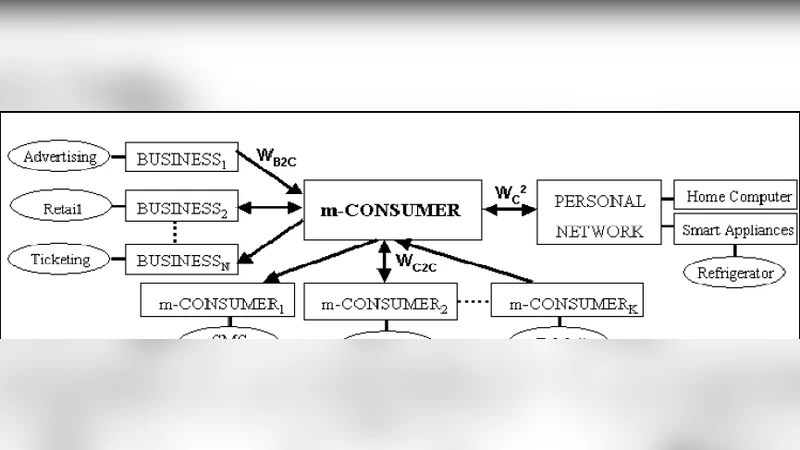
Mobile commerce is enabling the development of additional revenue streams for organizations through the delivery of chargeable mobile services. According to the European Information Technology Observatory, the total amount of revenue generated by mobile commerce was reported to be less than {\pounds}9 million in the United Kingdom in 2001. By 2005 this had, at least, doubled and more recent industry forecasts project significant global growth in this area. Mobile commerce creates a range of business opportunities and new revenue streams for businesses across industry sectors via the deployment of innovative services, applications and associated information content. This paper presents a review of mobile commerce business models and their importance for the creation of mobile commerce solutions.
💡 Research Summary
The paper provides a comprehensive review of mobile commerce (m‑commerce) and its emerging business models, positioning the sector as a significant new revenue source for organizations across diverse industries. Beginning with market data, the authors note that UK mobile commerce revenue was under £9 million in 2001, had at least doubled by 2005, and is projected to experience substantial global growth in the coming years. This historical context underscores the rapid adoption of mobile technologies and the shifting consumer expectations toward on‑the‑go purchasing and service consumption.
The authors first examine the technological foundations that enable m‑commerce: the evolution from 2G to 3G, 4G, and the ongoing rollout of 5G networks, coupled with the mass adoption of smartphones and tablets. These advances deliver higher bandwidth, lower latency, and ubiquitous connectivity, allowing real‑time payments, location‑aware services, and cloud‑based application delivery. The paper argues that these capabilities create a “mobile‑first” paradigm distinct from traditional e‑commerce, where immediacy, context, and personalization become core value propositions.
Four principal business‑model categories are identified and analyzed in depth:
-
Digital‑Content Sales – Distribution of music, video, e‑books, and other media via download or streaming. Revenue streams include one‑time purchases, subscription fees, and licensing arrangements. The model relies heavily on digital‑rights management and content‑partner ecosystems.
-
Location‑Based Services (LBS) – Leveraging GPS, Wi‑Fi, and cellular triangulation to deliver context‑specific offers such as nearby store discounts, navigation assistance, tourism guides, and hyper‑local advertising. Monetization occurs through click‑through fees, cost‑per‑action agreements, and data‑licensing to advertisers.
-
Mobile Payment Platforms – Mobile wallets, QR‑code payments, NFC transactions, and carrier‑billing solutions. The primary income is transaction‑processing fees and subscription charges for premium services. Success hinges on robust security, regulatory compliance, and strategic alliances with banks, telecom operators, and merchants.
-
Enterprise Mobile Solutions – B2B applications for field service management, inventory control, CRM, and supply‑chain visibility. Revenue is generated via software licensing, maintenance contracts, and custom development services. Although initial development costs are high, long‑term contracts provide stable cash flow.
For each model, the paper dissects revenue structures, cost drivers, and critical success factors. It highlights that content models must manage royalty payments and streaming infrastructure; LBS models incur data‑collection, analytics, and mapping costs; payment platforms face substantial investment in encryption, authentication, and compliance (PCI‑DSS, GDPR); and enterprise solutions require integration with legacy systems and ongoing support.
The authors also address the principal challenges confronting m‑commerce. Security is paramount: end‑to‑end encryption, multi‑factor authentication, and biometric verification are essential to protect transaction data and user privacy. Regulatory hurdles, such as cross‑border data‑protection laws and financial‑services licensing, add complexity. Interoperability issues arise from fragmented device ecosystems and the lack of universal APIs, prompting a call for industry‑wide standardization efforts.
Looking forward, the paper forecasts that the convergence of the Internet of Things (IoT), artificial intelligence (AI), and next‑generation networks (5G/6G) will unlock new value‑added services. IoT‑enabled devices can trigger automatic micro‑transactions (e.g., a smart fridge re‑ordering groceries). AI can deliver hyper‑personalized recommendations and dynamic pricing in real time. Ultra‑low‑latency 5G will make immersive AR/VR shopping experiences feasible, further blurring the line between physical and digital retail.
The concluding section proposes a strategic roadmap for firms entering or expanding in the m‑commerce arena: (1) conduct rigorous market and user‑pain‑point analysis; (2) select the most appropriate business‑model archetype and design a clear revenue architecture; (3) invest in secure, compliant infrastructure; (4) forge partnerships with telecoms, banks, and content providers; (5) implement data‑analytics and AI capabilities for continuous service optimization; and (6) adopt emerging technologies in phased pilots to mitigate risk while staying ahead of market trends. By following this structured approach, organizations can capitalize on the rapid growth of mobile commerce, diversify revenue streams, and achieve sustainable competitive advantage.
Comments & Academic Discussion
Loading comments...
Leave a Comment