New Visual Cryptography Algorithm For Colored Image
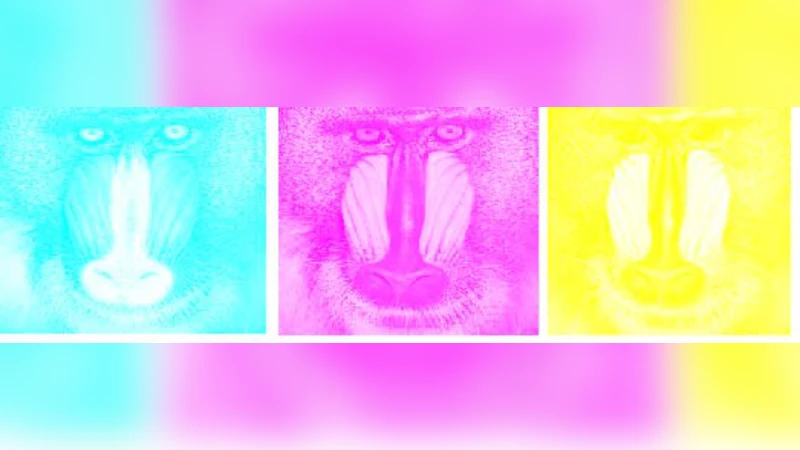
Visual Cryptography is a special encryption technique to hide information in images, which divide secret image into multiple layers. Each layer holds some information. The receiver aligns the layers and the secret information is revealed by human vision without any complex computation. The proposed algorithm is for color image, that presents a system which takes four pictures as an input and generates three images which correspond to three of the four input pictures. The decoding requires only selecting some subset of these 3 images, making transparencies of them, and stacking them on top of each other, so the forth picture is reconstructed by printing the three output images onto transparencies and stacking them together. The reconstructed image achieved in same size with original secret image.
💡 Research Summary
The paper proposes a visual cryptography scheme for 24‑bit color images that builds on the classic Naor‑Shamir visual secret sharing concept but extends it to the color domain by exploiting the three primitive subtractive colors cyan (C), magenta (M) and yellow (Y). The authors first decompose a secret image (e.g., a 256 × 256 “baboon” bitmap) into its C, M and Y components. Each component is reduced to one‑quarter of its original intensity (i.e., Pi,j → 0.25·Pi,j) to make room for a cover image. For each primitive color a separate cover image is selected based on the smallest absolute difference between the primitive pixel value and the cover pixel value. The reduced primitive pixel is then combined with the corresponding cover pixel using a bitwise OR operation, producing three shares (named a, b and c). Share a contains the cyan component mixed with its cover, share b the magenta component, and share c the yellow component.
Reconstruction is performed by printing the three shares on transparencies, stacking them, and applying a simple post‑processing step: each share’s pixel value is subtracted from 255 after scaling by ¾, and the result is multiplied by four to restore the original intensity range. The stacked transparencies therefore reveal the secret image at the same resolution as the original, without any digital computation on the viewer’s side.
The authors claim that each individual share leaks only about 25 % of the secret’s structural information, making the scheme more secure than a naïve single‑share approach. They also note that the method works best when the secret image contains colors close to the primitive C, M or Y tones; dark, high‑contrast images tend to produce noisy, low‑contrast shares. To mitigate this, they introduce a colour‑correction step after reconstruction that rescales pixel values to improve visual quality.
The experimental section is limited to visual inspection of a few test images. No quantitative metrics such as PSNR, SSIM, or contrast measurements are reported, and there is no systematic comparison with existing colour visual cryptography schemes (e.g., Koga’s lattice‑based method, Rijmen‑Preneel’s 24‑colour approach). The paper also lacks a formal security analysis; the 25 % leakage claim is not backed by statistical attacks or information‑theoretic proofs.
From a technical standpoint, the scheme’s reliance on a fixed ¼/¾ intensity scaling and a simple OR operation is problematic. The OR operation does not model the physical subtractive mixing of inks or transparencies, so the colour reproduction in the reconstructed image deviates from the original, especially in darker regions where the intensity reduction can drive values to zero. The authors acknowledge that an “ideal subtractive colour mixture is unlikely” in practice, suggesting that a more sophisticated colour‑mixing model would be required for real‑world deployment.
In summary, the paper introduces an early attempt to adapt visual cryptography to colour images by decomposing the secret into primitive colour channels and embedding each channel into a separate cover‑image share. While the idea of using three shares that each reveal only a partial colour component is conceptually appealing, the implementation suffers from several shortcomings: arbitrary intensity scaling, poor handling of dark/high‑contrast images, lack of rigorous security proofs, and an absence of objective quality evaluation. Future work should focus on (1) developing a realistic subtractive colour model for share generation, (2) optimizing the scaling factors per channel to preserve contrast, (3) providing a formal (k, n) security analysis, and (4) benchmarking against state‑of‑the‑art colour visual cryptography methods using standard image‑quality metrics. Only with these improvements can the scheme become a viable, secure, and high‑fidelity solution for colour visual secret sharing.
Comments & Academic Discussion
Loading comments...
Leave a Comment